

All Articles
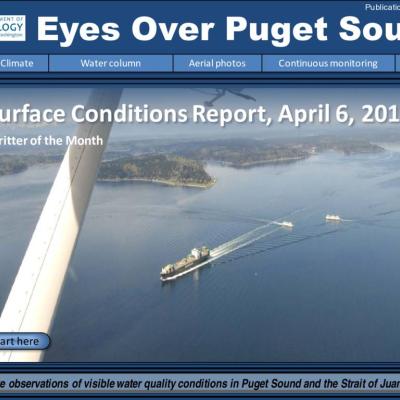
Eyes Over Puget Sound: Surface Conditions Report – April 6, 2016
Despite warmer air temperatures, normal snowpack in the mountains suggest that summer freshwater flows into Puget Sound might be higher than last year. As of April, the spring plankton bloom has extended across Central and South Puget Sound. Ferry data shows chlorophyll increasing after March 25 and expanding across the area. With water temperatures above normal as a carry-over from 2015
State guidelines offer new approaches to shoreline protection
Bulkhead removal is becoming an attractive option for many shoreline property owners as awareness spreads of their geological and ecological impacts, and as aging bulkheads come up for replacement. New state guidelines provide alternatives to hard armor.

Sources of sand: maps show crucial “feeder bluffs”
For more than a hundred years, property owners have seen shoreline erosion as the enemy. But it turns out that in many cases erosion is actually a good thing — crucial, according to scientists — because it provides the sand and gravel needed for healthy beaches.
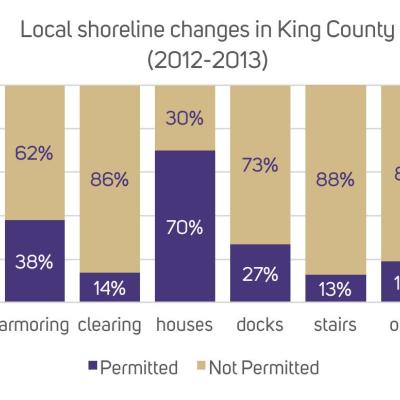
Studies point to gap in permits for shoreline armoring
A significant number of Puget Sound property owners have been altering their shorelines without required permits. A new report suggests that state and local regulators should increase enforcement and make penalties more costly for violators.

Shoreline restoration turns to private property owners
By removing bulkheads where they can, property owners are improving shoreline habitat, one piece at a time. Officials from county and nonprofit groups have been offering assistance and finding new ways to connect with property owners.
Shoreline and Coastal Planners Forum: Shoreline stabilization
Proceedings of the March 31, 2016 WA Shoreline and Coastal Planners Group Spring Forum. Shoreline Stabilization: Using the Permit Process to Protect Shoreline Habitat and Property with a Focus on Single Family Residential Properties
Building Squaxin Island Tribe capacity to implement the 2020 Action Agenda for Puget Sound and the EPA region 10 comprehensive conservation and management plan
This 2015 report from the Squaxin Island Tribe details the projects it undertook with funds received by the EPA for the implementation of the 2020 Puget Sound Action Agenda. These projects include the restoration of the Shelton Harbor shoreline and a pelagic food web study.
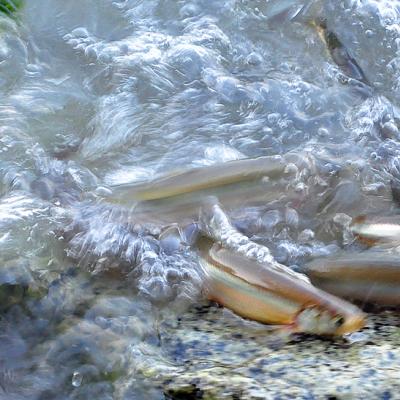
Spawning habitat for forage fish being lost to rising tides
Where shoreline bulkheads remain in place, the loss of spawning habitat used by surf smelt is likely to reach 80 percent.
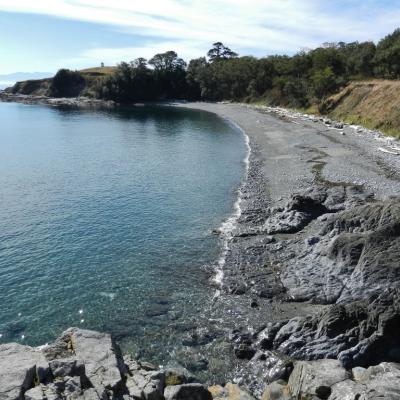
Forage fish are losing places to lay their eggs
Rising sea levels are expected to exacerbate habitat loss caused by bulkheads, according to studies in the San Juan Islands.
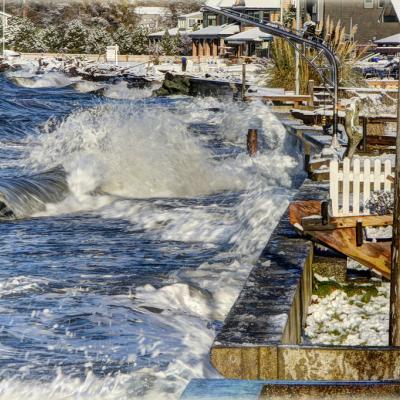
Shoreline armoring's effect on the food web
The removal of shoreline armoring in Puget Sound has become a priority for state and federal agencies, but until recently there have been relatively few scientific studies of armoring's local impact. New research looks at the pronounced biological and ecological effects of these common shoreline structures, especially for tiny beach-dwelling creatures that make up the base of the food web.