

All Articles
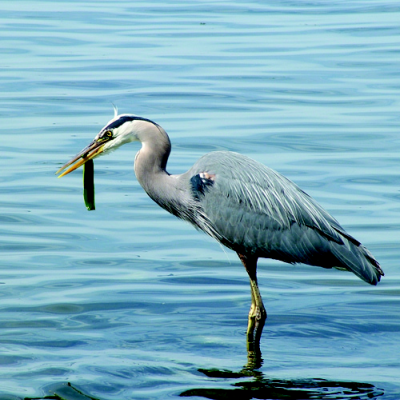
Food Web
Puget Sound hosts more than 100 species of seabirds, 200 species of fish, 15 marine mammal species, hundreds of plant species, and thousands of invertebrate species. These species do not exist in isolation, but rather interact with each other in a variety of ways: they eat and are eaten by each other; they serve as vectors of disease or toxins; they are parasitic; and they compete with each other
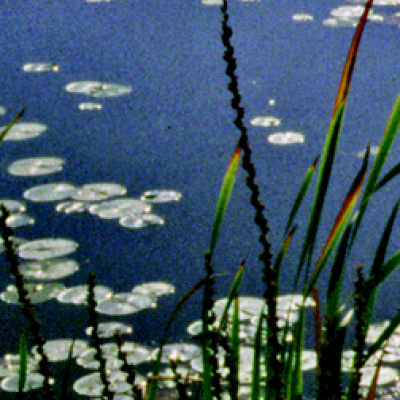
Habitats of the Puget Sound watershed
"Habitat" describes the physical and biological conditions that support a species or species assemblage and refers to conditions that exist at many scales. An oyster shell provides habitat for some algae and invertebrates, whereas cubic miles of sunlit water in Puget Sound comprise the habitat for many planktonic species.
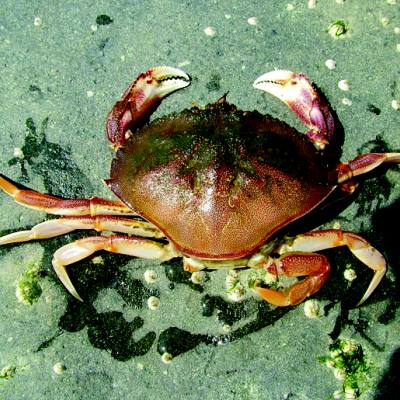
Herbivores and detritivores in Puget Sound
Many consumer organisms in Puget Sound are both herbivores and detritivores. Zooplankton and benthic invertebrates that are scavengers, herbivores, or detritivores are considered jointly in this article. Some of these organisms can be predatory as well. Hundreds of invertebrates and fish species have a planktonic larval stage that eats plants and occupies the nearshore and offshore pelagic waters
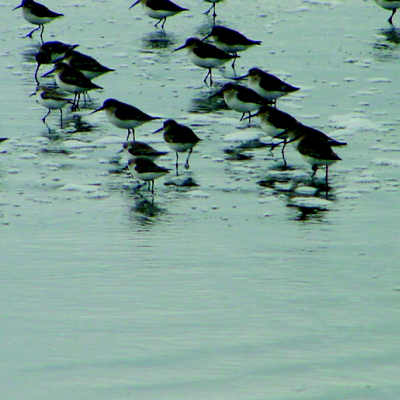
Mid-level consumers in Puget Sound
A variety of animals, including invertebrates, fish, mammals, and birds, consume the suspension-feeders, filter-feeders, grazers, and detritivores that serve as a link between the primary producers and detrital pathways and the upper levels of the food web.
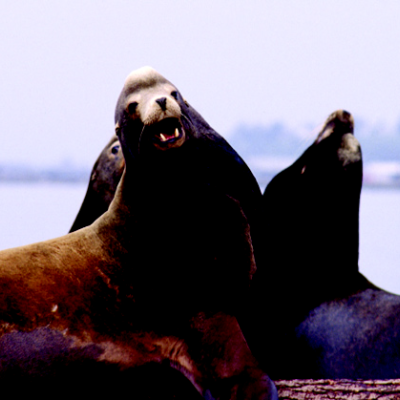
Top-level predators in Puget Sound
Fishes, birds, and mammals (including humans) serve as top-level carnivores in the Puget Sound ecosystem. With the exception of humans, these organisms have a diet that consists almost entirely of fish or other vertebrates.
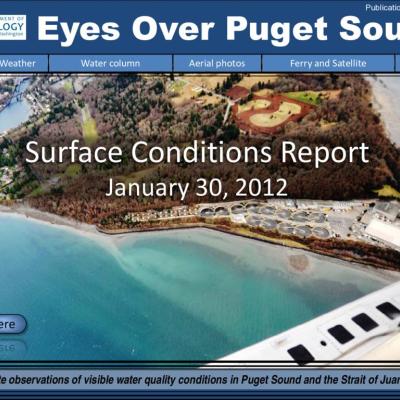
Eyes Over Puget Sound: Surface Conditions Report - January 30, 2012
Cloudy, slightly warmer-than-average air temperatures, and higher-than normal river flows. Freshwater plumes extend far into the waterways. Jellyfish from fall still persist in Budd Inlet. Chilly surface temperatures and pulses of high CDOM waters in Central Sound.
Eyes Over Puget Sound: Surface Conditions Report - December 5, 2011
Less rain and sun and colder temperatures. Conditions are challenging for crew and instruments. Large jelly fish patches in Inlets: Budd, Sinclair, and Case. Central Sound algae bloom continues as temperatures fall and oxygen is still decreasing at places. Freshwater water moves into Central Sound.Tides movie test
Vivamus tempus posuere metus at pulvinar. Praesent finibus est nec commodo faucibus. Mauris finibus congue magna, sit amet placerat lorem sagittis ut. Nunc at neque ac ante consectetur condimentum et quis metus.

Eyes Over Puget Sound: Surface Conditions Report - November 15, 2011
Good conditions to be in the field Less rain, average temperatures and not much sun. Temperatures continue to cool and blooms fade. Algae bloom still in northern Quartermaster Harbor. Jelly fish in Budd Inlet.