Freshwater habitat

Freshwater habitat in the Puget Sound region consists of rivers, marshes, streams, lakes and ponds that do not have any saltwater input. Many species depend on these freshwater resources, including salmon, salamanders, frogs, and beavers. The freshwater habitat is also intricately linked with land use and the terrestrial environment. Sediment runoff, logging, and flood control measures all influence the patterns of freshwater flow and habitat quality.

Source:

Sound Science: Synthesizing ecological and socioeconomic information about the Puget Sound ecosystem. Published 2007. Used by permission.

https://www.eopugetsound.org/articles/sound-science-2007

Overview

Freshwater habitat in the Puget Sound region consists of rivers, marshes, streams, lakes and ponds that do not have any saltwater input. Many species depend on these freshwater resources, including salmon, salamanders, frogs, and beavers.

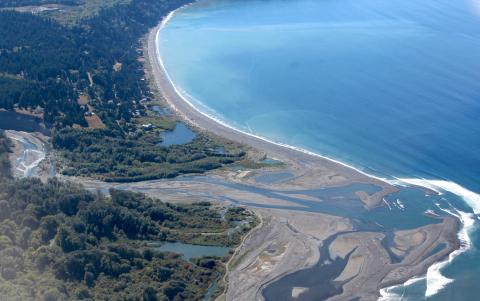
Freshwater habitat in King County. Photo by Jeff Rice. All rights reserved.

Related Articles

Puget Sound serves as the ultimate drainage destination for many rivers that carry fresh water from the Olympic and Cascade mountain ranges to the ocean. When this freshwater mixes with the ocean’s saltwater it creates biologically rich environments known as estuaries. These estuaries provide critical habitat for young salmon, migratory birds, and many other species including forage fish and marine mammals.

The rivers flowing into Puget Sound pass through 16 major deltas in seven sub-basins. Scientists estimate that 70–80% of Puget Sound’s historical delta habitats have been lost to human development since the early 1800s (Wildlife Management Institute, 2024)

Scientists at the Washington Department of Ecology along with many other researchers have spent years studying and debating the problem of low oxygen in Puget Sound. Now, many new developments — technical, scientific and legal — are reaching a critical stage and setting up a framework to make some major decisions. This is part four of a four-part series originally published in the Puget Sound Institute blog.
The Puget Sound region is known for its salmon-filled estuaries and coastal forests, but on the southern portion of its range, evergreens give way to small patches of rolling grasslands that are home to some of Washington's rarest species. One of those species, the northwestern pond turtle, was recently proposed for listing under the Endangered Species Act. A captive breeding program is preparing these turtles for the challenges of life in the wild.

Finding a replacement for 6PPD in tires is one major challenge; another is to prevent the highly toxic derivative 6PPD-Q from reaching salmon streams and killing fish.

Research that began in Puget Sound has revealed much about the cellular-level assault on vulnerable salmon and trout, yet the puzzle remains incomplete.

Longfellow Creek near West Seattle's industrial district still draws spawning salmon despite a century of city development and an onslaught of toxic chemicals. A current exhibit by photographer Tom Reese explores this often-overlooked gem of urban nature.