Disease

The risk of a deadly disease is ever-present among wild populations, domesticated animals and even humans. It is a powerful ecological force, scientists say, often underestimated and under-researched.

Overview

From orcas to starfish to humans, disease affects every living creature in the ecosystem. Scientists are increasingly alarmed by its potential to devastate already compromised populations of species in Puget Sound.  

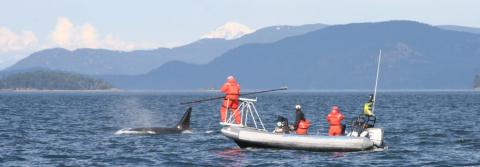
Mist from the breath of killer whales is collected at the end of a long pole then tested for dozens of different types of bacteria. Photo: Pete Schroeder

Related Articles

Participants in this year’s Earth Day activities won’t be rallying in large groups, participating in environmental festivals or coming together to clean up the Earth. On the 50th anniversary of Earth Day — April 21st — the environmental movement will be uniquely digital, with many people celebrating from their home computers. [This story is reprinted from the Puget Sound Institute-sponsored blog 'Our Water Ways.']

The Pathogens Prevention Reduction and Control agreement between the Environmental Protection Agency and the Washington State Department of Health focuses on the prevention and reduction of pathogen pollution in Puget Sound through the management of human and animal waste. The primary objectives of the agreement include restoring shellfish growing areas, avoiding shellfish closures, and protecting people from disease.

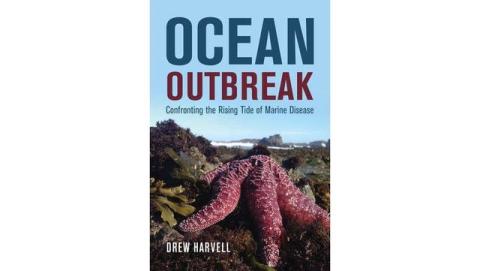
When Cornell University ecologist Drew Harvell wrote her book "Ocean Outbreak," she couldn't have known that 2020 would be the year of COVID-19. But even as people around the world grapple with the effects of that disease, scientists are keeping watch on potential disasters from viruses and other pathogens for species in the world's oceans. As the oceans warm due to climate change, scientists expect incidences of disease to increase in marine ecosystems including the Salish Sea. We asked Harvell about her new book and the need to address this rising challenge.

Researchers studying the killer whales that frequent Puget Sound are growing increasingly concerned that a dangerous virus or other disease-causing organism could spread through the population and hasten extinction of these critically endangered southern resident orcas.

As officials struggle to track and contain the outbreak of the novel coronavirus known as COVID-19, ecologists say widespread impacts from viruses and other pathogens are also a growing threat to the species of the Salish Sea ecosystem.

Scientists are still trying to understand what caused the deaths of thousands of rhinoceros auklets in the Salish Sea in 2016. Some studies point to disease as a central factor in that incident and potentially other large seabird die-offs along the coast. That is prompting a deeper look at what makes these birds sick, and how local populations are faring. We followed a group of researchers as they gave a health checkup to a breeding colony of rhinoceros auklets on Protection Island.