Disease

The risk of a deadly disease is ever-present among wild populations, domesticated animals and even humans. It is a powerful ecological force, scientists say, often underestimated and under-researched.

Overview

From orcas to starfish to humans, disease affects every living creature in the ecosystem. Scientists are increasingly alarmed by its potential to devastate already compromised populations of species in Puget Sound.  

Mist from the breath of killer whales is collected at the end of a long pole then tested for dozens of different types of bacteria. Photo: Pete Schroeder

Related Articles

A high-profile salmon escape led to a ban on salmon farms in Washington earlier this year. But just across the border, scientists say salmon farms in British Columbia expose migrating fish from Puget Sound to potential maladies like parasites, bacteria and dangerous viruses. They say simply getting rid of salmon farms in Washington does not put the potential impacts to rest. 

A report from the Washington State Department of Health outlines results from a series of projects funded by the U.S. Environmental Protection Agency's National Estuary Program in 2011. These projects addressed pathogen pollution in Puget Sound through the management of human and animal waste. Restoring shellfish growing areas, avoiding shellfish closures, and protecting people from disease served as the primary objectives.

New studies show that eelgrass wasting disease is more common in warmer waters, leading to concerns over the future effects of climate change on eelgrass populations in Puget Sound. We continue our series on science findings from the 2018 Salish Sea Ecosystem Conference.  

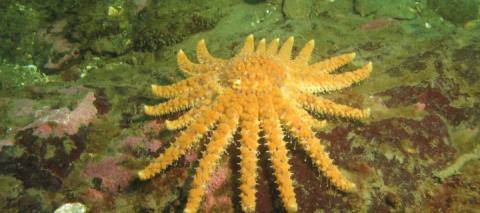
A study in the journal PLOS ONE uses volunteer diver surveys to assess the impacts of sea star wasting disease in the Salish Sea. Data shows that sunflower sea stars were especially hard hit and have all but disappeared from the region. 

Invasive species are considered a top threat to the balance of ecosystems worldwide. New discoveries of non-native green crabs in Puget Sound have highlighted that concern here at home, but invasive species can impact more than just the food web. Some introduced species can produce toxins that accumulate in shellfish or by directly infecting the human body.

The Puget Sound Ecosystem Monitoring Program released its fifth annual Marine Waters Overview this week. The report provides an assessment of marine conditions for the year 2015 and includes updates on water quality as well as status reports for select plankton, seabirds, fish and marine mammals.