Disease

The risk of a deadly disease is ever-present among wild populations, domesticated animals and even humans. It is a powerful ecological force, scientists say, often underestimated and under-researched.

Overview

From orcas to starfish to humans, disease affects every living creature in the ecosystem. Scientists are increasingly alarmed by its potential to devastate already compromised populations of species in Puget Sound.  

Mist from the breath of killer whales is collected at the end of a long pole then tested for dozens of different types of bacteria. Photo: Pete Schroeder

Related Articles

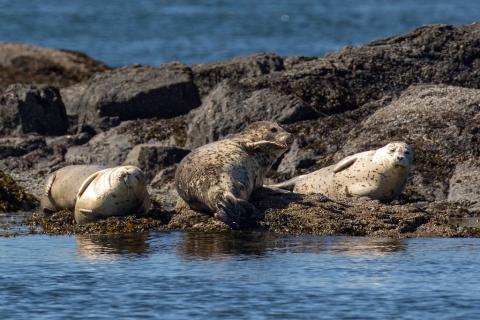
Harbor seals and harbor porpoises in the Salish Sea are showing a relatively high presence of antibiotic-resistant bacteria. A 2021 paper in the journal Oceans suggests that these findings may indicate a wider problem among other species in the region.

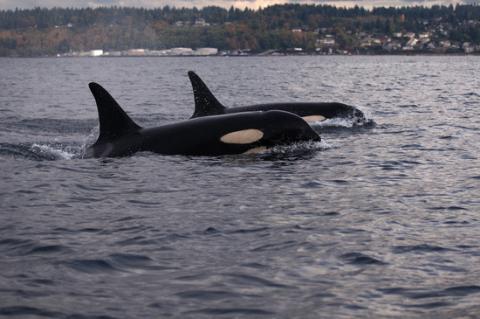
A 2020 study of pathology reports for 53 stranded killer whales in the northeastern Pacific and Hawaii showed that deaths related to human interaction were found in every age class. Vessel strikes accounted for the deaths of four of the nine endangered southern resident killer whales identified in the study. The findings were published Dec. 2 in the journal PLOS ONE.

Few environment problems in the Salish Sea have been studied more than the steep decline in salmon populations. But one potential contributor to these declines has gained less attention. Scientists say infectious disease may play a wider role than previously understood.

A 2020 paper published in Frontiers in Marine Science describes details of the fungal disease Mucormycosis which has caused the death of harbor porpoises, harbor seals and one orca in Puget Sound in recent years. The authors discuss the implications for local marine mammals, specifically the endangered southern resident killer whale population.

A 2020 article in the journal Frontiers in Marine Science looks at harbor seal stranding and necropsy findings in the San Juan Islands to assess age-related stranding trends and causes of mortality. The harbor seal (Phoca vitulina richardii) population in the Salish Sea has been at equilibrium since the mid-1990s. This stable population of marine mammals resides relatively close to shore near a large human population and offers a novel opportunity to evaluate whether disease acts in a density-dependent manner to limit population growth.

Welcome to the 2020 edition of Salish Sea Currents magazine. This is the fourth issue of the magazine, and the first one dedicated to a single theme. All of the stories in this report address the impact of climate change on the Salish Sea ecosystem.