Shoreline armoring

Puget Sound’s 2,500 miles of shoreline are among the most valuable and fragile of our natural resources. A dynamic area where land and marine ecosystems meet, the shoreline is constantly changing with the action of wind, waves, tides, and erosion. These same shaping forces are also the reason why people often build bulkheads or other structures to harden the shoreline. Indeed, more than 25% of the shoreline has been armored to protect public and private property, ports and marinas, roads and railways, and other uses.

Shoreline armoring, the practice of constructing bulkheads (also known as seawalls) and rock revetments, disrupts the natural process of erosion, which supplies much of the sand and gravel that forms and maintains our beaches. Erosion also creates habitat for herring, surf smelt, salmon, and many other species in Puget Sound. Over time, shoreline armoring may cause once sandy beaches to become rocky and sediment starved, making them inhospitable to many of our native species.

Source: https://pugetsoundestuary.wa.gov/shoreline-armoring/

Overview

New numbers show progress in the state’s efforts to remove shoreline armoring, but they don’t tell the whole story.

Before and after composite view at the site of a 2013 bulkhead-removal project on the shore of Penrose Point State Park in Pierce County. Composite: Kris Symer, PSI; original photos: Kristin Williamson, South Puget Sound Salmon Enhancement Group

Related Articles

The Elwha River has become famous as the site of the largest dam removal project in U.S. history. Several years ago, scientists began knocking down another barrier about a mile away from the river's delta. They removed a large seawall along the Salish Sea shoreline and discovered that sediment from the dam removal had huge benefits for their project.

Design innovations at the new seawall along Seattle's waterfront could inspire improvements for other shoreline structures around Puget Sound. They may even encourage broader regulatory changes that enhance habitat for migrating salmon and other species.


A 2019 report from Oregon State University examines how community members, including non-property owners, value shorelines in Puget Sound. The report emphasizes the impacts of shoreline armoring on survey respondents' sense of place in the region.

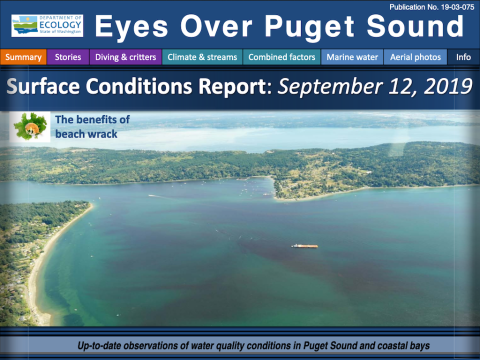
This year, air temperatures were warmer than in previous years, and this pattern is predicted to continue. Precipitation was low and is now improving, yet river flows remain low. By August, Puget Sound surface water temperatures were 0.6 °C warmer across all regions; this could have shifted the timing of optimal temperatures for some marine organisms. In September, blooms are limited to inlets. Jellyfish are abundant in Sinclair Inlet, and anchovies reside in Eld Inlet. Macroalgae are still plentiful. Learn about the benefits of beach wrack and a DNA barcoding project supported by Ecology.

A 2019 story map produced by the University of Washington Puget Sound Institute in collaboration with the Washington Department of Fish and Wildlife shows how shoreline armoring can often be replaced by softer, shore-friendly features.

The removal of shoreline armoring has become a priority for the state's Puget Sound recovery efforts. The Puget Sound Ecosystem Monitoring Program (PSEMP) is providing details on the effectiveness of armor-removal projects at 49 study sites.