Shoreline armoring

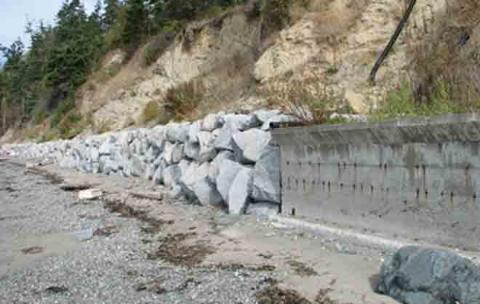
Puget Sound’s 2,500 miles of shoreline are among the most valuable and fragile of our natural resources. A dynamic area where land and marine ecosystems meet, the shoreline is constantly changing with the action of wind, waves, tides, and erosion. These same shaping forces are also the reason why people often build bulkheads or other structures to harden the shoreline. Indeed, more than 25% of the shoreline has been armored to protect public and private property, ports and marinas, roads and railways, and other uses.

Shoreline armoring, the practice of constructing bulkheads (also known as seawalls) and rock revetments, disrupts the natural process of erosion, which supplies much of the sand and gravel that forms and maintains our beaches. Erosion also creates habitat for herring, surf smelt, salmon, and many other species in Puget Sound. Over time, shoreline armoring may cause once sandy beaches to become rocky and sediment starved, making them inhospitable to many of our native species.

Source: https://pugetsoundestuary.wa.gov/shoreline-armoring/

Overview

New numbers show progress in the state’s efforts to remove shoreline armoring, but they don’t tell the whole story.

Before and after composite view at the site of a 2013 bulkhead-removal project on the shore of Penrose Point State Park in Pierce County. Composite: Kris Symer, PSI; original photos: Kristin Williamson, South Puget Sound Salmon Enhancement Group

Related Articles

The Puget Sound Ecosystem Monitoring Program (PSEMP) is an independent program established by state and federal statute to monitor environmental conditions in Puget Sound. 

A September 2016 report from the University of Washington Puget Sound Institute provides an overview of key products, results, and recommendations presented in three previous reports reviewing 50 projects from the first four years of the Puget Sound Marine and Nearshore Grant Program.

A 2016 article in the journal Conservation Letters makes policy recommendations to address shoreline armoring in the Salish Sea.

A September 2016 report from the University of Washington Puget Sound Institute summarizes and reviews 27 EPA-funded projects focusing on Puget Sound's marine and nearshore environments. The projects were conducted between 2011-2015 with support from the EPA's National Estuary Program.  The report is an analysis of findings on shoreline restoration and derelict net and fishing gear removal. 

New numbers show progress in the state’s efforts to remove shoreline armoring, but they don’t tell the whole story.
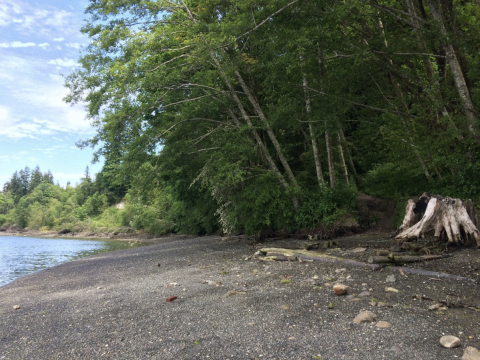
A new peer-reviewed study reports significant findings on the impacts of shoreline armoring in the Salish Sea.