Species of concern

Species of concern are native species, sub-species or ecologically significant units that warrant special attention to ensure their conservation. The number of species of concern within the Salish Sea is used by the US Environmental Protection Agency and Environment Canada as a transboundary ecosystem indicator (called "Marine Species at Risk"). 

Source

Zier, Jacqlynn and Gaydos, Joseph K. (2016). The growing number of species of concern in the Salish Sea suggests ecosystem decay is outpacing recovery. Proceedings of the 2016 Salish Sea Ecosystem Conference, April 13-15, 2016
Vancouver, BC. 17 pgs.

Overview

The number of species of concern in the Salish Sea is growing at an average annual rate of 2.6%, according to a report published in the proceedings of the 2016 Salish Sea Ecosystem Conference in Vancouver, B.C.

The Tufted Puffin is among 125 species of concern found in the Salish Sea. Photo: Peter Hodum.

Related Articles

This article was originally published by the Washington Department of Fish and Wildlife as part of its annual report Threatened and Endangered Wildlife in Washington.

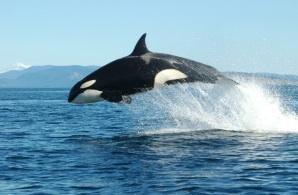
A paper presented at the European Wave and Tidal Energy Conference in Aalborg, Denmark describes the potential effects of a tidal turbine strike on an endangered Southern Resident Killer Whale in Puget Sound (SRKW). A tidal turbine is proposed for deployment in Admiralty Inlet in Island County. 

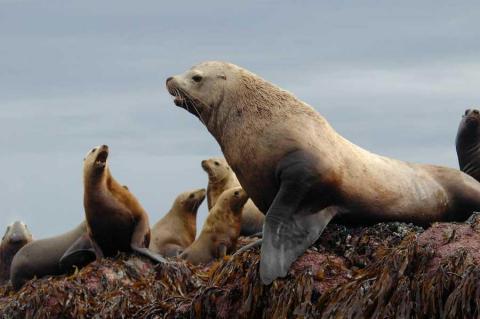
This page includes documents and links related to the status of Steller Sea Lion in Washington state and the Salish Sea region. 

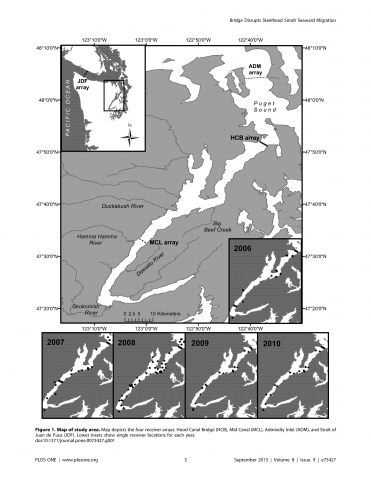
A new study provides strong evidence of substantial migration interference and increased mortality risk associated with the Hood Canal Bridge for aquatic animals, and may partially explain low early marine survival rates observed in Hood Canal steelhead populations.

The National Marine Fisheries Service has released a Draft Biological Report proposing designation of critical habitat for yelloweye rockfish, canary rockfish, and bocaccio in the Salish Sea. Download the full report and supporting data.

The U.S. Environmental Protection Agency Region 10 and the National Marine Fisheries Service Northwest Region have released a report describing results from a series of technical workgroups about the potential effects of polybrominated diphenyl ethers (PBDEs) on Puget Sound and Southern Resident killer whales.