Finding a replacement for 6PPD in tires is one major challenge; another is to prevent the highly toxic derivative 6PPD-Q from reaching salmon streams and killing fish.
Research that began in Puget Sound has revealed much about the cellular-level assault on vulnerable salmon and trout, yet the puzzle remains incomplete.
Longfellow Creek near West Seattle's industrial district still draws spawning salmon despite a century of city development and an onslaught of toxic chemicals. A current exhibit by photographer Tom Reese explores this often-overlooked gem of urban nature.
An estimated 80% of all the salmon in the North Pacific are pink salmon. Scientists say the extreme abundance of pinks could be causing a "trophic cascade" that is harming species across the food web.
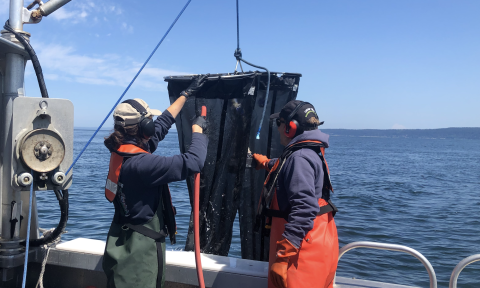
Zooplankton are critical to the marine food web, but until recently there have been few surveys of the zooplankton community in Puget Sound. Ongoing monitoring is now revealing a system full of complexity and surprises. The following article was commissioned by the Habitat Strategic Initiative Lead (HSIL), a cross-agency team co-led by the Washington Departments of Fish and Wildlife and Natural Resources.
Salmon restoration groups are learning how to work with beavers to create better salmon habitat. The process hinges on reducing human-beaver conflicts while taking a natural approach to ecosystem recovery. The beavers are happy to help.
A new report says further study may reveal why experts cannot find expected benefits to salmon populations, despite widespread use of wood in stream restorations.
Occasionally, our magazine includes reports and essays from guest writers on the subject of Puget Sound ecosystem recovery. Biologist and author Eric Wagner has this look at an ongoing harbor seal survey at the mouth of the Stillaguamish River. Wagner says the study hinges on a basic question: Who is eating the salmon?
Bull trout appear to be thriving in nearly every section of the Elwha River. Populations there have at least doubled in the years since dam removal, signaling good news for a species that has struggled throughout the West. We bring you part six of our series 'Returning home: The Elwha's genetic legacy.'
Restoration managers are hopeful that populations of coho, chum and pink salmon will rebound on the Elwha River as the fish take advantage of newly accessible habitat. Part five of our series 'Returning home' examines the importance of genetically distinct salmon runs.