Birds

Find content specifically related to birds of the Puget Sound and Salish Sea ecosystems. For checklists and descriptive accounts of individual species, visit our species library.

Species Lists

Additional resources

Birdweb

Overview

More than 70 bird species regularly utilize Puget Sound during some or all stages of their life histories, but only a portion of these are actively being investigated.

Brandt's cormorant (Phalacrocorax penicillatus). Photo by Finley and Bohlman, courtesy U.S. Fish and Wildlife Service

Related Articles

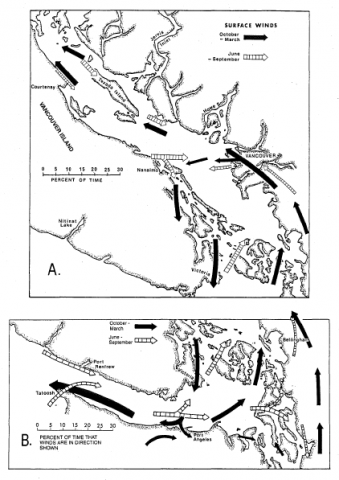
Proceedings of the BC/Washington Symposium on the Marine Environment, January 13 and 14, 1994 

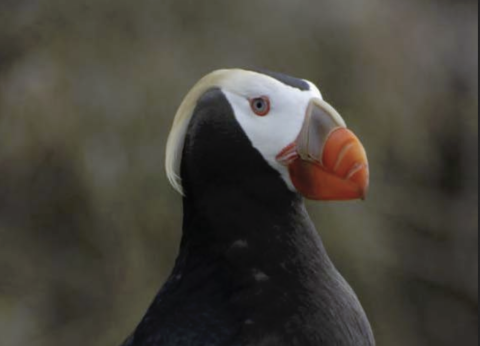
With its striking plumage and brilliant orange bill, the Tufted Puffin is an iconic seabird well known to native peoples, fishermen, and coastal communities throughout its range in the temperate and sub-arctic North Pacific. Though pelagic in winter, puffins gather on islands and headlands during spring and summer to breed and raise their young. They are members of the auk family, with stocky bodies adapted to “flying” underwater as they dive in pursuit of a wide range of fish and invertebrate prey. Nesting Tufted Puffins range up to 100 km from their breeding colonies to forage for their nestlings, and are famed for carrying 20 or more small fish at one time, neatly lined up and carried crosswise in their large, brightly colored bills.

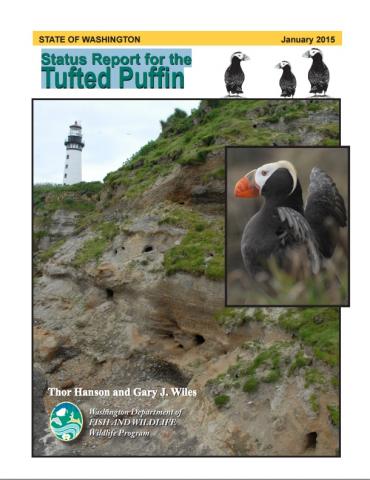
A 2015 report from the Washington Department of Fish and Wildlife reviews information relevant to the status of the tufted puffin in Washington and addresses factors affecting this status. 

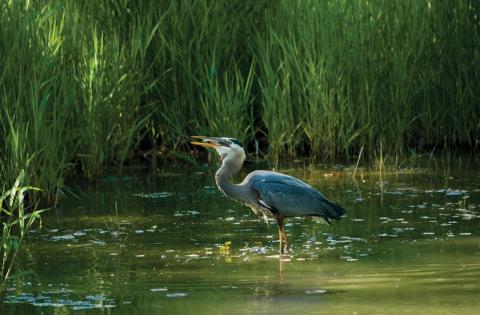
A 2015 paper in Oikos Journal examines the impacts of great blue heron predation on species diversity in eelgrass meadows in British Columbia. 

A 2015 paper in the journal The Condor: Ornithological Applications describes century-long trends in Glaucous-winged Gull populations in British Columbia.

A 2014 report by the North Cascadia Adaptation Partnership identifies climate change issues relevant to resource management in the North Cascades, and recommends solutions that will facilitate the transition of the diverse ecosystems of this region into a warmer climate.