

In Seattle’s Longfellow Creek, coho salmon are still dying in large numbers before they get a chance to spawn, according to observers. But now a long-term solution to the problem may be inching closer.
Just over five years ago, scientists identified a deadly chemical associated with automobile tires that has been blamed on the untimely deaths of thousands of coho and other vulnerable salmonids. Such losses have been observed not only in Longfellow Creek but in urban streams throughout the Salish Sea. Based on known and suspected toxic levels, salmon may be dying in populated areas from California to Alaska, while numerous trout and char species may be experiencing problems in waterways throughout the world.

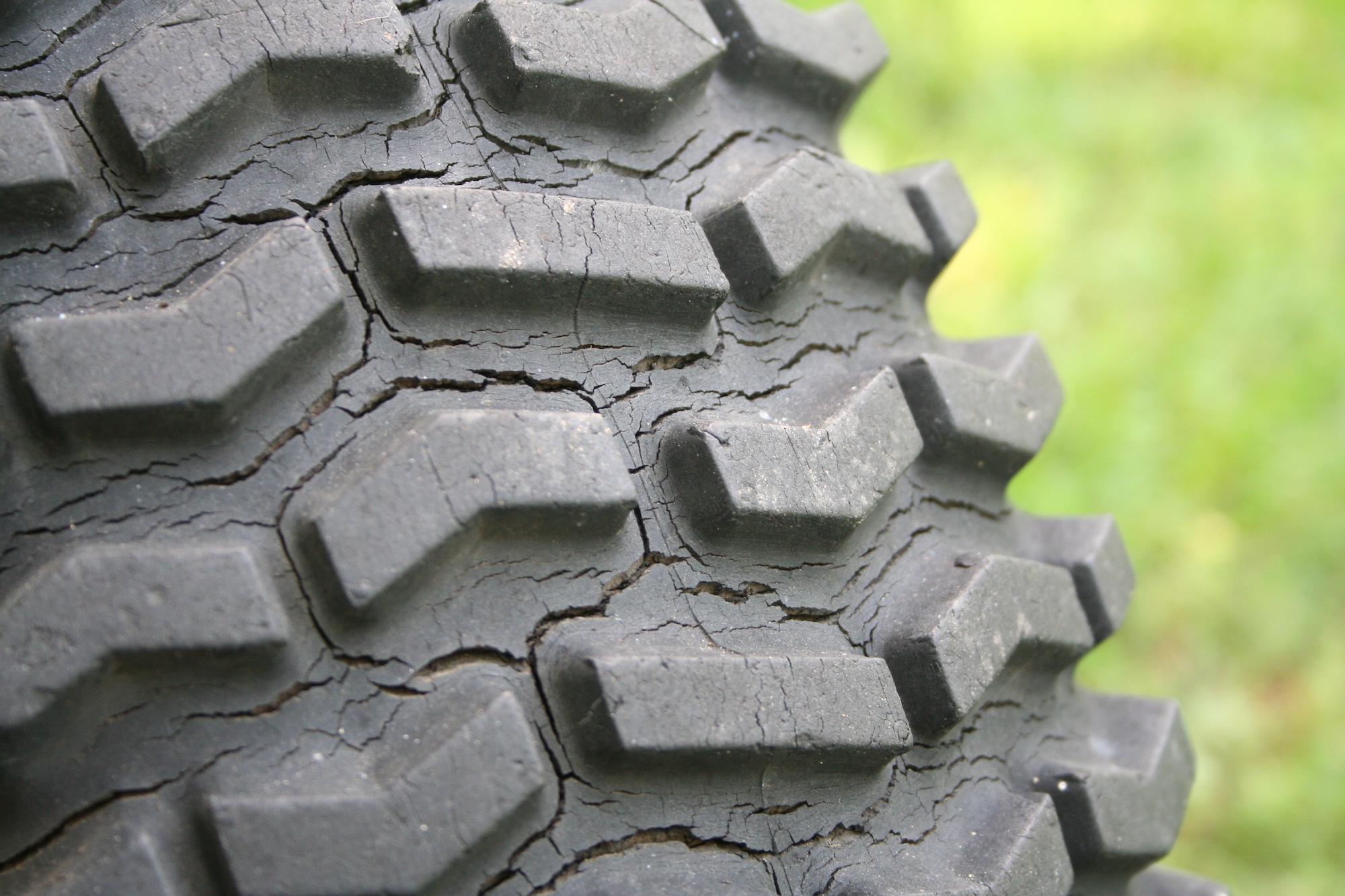
Researchers have been exploring potential alternatives to the tire chemical, known as 6PPD, which blocks destructive ozone before it can attack and destroy the rubber in tires. In the process, 6PPD transforms into 6PPD-quinone (6PPD-Q), one of the most toxic agents known to science.
For nearly 40 years, observers have been watching returning coho become disoriented, keel over and die. Over time, they narrowed the list of suspects — from something in stormwater to automobiles, to tires and finally to a single specific chemical. The effects of 6PPD-Q still reverberate through the aquatic food web, where losses to coho and other populations are immeasurable, experts say.
Although the chemistry of 6PPD has been well known to tire engineers, nobody ever took a serious look at the transformation product, 6PPD-Q, until focused studies examined what was killing coho in Puget Sound. Using advanced techniques, University of Washington Tacoma researchers with our affiliate the Center for Urban Waters — along with scientists from Washington State University and the National Oceanic and Atmospheric Administration — were able to isolate 6PPD-Q from more than 2,000 compounds found in stormwater.
Now, getting 6PPD out of tires and eventually out of streams has become an all-out goal of numerous tire manufactures, government and nongovernment scientists, as well as agencies responsible for the health of our ecosystems. Outside pressure also is increasing from individuals and organizations concerned about the future of Puget Sound and other waterways.
Alternatives under study
At least a dozen companies and groups associated with the tire industry are working on ways to remove 6PPD from tires. But tire chemistry is complicated, involving 10 to 15 different constituents working together. No simple solutions have emerged.
Possible replacements under review include chemicals closely related to 6PPD along with newly invented compounds. Some ideas would necessitate significant changes to the rubber-making process. Other ideas are focused on innovative tire designs, a few made with little or no rubber.
Despite the intense effort, finding a replacement for 6PPD is widely recognized as a monumental challenge. That’s because the chemical is exceedingly good at its job — which is to extend the life of tires. For the better part of a century, chemists have been perfecting ways to keep tires from falling apart. Today’s designs cover a wide range of tires with 6PPD as a universal constituent, making tires last longer while increasing safety for drivers and passengers.
“The safety, performance and sustainability” of tires remain the “uncompromising priority” of the U.S. Tire Manufacturer’s Association, said Stephanie Schlea, the organization’s vice president for environment, health, safety and sustainability.
USTMA is leading a consortium of 36 tire-related companies searching for alternatives to 6PPD. As of last August, the consortium was studying 24 potential alternatives, but USTMA officials say that number may have changed as studies advance.
“The chemicals present in tires today all perform specific and integrated functions, and tire composition cannot responsibly be modified without great care, including extensive and rigorous testing,” said Schlea in a letter (pdf) to the Washington Department of Ecology. “Any alternative identified must continue to ensure compliance with Federal Motor Vehicle Safety Standards and other consumer, vehicle and tire manufacturer requirements.”
Rubber formulations vary depending on the type and weight of a vehicle along with different traction specifications for weather and road conditions. While many rubber additives are used in various parts of a tire, 6PPD has become universally accepted as the leading chemical for rubber preservation.
Players in the race for 6PPD alternative
 | With a worldwide market valuation somewhere around $1 billion a year for the single chemical 6PPD, tire companies and their chemical suppliers are working overtime to find a safe and effective replacement for the tire additive. Learn more about some of the players in the race. |
6PPD in action
Here’s how it works: Natural rubber is highly vulnerable to an attack by ground-level ozone, often produced from pollution (including automobile emissions) in the presence of sunlight. The 6PPD on a tire’s surface reacts rapidly with the ozone before it can attack the rubber, which would otherwise crack and eventually break apart.
As 6PPD reacts with ozone, the chemical is used up and must be replaced by 6PPD that migrates to the tire’s surface from the underlying rubber. If 6PPD migrates too slowly, it won’t be there in time to protect the rubber from ozone. If it migrates too quickly, it can dissipate and be used up prematurely. Some experts call 6PPD the “Goldilocks” of tire preservatives for its optimal rate of migration and rapid reaction with ozone.
Any replacement compound must maintain a defensive posture at the surface of the tire, but that’s not the only benefit derived from 6PPD. For example, heat and mechanical stress can create highly reactive free radicals within the rubber polymer chains, which provide structure to the tire. The presence of oxygen encourages chain reactions, which break apart the rubber at the molecular level. The presence of 6PPD quells the chain reactions by “scavenging” free radicals. These antioxidant properties — separate from ozone blockage — mean that 6PPD does double duty in maintaining a tire’s integrity.
In the sidewalls of tires, 6PPD also helps to maintain a flexibility essential to a tire’s performance. Engineers also tout 6PPD’s ability to mix easily into natural rubber and man-made polymers that make up the bulk of a tire. The chemical also performs well during a heating process, called vulcanization, which results in chemical bonding with sulfur, adding strength yet flexibility to the final product.
The multiple attributes of 6PPD make it difficult to find a single chemical to replace it, said Erick Sharp, CEO and founder of ACE Laboratories in Northeast Ohio, a firm involved in the development and testing of potential alternatives to 6PPD.
“We have tried a lot of things, and I don’t think you are going to have a one-for-one replacement for 6PPD,” Sharp said. “The final solution is likely to be a multi-faceted system replacement.”
For example, if a replacement chemical inhibits the vulcanization process — unlike 6PPD — then another chemical might be added to maintain the needed “cure” rate for a specific tire, Sharp said. Virtually all tire manufacturing involves chemicals, called accelerants, that can help establish a cure rate conducive to the desired chemical bonding among raw materials. If the cure rate is altered significantly by new chemicals, then a manufacturing plant might need to be restructured for additional processing, he said.
Of course, any new rubber formulations must be tested for toxicity. An initial test in Sharp’s lab involves exposing new rubber candidates to high levels of ozone and identifying the transformation products released into water. Toxicity, based on published data, is a major factor in deciding whether further study of a particular material is warranted.
Although the challenge is considerable, one or more viable alternatives to 6PPD may not be far away, Sharp said. “With what we have seen, I think all the tools are in the toolbox to get there.”
Urgency for fish populations
Longfellow Creek, which drains a 2,685-acre area in West Seattle, has become Exhibit A for the killing effects of 6PPD-Q on coho salmon. The once-natural stream runs through the heart of the immense Duwamish Industrial Area. Around 1939, it is believed that a localized coho population went extinct, probably because of pollution and fish-passage problems — including a 3,300-foot culvert that carries the stream under parking lots and industrial facilities before releasing the water into the West Duwamish Waterway.
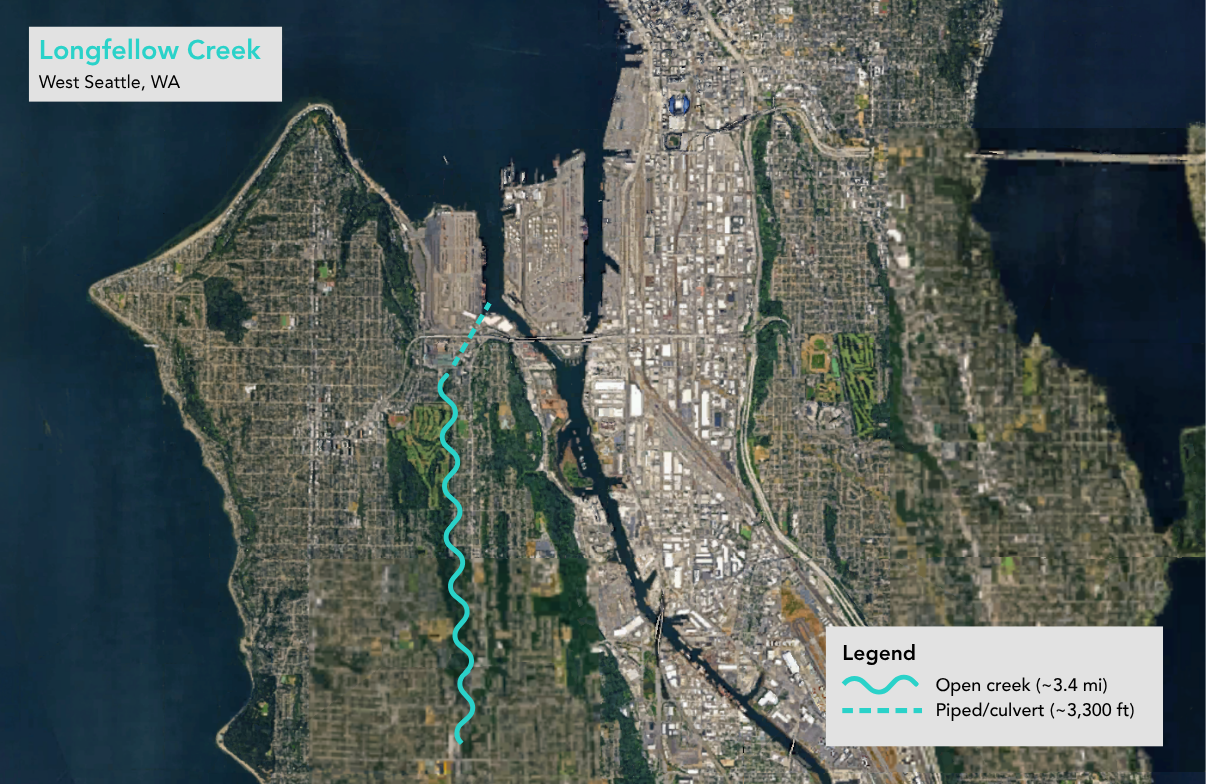
During the 1990s, community groups and volunteers began to restore natural streamside vegetation in an area just upstream of where the stream dives into the long culvert. Around the same time, rocks were added just below that culvert to raise the downstream channel, allowing fish an easier entryway to the culvert when they return from the ocean. In addition, “skylights” were installed by cutting into the top of the culvert to increase light and encourage salmon to swim through the otherwise dark and uninviting pipe.
By the end of the 1990s, coho were beginning to return to Longfellow Creek, a likely result of stream and fish-passage improvements. The first to arrive apparently were strays from hatchery operations. For the first time in years, fair numbers of coho were seen in the vegetated section of Longfellow Creek upstream of the long culvert, as well as areas farther upstream.
But all the work on stream restoration became a somewhat hollow victory, because of the unexpected and gruesome deaths among the returning coho. Many fish that survived the long and tortuous trip from the ocean were dying on the doorstep of their home stream before they could complete their life cycle with reproduction for a new generation.
In some years, the rate of so-called pre-spawn mortality for coho in Longfellow Creek has been estimated as high as 90 percent. Last fall, among the 130 coho that were found dead in the creek, 55 percent had died before spawning, according to observers with Puget Soundkeeper, an environmental group that has been monitoring coho returns since 2015. Another 20 percent were believed to have spawned, but spawning success or failure could not be determined for 24 percent of the dead fish, according to reports.
Another 366 coho were spotted alive in the stream, but that includes an unknown number of fish that may have been counted more than once.
Scientific investigations have found that the highest concentrations of 6PPD-Q can be measured in streams whose watersheds contain a multitude of heavily traveled roads. In Puget Sound, such areas are located in Seattle, Tacoma and Everett, as well as heavily developed areas throughout the region, according to computer models. Concentrations of 6PPD-Q have been found to spike during and shortly after rainstorms, when accumulated toxics are washed off the roads.
Sean Dixon, executive director of Puget Soundkeeper, said he appreciates the research being done to find an alternative to 6PPD, but the urgency doesn’t seem to match the hazard. People need to understand that this tire chemical is one of the most toxic chemicals ever produced by humans, he said, arguing that it has been getting into waters throughout the world and causing serious ecological effects — some known but some yet to be revealed..
“From the perspective of the fish, a ban on 6PPD needs to be in place now,” Dixon said. “You can have the world’s best rainbow trout stream, but if a county road or bridge is nearby, you will have tire particles going down into the stream, and it won’t be the same.”
Dixon noted that it has been more than five years since 6PPD-Q was discovered and 40 years since dying fish were first reported in urban streams. Still, representatives for the tire industry say a solution could be years in the future — and that’s hard to accept, he added.
“It blows my mind in this day and age that we can’t move faster when the whole world recognizes the problem,” Dixon said. “I think we could (move faster) if society decided that we need to.”
Unfortunately, he continued, 6PPD is just one of many problems that salmon encounter in Puget Sound today. Others are warm waters caused by loss of streamside vegetation, fish-passage problems caused by poor road building, and a variety of dangerous chemicals from multiple human sources.
Dixon pointed out that “green infrastructure,” in which natural materials are used to filter stormwater, have been effective at reducing pollution, including 6PPD-Q. Because of the cost of retrofitting stormwater systems in urban areas, many jurisdictions have been slow to make renovations, he noted.
“There are solutions,” Dixon said. “We just need to align our management of the environment with the solutions that we know exist.”
Beyond coho salmon
The search for alternative chemicals that could replace 6PPD is closely connected to toxicological studies examining the chemical’s effects on a multitude of species, including humans. Studies have found that coho salmon are extremely sensitive to 6PPD-Q, succumbing to death at lower concentrations than any other species examined so far — although data remains sparse for many animals.
Recent studies have shown that young coho, as well as older fish, are highly susceptible to 6PPD-Q. If exposed, they can be killed in urban streams during their early rapid-growth period, when coho typically spend their first year of life in freshwater.
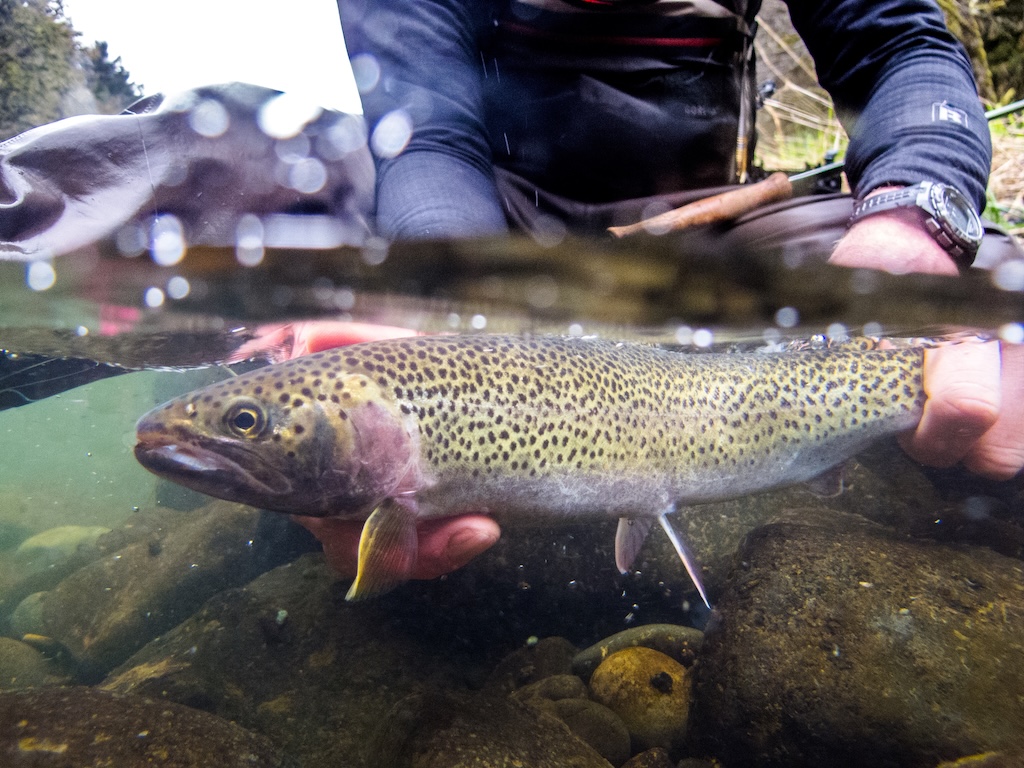
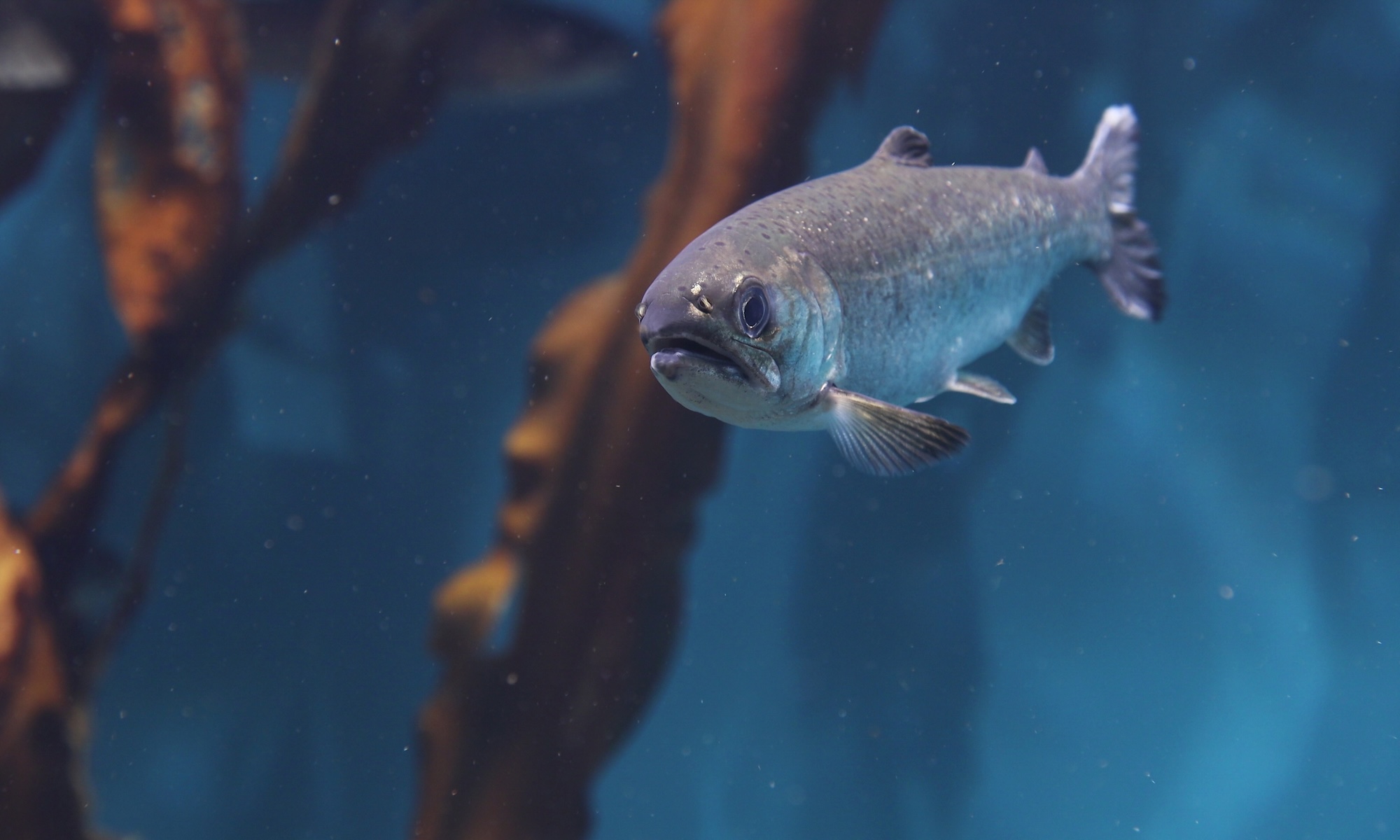
Dying coho alerted experts from the beginning about a serious pollution problem in urban streams, and coho remain the most sensitive to 6PPD-Q of any species studied. But new information is continually coming forth. Last year, researchers with the U.S. Geological Survey in Seattle reported that coastal cutthroat trout are nearly as susceptible to the chemical as coho. Other studies have shown that lake trout, brook trout and whitespotted char are somewhat less sensitive. Rainbow trout come next on the sensitivity scale, while Chinook, sockeye and pink salmon are far less sensitive, being able to survive under extreme environmental conditions. Chum salmon seem to be the least susceptible of all.
These reports of sensitivity are based on experiments that measure the minimum concentration of 6PPD-Q that can kill half the fish in a sample when exposed for a specified amount of time. Researchers are just beginning to understand what may happen when fish are exposed at lower, sublethal concentrations. For example, ongoing studies have shown that the chemical can impair muscle function and reduce metabolism, with reports of diminished swimming ability under some conditions.
How 6PPDQ affects fish at the cellular level is not yet well understood, but several studies have revealed that it can cause leaky blood vessels, notably in the brain and gills. Metabolic disruption and immune system activation have been found in some experiments, with potential but uncertain links to vascular dysfunction. Interestingly, some studies suggest that differences in 6PPD-Q sensitivity among species may be related to how quickly different fish are able to detoxify the chemical in their livers.
As for effects on humans, 6PPD-Q has been found in multiple human tissues, and studies on laboratory animals suggest that the chemical may be toxic to people, according to the Washington State Department of Health. More research is needed to determine what human health conditions may be caused by 6PPD-Q and at what levels. Researchers are investigating metabolic stress, reproductive deficiency, developmental impairment, DNA damage and potential effects on various organs.
On a broader scale, 6PPD-Q may disrupt entire ecosystems by affecting organisms at the base of the food web. Limited research so far shows that growth, reproduction and metabolism may be impaired in freshwater invertebrates — including microalgae, water fleas and snails.
First look at alternatives
A first rapid assessment of alternatives to 6PPD was published by the Washington Department of Ecology in November 2021, less than a year after the discovery that 6PPD-Q was killing coho. But the report considered only the toxicity of 6PPD compared to 10 early replacement candidates. It did not evaluate potential transformation products that could result from real-life conditions, such as exposure to ozone.
Six of the chemicals mentioned in the report are closely related to 6PPD, and some could potentially produce quinone forms, the authors acknowledge. If so, those transformation products might be more toxic than the alternatives themselves — such as when ozone transforms 6PPD into the far-more-toxic 6PPD-quinone. With little or no information available about potential transformation products and their effects on coho salmon, the report concluded that more research was needed.
The other four chemicals mentioned in the report appear to be less hazardous than 6PPD-Q, but limited information is available on their transformation products. Three of the four may not sufficiently protect rubber from ozone attack, according to chemical profiles, reinforcing the idea that a simple replacement may not be feasible.
By July 2024, a consortium of tire companies had finalized what is called a “Stage 1” analysis required under California’s Safer Consumer Products law. The analysis selected seven possible alternatives for further study from an original list of 60 candidates given consideration. A year later, during an annual update, the consortium reported in writing that 24 unidentified chemicals were still being reviewed.
Of the seven in the Stage 1 report, four are close relatives of 6PPD. All of those showed promising potential for ozone protection. While their quinone forms had various toxicities, they all appeared to be less hazardous than 6PPD-Q, according to the report. Whether their toxicities are within an acceptable range is a question yet to be answered.
The remaining three are octyl gallate, a food preservative with antioxidant properties; Irganox, an antioxidant compound often used in plastics; and specialized graphene, a substance in which carbon atoms interlock together to form super-thin sheets. Graphene proponents say the material can increase the strength of rubber and possibly reduce, but not eliminate, the need for anti-degradant chemicals. All these are undergoing further review. (See alternatives analysis reports.)
Final recommendations from the consortium are due on Aug. 19 under California regulations. (Tires came under limited state authority in October 2023, when the state’s Department of Toxic Substances Control declared tires with 6PPD as a “priority product.”) Officials with the U.S Tire Manufacturing Association have expressed confidence that one or more viable alternatives to 6PPD will be reported as part of the upcoming “Stage 2” report.
Transformation products resulting from the ozonation of chemicals in the PPD family remain a concern for those seeking alternatives to 6PPD. But the risks became a little clearer recently in a study (pdf) conducted by the U.S. Geological Survey. Instead of using live fish, the study measured the effects of various transformation products on immortalized cell lines from coho salmon, Chinook salmon and rainbow trout.
Increasingly used in toxics studies, immortalized cell lines result from normal cells that are altered in a lab to keep them dividing indefinitely. These laboratory cells respond to chemical exposure like normal cells in many ways. The advantage is that results can be achieved more quickly and consistently without exposing live animals.
Justin Greer, a USGS toxicologist at the Western Fisheries Research Center in Seattle, said studies of tire additives were turned upside down by the discovery of 6PPD-quinone, which is not a tire additive at all. Rather the chemical is the result of the reaction of 6PPD with ozone, a chemical that can destroy a tire under normal driving conditions.
To find an alternative to 6PPD, chemists must understand not only the toxicity of the tire additive but also the toxicity of the transformation products generated through chemical reactions on the road and in the environment, Greer said.
“Specifically,” he added, “tire chemicals are meant to react under normal conditions — so we know that the transformation products are important.”
The USGS study examined the effect of ozonation products — include quinone forms — of five compounds closely related to 6PPD, including some still under consideration as potential replacements for the tire additive.
As expected, 6PPD-Q was highly toxic to coho salmon, as revealed by a disruption in metabolic activity in the laboratory-grown cells. Two related chemicals, 7PPD-Q and IPPD-Q showed metabolic declines in coho cells but at higher concentrations than for 6PPD-Q. Metabolic activity for the Chinook salmon and rainbow trout cells were not significantly affected by the quinone forms of either 7PPD or IPPD.
Expanding the experiment, the researchers looked at the full mixture of transformation products, many unidentified, following ozone treatment of the base PPD chemicals.
“We observed that ozonated mixtures of 6PPD, 7PPD and IPPD were typically more toxic that the purified quinones,” states a report on the project. Those findings suggest that the PPD-quinones are not the only transformation products harmful to fish; others not only exist but can add to the toxicity of the quinones alone.
For the Chinook cell line, no effects were seen when exposed to pure 7PPD-quinone, a single transformation product. Yet multiple transformation products resulting from ozonation of 7PPD produced a measurable reduction in metabolic activity. Likewise, for rainbow trout, the ozonated mixtures produced greater toxic effects than pure quinones not only for 7PPD but also 6PPD and IPPD.
While 6PPD may have a variety of transformation products, it appears that 6PPD-Q, the quinone form, is by far the most potent to coho salmon. The effects of other chemicals formed during ozonation are not even comparable.
For three other relatives of 6PPD, namely DPPD, 77PD and CCPD, no effects were seen in the lab-grown cells of coho, chinook or rainbow trout when exposed to their quinone forms. The researchers note, however, that immortalized coho cells are less sensitive than living coho cells, so the question of sensitivity among all the test cells warrants further examination.
While these experiments clearly demonstrate the importance of studying the full range of transformation products, this study did not try to identify the actual chemicals in the mix. Consequently, the authors could not entirely rule out the possibility that unknown contaminants had influenced the results.
Up Next: State and federal governments address 6PPD problem
 | Formal legal processes are underway in Washington and California to seek alternatives to the highly toxic chemical in tires. Read the next article in the series. |
View the full series: Seeking alternatives to 6PPD