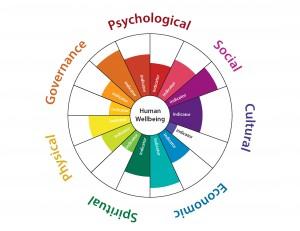
Human quality of life is sometimes described using the term human wellbeing. Human wellbeing (HWB) is multi-faceted and can be enhanced, or negatively affected, by our daily experiences, such as the quality of our work life and personal relationships, our engagement in physical activity and adherence to a healthy diet, and opportunities to participate in cultural activities. Many facets of wellbeing are directly related to the health of the natural environment such as the ability to release stress in a peaceful forest or a thriving local economy derived from sustainable shellfish harvesting. The status of our wellbeing can influence the way we make decisions that affect the environment and the status of those resources, in turn, can affect our wellbeing. In many cases, this perspective is left out of ecosystem recovery. Because of a growing understanding of the relationship between HWB and the status of natural resources, planning for and monitoring human wellbeing as a component of ecosystem recovery is a growing trend. Within the Puget Sound specifically, the Puget Sound Partnership has adopted a series of quality of life indicators.
Sources:
Developing Human Wellbeing Indicators for the Hood Canal Watershed, a report by Kelly Biedenweg, Ph.D., Stanford University and Puget Sound Institute and Adi Hanein, UW School of Marine and Environmental Affairs (2013).