Marine habitat

The Marine System encompasses all coastal areas not appreciably diluted by freshwater (surface salinities seldom falling below 30 ppt), including open coastal areas, straits, and euhaline inland waters.  It can extend from the outer edge of the continental shelf to (1) the landward limit of tidal inundation or wave splash or (2) the seaward limit of the Estuarine System.

Source:

Dethier, M.N. 1990. A marine and estuarine habitat classification system for Washington State. Natural Heritage Program, WA DNR, Olympia, WA. 60 pp.

Overview

Each year, the Puget Sound Ecosystem Monitoring Program releases the annual Puget Sound Marine Waters Overview report. The latest report combines a wealth of data from comprehensive monitoring programs and provides a concise summary of what was happening in Puget Sound’s marine waters during 2022. The report represents the collective effort of 84 contributors from federal, tribal, state, and local agencies, academia, nonprofits, and private and volunteer groups.

Image of a sailboat on the water at sunset.Text overlay reads: Puget Sound Marind Waters 2022 Overview.

Related Articles

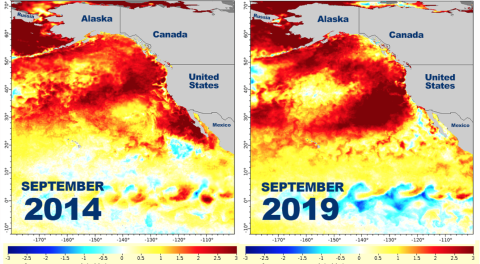
It’s no secret that salmon and other Northwest fish populations are expected to shrink as a result of a warming Pacific Ocean. But a new study suggests that the resulting decline in commercial fishing by 2050 could be twice as great as previously estimated by climate scientists.

After a wet January, precipitation has been low and air temperatures have been cooler.  As a result, rivers gages are lower than expected, a pattern that has continued since last year. In March we approached the coldest water temperatures of the year. Herring are spawning in Port Madison. Although these cool temperatures are good for herring, temperatures are close to the survival limits for anchovies. If you can handle these temperatures, now is a good time to go diving to benefit of good underwater visibility, just avoid windy days near wave-exposed beaches. If you are lucky, you might see the kelp humpback shrimp, a master of camouflage.

Scientists are using computer models to address complex issues in the Salish Sea like the rise of harmful algal blooms and the movement of toxic PCBs. LiveOcean, Atlantis and the Salish Sea Model are three systems that are changing the game for ecologists and other researchers.

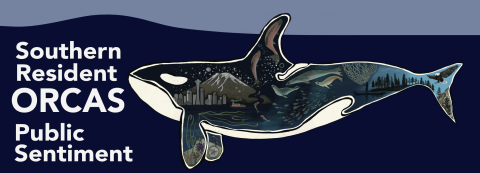
Social scientists at Oregon State University have been analyzing a trove of more than 17,000 public comments sent to the Washington state governor's southern resident orca recovery task force. The researchers have added the comments to a keyword database to look at public emotions and perceptions around the issue of orca declines.

When Cornell University ecologist Drew Harvell wrote her book "Ocean Outbreak," she couldn't have known that 2020 would be the year of COVID-19. But even as people around the world grapple with the effects of that disease, scientists are keeping watch on potential disasters from viruses and other pathogens for species in the world's oceans. As the oceans warm due to climate change, scientists expect incidences of disease to increase in marine ecosystems including the Salish Sea. We asked Harvell about her new book and the need to address this rising challenge.

Researchers studying the killer whales that frequent Puget Sound are growing increasingly concerned that a dangerous virus or other disease-causing organism could spread through the population and hasten extinction of these critically endangered southern resident orcas.