Marine habitat

The Marine System encompasses all coastal areas not appreciably diluted by freshwater (surface salinities seldom falling below 30 ppt), including open coastal areas, straits, and euhaline inland waters.  It can extend from the outer edge of the continental shelf to (1) the landward limit of tidal inundation or wave splash or (2) the seaward limit of the Estuarine System.

Source:

Dethier, M.N. 1990. A marine and estuarine habitat classification system for Washington State. Natural Heritage Program, WA DNR, Olympia, WA. 60 pp.

Overview

Each year, the Puget Sound Ecosystem Monitoring Program releases the annual Puget Sound Marine Waters Overview report. The latest report combines a wealth of data from comprehensive monitoring programs and provides a concise summary of what was happening in Puget Sound’s marine waters during 2022. The report represents the collective effort of 84 contributors from federal, tribal, state, and local agencies, academia, nonprofits, and private and volunteer groups.

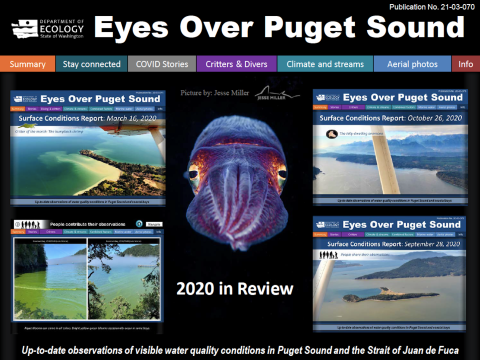
Image of a sailboat on the water at sunset.Text overlay reads: Puget Sound Marind Waters 2022 Overview.

Related Articles

The Washington State Department of Ecology has prepared a summary review of its Eyes Over Puget Sound surface condition reports from 2020.

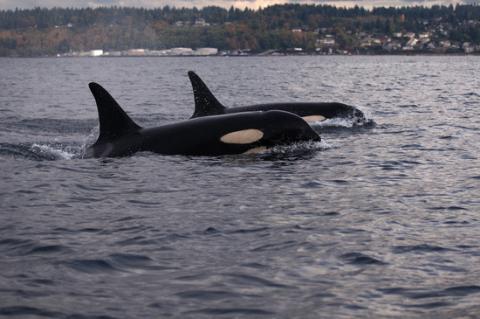
A 2020 study of pathology reports for 53 stranded killer whales in the northeastern Pacific and Hawaii showed that deaths related to human interaction were found in every age class. Vessel strikes accounted for the deaths of four of the nine endangered southern resident killer whales identified in the study. The findings were published Dec. 2 in the journal PLOS ONE.

A new report from the Puget Sound Ecosystem Monitoring Program details the effects of a changing climate on Puget Sound in 2019, and documents how these changes moved through the ecosystem to affect marine life and seafood consumers.

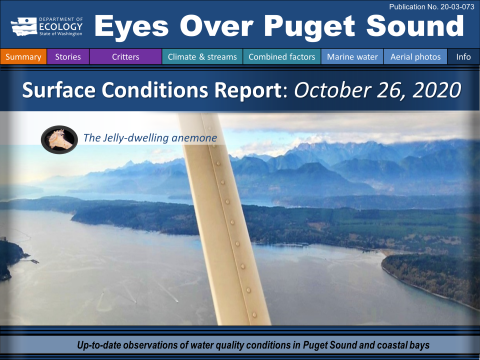
After a relatively warm summer and fall, and La Niña forming in the tropics, stream flows in the Puget Sound region are now relatively normal. Summer in Puget Sound produced lots of algal and organic material in the water and on beaches, which by October have disappeared. Kelp beds look strong in northern Puget Sound and the Straits; and the harvest of the annual chum salmon run is in full swing in Hood Canal. Jellyfish aggregations are visible in Budd and Sinclair Inlets — and some of the jellyfish might conceal a beast of another kind within. Oil sheens on the water are currently numerous.

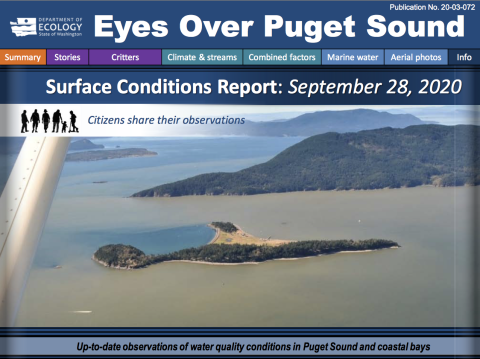
A warm and dry summer ended with a smoky September due to massive wildfires that were followed by strong rain. As a consequence, muddy river plumes in Puget Sound are very visible, especially near the Nooksack River. During summer, many wonderful citizen contributions documented the large formation of organic material in Central Sound and helped us cover the gap in EOPS flight from April-September. By September when we started flying again, a few bays still had red-brown blooms. Nevertheless, schools of fish are abundant, and jellyfish are sparse, which is good news. Meet our new ocean acidification experts.

Years after the appearance of the devastating marine heat wave known as "the blob," scientists are still working to understand how it has affected the Salish Sea. In some ways, they say, it is like the blob never left.