Monitoring

Monitoring encompasses the routine measurement of ecosystem indicators to assess the status and trends of ecosystem structure and function. Broadly, there are two goals for monitoring in the Puget Sound ecosystem. The first goal is to monitor status and trends of the ecosystem. This may take the form of snapshots of specific regions, or, more usefully, status monitoring tracks variability in carefully selected indicators over time. Status monitoring is fundamentally concerned with documenting spatial and temporal variability in ecosystem components and thus ideally relies on consistent long-term monitoring in a network of sites. A second aim of monitoring is to evaluate the effectiveness of management strategies. Effectiveness monitoring thus aims to detect changes in ecosystem status that are caused by specific management actions.

Sources:

Puget Sound Science Review

Additional resources:

Puget Sound Ecosystem Monitoring Program

Eyes Over Puget Sound

Overview

The Puget Sound Ecosystem Monitoring Program (PSEMP) is an independent program established by state and federal statute to monitor environmental conditions in Puget Sound. 

PSEMP logo

Related Articles

A 2015 paper in the journal The Condor: Ornithological Applications describes century-long trends in Glaucous-winged Gull populations in British Columbia.

A 2014 report by the North Cascadia Adaptation Partnership identifies climate change issues relevant to resource management in the North Cascades, and recommends solutions that will facilitate the transition of the diverse ecosystems of this region into a warmer climate.

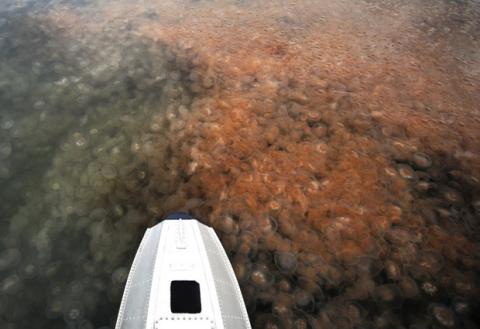
Warm air and water temperatures and offshore winds have persisted since fall. Numerous and sizable jelly fish patches are still present in southern inlets of Puget Sound. Coastal waters were colored in shades of gray to brown by sediment and humic substances. Phytoplankton blooms were restricted to the surf zone. We were treated to artful views of meandering sloughs and gullies on exposed mud flats during low tide in Willapa Bay, interspersed with the geometry of shellfish management. Brown pelicans: a story of recovery.

A 2014 Washington State Department of Ecology report provides a taxonomic guide for Puget Sound sediment-dwelling invertebrates (benthos). Surveys of these species are used to monitor the health of the foodweb, as well as levels of toxic contaminants in the seafloor.

A 2014 report by the Kitsap Public Heath District describes the goals and achievements of the Shellfish Restoration and Protection Project including: increasing harvestable shellfish growing areas, establishing a routine shoreline monitoring program, improving water quality, and increasing education of water quality and shellfish protection.

The year 2014 in pictures: In 2014, Puget Sound and Hood Canal behaved distinctly different in temperature and dissolved oxygen. In Puget Sound, generally warmer conditions, abundant and diverse algal blooms, and large pools of organic material persisted along with lower oxygen, high jellyfish abundances, and a lot of suspended sediment. On the other hand, Hood Canal was colder, more oxygenated, and algae blooms were rare. People and planes: past and present.