Monitoring

Monitoring encompasses the routine measurement of ecosystem indicators to assess the status and trends of ecosystem structure and function. Broadly, there are two goals for monitoring in the Puget Sound ecosystem. The first goal is to monitor status and trends of the ecosystem. This may take the form of snapshots of specific regions, or, more usefully, status monitoring tracks variability in carefully selected indicators over time. Status monitoring is fundamentally concerned with documenting spatial and temporal variability in ecosystem components and thus ideally relies on consistent long-term monitoring in a network of sites. A second aim of monitoring is to evaluate the effectiveness of management strategies. Effectiveness monitoring thus aims to detect changes in ecosystem status that are caused by specific management actions.

Sources:

Puget Sound Science Review

Additional resources:

Puget Sound Ecosystem Monitoring Program

Eyes Over Puget Sound

Overview

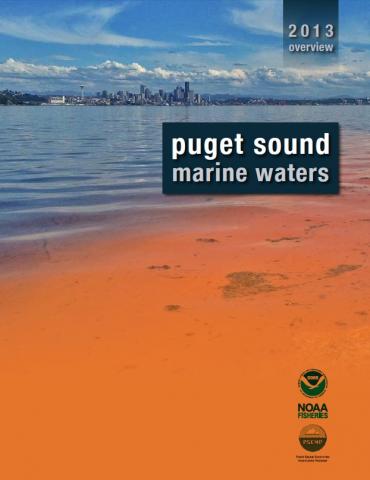
The Puget Sound Ecosystem Monitoring Program (PSEMP) is an independent program established by state and federal statute to monitor environmental conditions in Puget Sound. 

PSEMP logo

Related Articles

A 2014 report describes a research and monitoring study of Pigeon Guillemot conducted in and near the Nisqually Reach Aquatic Reserve. 

This paper appears in the July 2014 issue of the journal Coastal Management, which focuses on the role of social sciences in Puget Sound ecosystem recovery.

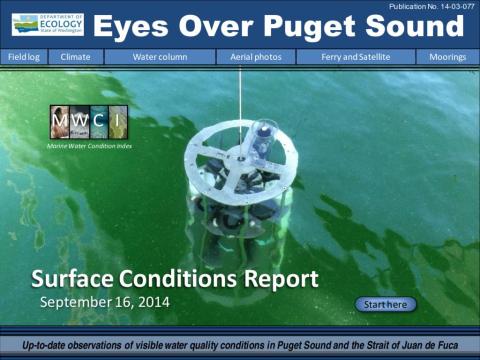
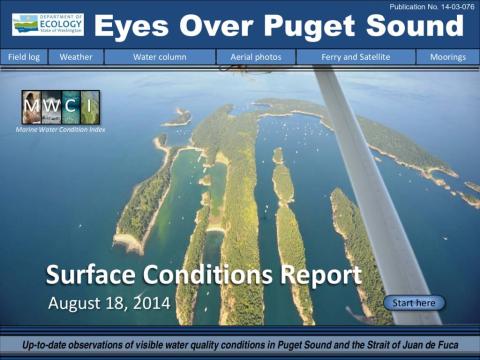
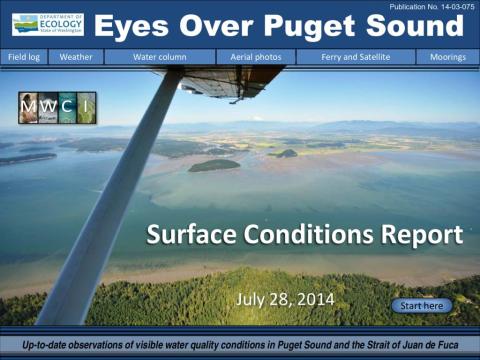
Onshore winds have been keeping the Puget Sound lowlands cool and cloudy, but sunlight and warmer temperatures are returning. Large organic mats of surface debris in Hood Canal, Padilla Bay, and Lay Inlet; many are macro-algae. Strong red-brown blooms in Discovery Bay, East Sound, and parts of Georgia Basin. Sediment-rich water north of San Juan Islands. Jelly fish are increasing in numbers. Colder, saltier conditions in early 2014 and lower oxygen in Whidbey Basin, Central, and South Sound continue. Hood Canal remains unusually cold. At our Mukilteo mooring, temperatures are similar to last year, but salinity and dissolved oxygen follow the Puget Sound-wide trend. Guest feature on phytoplankton monitoring, plus an in-depth look at our mooring program. Our technology now hitching a ride on the state ferries!

A list of over 1800 benthic infaunal invertebrates is now available on the Encyclopedia of Puget Sound. The list was prepared as part of the Washington State Department of Ecology’s Marine Sediment Monitoring Program (MSMP).  This program, initiated in 1989, is one component of the Puget Sound Ecosystem Monitoring Program, a collaborative effort dedicated to monitoring environmental conditions in Puget Sound. 

Benthic infaunal invertebrates, often referred to as benthos, are tiny animals, including worms, clams, snails, shrimp, crabs, brittle stars, and many others, that live in the sand and mud at the bottom of Puget Sound.  Benthos are an essential link in

Several research groups in the region are investigating biological markers and/or impacts of Contaminant of Emerging Concern (CEC) exposure in different organisms.  An abstract describing each study is included below.  Also included are links or contact details for further information about each project.

Several studies have been performed to determine the occurrence of selected Contaminants of Emerging Concern (CECs) in the environment.