Monitoring

Monitoring encompasses the routine measurement of ecosystem indicators to assess the status and trends of ecosystem structure and function. Broadly, there are two goals for monitoring in the Puget Sound ecosystem. The first goal is to monitor status and trends of the ecosystem. This may take the form of snapshots of specific regions, or, more usefully, status monitoring tracks variability in carefully selected indicators over time. Status monitoring is fundamentally concerned with documenting spatial and temporal variability in ecosystem components and thus ideally relies on consistent long-term monitoring in a network of sites. A second aim of monitoring is to evaluate the effectiveness of management strategies. Effectiveness monitoring thus aims to detect changes in ecosystem status that are caused by specific management actions.

Sources:

Puget Sound Science Review

Additional resources:

Puget Sound Ecosystem Monitoring Program

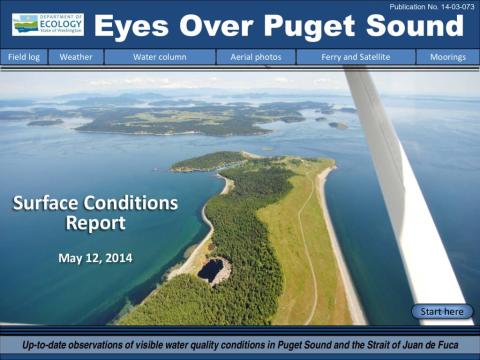
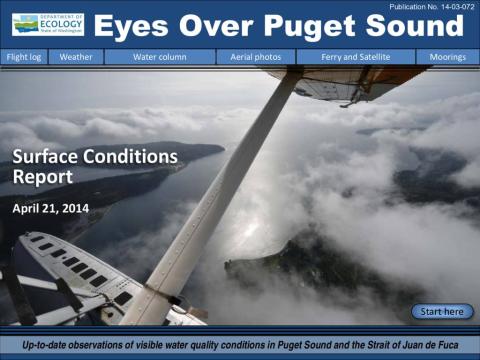
Eyes Over Puget Sound

Overview

The Puget Sound Ecosystem Monitoring Program (PSEMP) is an independent program established by state and federal statute to monitor environmental conditions in Puget Sound. 

PSEMP logo

Related Articles

River flows are above normal and air temperatures are increasing slowly. The spring phytoplankton bloom is slow to develop with visible blooms limited to smaller bays such as Sequim and Bellingham Bays. Noctiluca observed in East Sound on Orcas Island, coinciding with high numbers of jellyfish. Debris lines are mostly confined to Hood Canal. Pockets of colder water observed in Central Sound and Hood Canal, likely from the colder, saltier conditions that developed during the winter in the northern regions. Oxygen is variable yet close to expected ranges. Sizable oil sheens were sighted in Gig Harbor and Carr Inlet.
Multiple algal blooms in South Sound and Main Basin. Ferry and satellite images confirm center of algae bloom in the Main Basin and indication of a bloom in Carr Inlet. Oxygen levels are increasing on moorings. Oil sheen in Colvos Passage.

The Salish Sea Hydrophone Network and Orca Network are two citizen science projects dedicated to furthering our understanding of abundance, distribution, behavior, and habitat use by the endangered population of Southern Resident Killer Whales, also called orcas. The Hydrophone Network lets the public listen for orcas through their computers and phones, while the Orca Network gathers and disseminates sightings of orcas as they move between Puget Sound, the Fraser River, and the Pacific Ocean.

A Washington State Department of Ecology report establishing benthic indicators for Puget Sound. Benthic macrofauna are known to be good indicators of the status of marine environments, and benthic indices are often used as an assessment tool.

Air temperatures have fallen due to unusually weak northern winds bringing in cold air. A dry beginning to winter causes low river flows. This dry winter brings new Puget Sound conditions with colder saltier waters observed in the northern regions. Oxygen has stabilized again within expected ranges. Suspended sediments along wind and wave exposed beaches add artful brushstrokes to the Puget Sound waterscape. Jellyfish are still going strong in Eld Inlet. Oil seen leaking from a boat in Commencement Bay and Ecology’s Spills Program responds. Our intern, Clifton, brings renewed passion to monitoring!

A December 2013 report identifies marine and terrestrial bird species for use as indicators within the Puget Sound Partnership's "Vital Signs" for ecosystem health.