Monitoring

Monitoring encompasses the routine measurement of ecosystem indicators to assess the status and trends of ecosystem structure and function. Broadly, there are two goals for monitoring in the Puget Sound ecosystem. The first goal is to monitor status and trends of the ecosystem. This may take the form of snapshots of specific regions, or, more usefully, status monitoring tracks variability in carefully selected indicators over time. Status monitoring is fundamentally concerned with documenting spatial and temporal variability in ecosystem components and thus ideally relies on consistent long-term monitoring in a network of sites. A second aim of monitoring is to evaluate the effectiveness of management strategies. Effectiveness monitoring thus aims to detect changes in ecosystem status that are caused by specific management actions.

Sources:

Puget Sound Science Review

Additional resources:

Puget Sound Ecosystem Monitoring Program

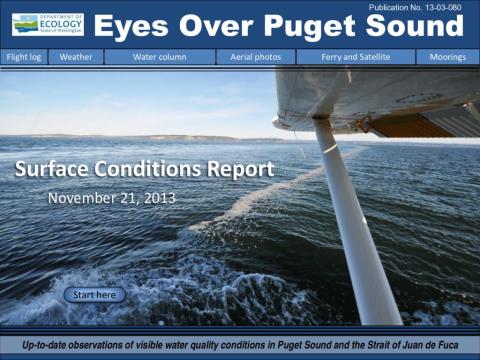
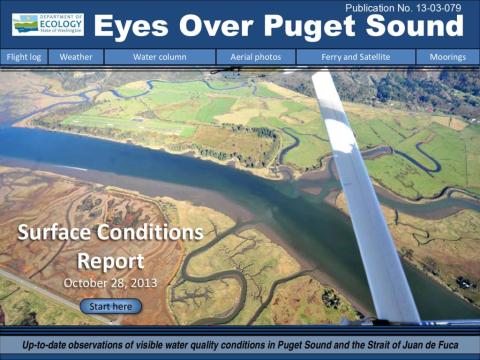
Eyes Over Puget Sound

Overview

The Puget Sound Ecosystem Monitoring Program (PSEMP) is an independent program established by state and federal statute to monitor environmental conditions in Puget Sound. 

PSEMP logo

Related Articles

Sun and high air temperatures warrant en route ozone measurements for model validations. A furry visitor takes a rest on the float plane. See the spotlight on our pilot, Joe Leatherman. High river flows lead to striking fronts of turquoise-colored water carrying glacial flour in many northeastern regions. Satellite and aerial images show widespread phytoplankton blooms in Whidbey Basin, Hood Canal, South Puget Sound, and West Bay of Orcas Island. Numerous large debris patches are observed in Hood Canal, Central Sound, and South Sound Inlets. After two years of colder temperatures and higher oxygen, Puget Sound waters are returning to expected or lower dissolved oxygen levels.

Remotely Operated Vehicles (ROVs) and Autonomous Underwater Vehicles (AUVs) are underwater robotic vehicles used for a variety of ocean surveys and operations. Both are used for deep-sea observation, mapping of underwater environments, and surveys of biodiversity and water quality trends. While ROVs are tethered to the user by a cord called the umbilical, which provides power as well as control and video signals, AUVs are programmed for a specific course and then set loose, operating without a tether.

Warm air temperatures and increases in flows from glacier-fed rivers give rise to dramatic images in the San Juan Islands. Warm surface temperatures in South Sound foster abundant red-brown blooms in southern inlets. Similar blooms are happening in the inlets of the Kitsap Peninsula. Large drifting algal mats in Central Sound, Sinclair Inlet, Hood Canal and Padilla Bay will likely end up on nearby shorelines soon. Jellyfish abundance has dropped. This year, dissolved oxygen levels in Puget Sound waters quickly decrease to levels of the previous decade.

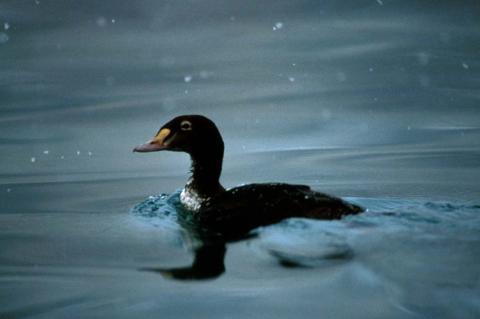
The Puget Sound Marine Waters 2012 Overview from the Puget Sound Ecosystem Monitoring Program synthesizes conditions measured in 2012 and has been expanded to include observations on seabirds that rely on marine waters. Read an excerpt below, or download the full report.

The audio files below are excerpts from a May 2013 interview with Donald Malins, former Director of the Environmental Conservation Division of NOAA Fisheries. Research by Malins and his colleagues in the 1970s and mid-1980s revealed high levels of industrial toxics in sediment-dwelling fish in Puget Sound, leading to the creation of Superfund sites in the Duwamish Estuary and Commencement Bay. Read a full profile of Donald Malins. The interview was conducted by Richard Strickland and Randy Shuman in cooperation with the Encyclopedia of Puget Sound as part of the Puget Sound Voices series. Additional assistance was provided by Jake Strickland. 

The U.S. Environmental Protection Agency Region 10 and the National Marine Fisheries Service Northwest Region have released a report describing results from a series of technical workgroups about the potential effects of polybrominated diphenyl ethers (PBDEs) on Puget Sound and Southern Resident killer whales.