Salmonids

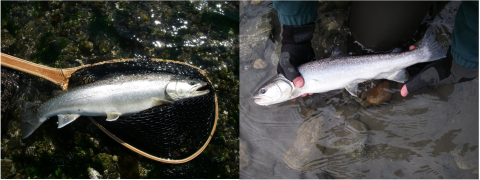
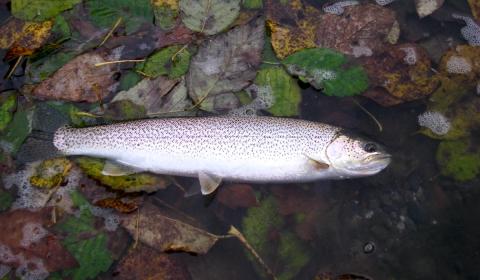
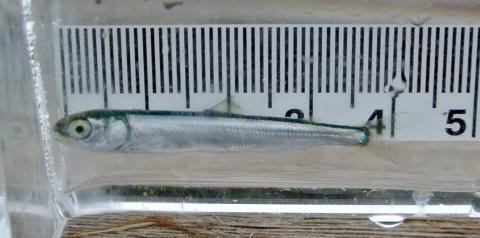
Fish in the family Salmonidae (salmon, trout, and charr) are unique in their cultural, economic and ecological role in Puget Sound. Because they utilize a very wide range of aquatic habitat types throughout their life history, they play potentially integral roles in the upland freshwater, nearshore and pelagic marine ecosystems and food webs of Puget Sound. They also provide key trophic links between habitats through their migratory behavior. While there is much variation in the behavior and ecology within and among the different salmonid species in Puget Sound, they typically use freshwater habitats to spawn, after which juveniles emerge and eventually migrate to nearshore estuaries or directly to marine pelagic habitats. The watersheds and nearshore habitats of Puget Sound currently support 8 species of salmon, trout, and charr (NOAA 2007), four of which are listed as Threatened under the Endangered Species Act (ESA). These are Chinook salmon (Oncorhynchus tshawytscha), chum salmon (O. keta), bull trout (Salvelinus confluentus) and steelhead (O. mykiss).

Puget Sound salmon:

Chinook salmon (Oncorhynchus tshawytscha)

Chum salmon (Oncorhynchus keta)

Sockeye salmon (Oncorhynchus nerka)

Pink salmon (Oncorhynchus gorbuscha)

Coho salmon (Oncorhynchus kisutch)

Puget Sound trout

Steelhead (Oncorhynchus mykiss)

Cutthroat trout (Oncorhynchus clarki clarki)

Puget Sound charr

Bull trout (Salvelinus confluentus

-- Source: Puget Sound Science Review

Overview

Fish in the family Salmonidae (salmon, trout, and charr) play potentially integral roles in the upland freshwater, nearshore and pelagic marine ecosystems and food webs of Puget Sound.

Chum salmon (Oncorhynchus keta). Image courtesy U.S. Fish and Wildlife Service.

Related Articles

The following article describes how both adult and juvenile bull trout use estuaries in Puget Sound and includes text from two previously published overviews on the subject by University of Washington biologist Thomas P. Quinn.
The following article describes how both adult and juvenile Chinook salmon use estuaries in Puget Sound and includes text from two previously published overviews on the subject by University of Washington biologist Thomas P. Quinn.
The following article describes how both adult and juvenile steelhead trout use estuaries in Puget Sound and includes text from two previously published overviews on the subject by University of Washington biologist Thomas P. Quinn.

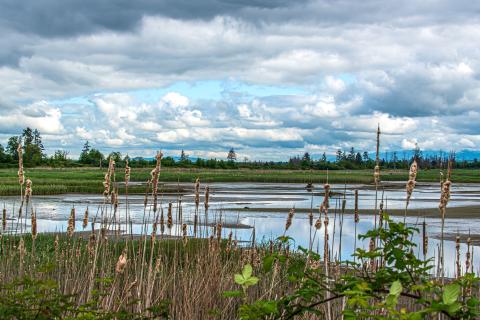
Puget Sound serves as the ultimate drainage destination for many rivers that carry fresh water from the Olympic and Cascade mountain ranges to the ocean. When this freshwater mixes with the ocean’s saltwater it creates biologically rich environments known as estuaries. These estuaries provide critical habitat for young salmon, migratory birds, and many other species including forage fish and marine mammals.

The rivers flowing into Puget Sound pass through 16 major deltas in seven sub-basins. Scientists estimate that 70–80% of Puget Sound’s historical delta habitats have been lost to human development since the early 1800s (Wildlife Management Institute, 2024)

Beavers are typically associated with freshwater environments, but scientists have learned that they also survive and thrive in the shoreline marshes of the Salish Sea. New research is revealing the vital connection between tidal beavers and salmon.
Pink salmon now comprise nearly 80 percent of all adult salmon in the North Pacific. This record abundance is coming at a cost to other salmon species such as threatened Chinook, which compete with pinks for spawning territory. A new study shows that the ecological toll may extend all the way to endangered southern resident killer whales.