Fishes

Find content specifically related to fishes of the Puget Sound and Salish Sea ecosystems. For checklists and descriptive accounts of individual species, visit our species library. The Encyclopedia of Puget Sound will also be creating additional pages and sections related to salmon recovery in the region. For a general overview of salmonids, visit the Encyclopedia's Puget Sound Science Review.

Additional resources:

Washington Department of Fish and Wildlife salmon stocks and escapement data
SalmonScape

Related Articles

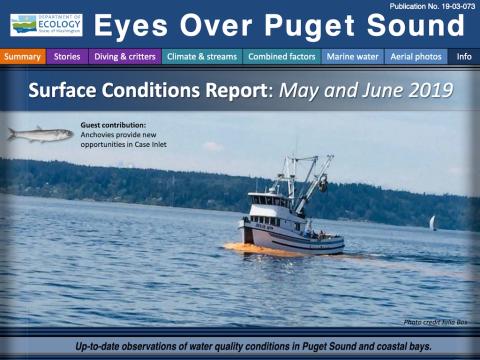
Warm and dry conditions this spring are predicted to persist into summer, resulting in saltier and warmer than normal Puget Sound water conditions. Early upwelling and a premature melt of the snowpack means nutrient-rich ocean water likely already entered Puget Sound. This sets the stage for a lot of biological activity. From the air, it is obvious that the productive season is in full swing. We saw large algae blooms in Central Sound along with abundant Noctiluca.  Huge numbers of anchovies were documented in Case Inlet and other finger inlets in South Sound, attracting hundreds of marine mammals.

New technology is helping to remove deadly “ghost nets” that have been lost in the depths of Puget Sound. It is part of an effort that saves millions of animals every year, but managers say better reporting of these lost nets by fishermen is still needed.    

Each winter and spring, researchers survey the sometimes spectacular spawning events of Puget Sound's Pacific herring. They have found wide swings in the fish's population and an overall decline in herring numbers since the 1970s, but little is known about the cause or what this might mean for the health of the food web. We spent a day with a biologist spotting herring eggs and considering the future of one of our region's most ecologically and culturally important fish species. 

The Toxics in Fish Implementation Strategy is a recovery plan that will guide funding and activities to reduce the impacts of toxics contaminants on marine fish and the humans that consume them. A final version of the plan was published in May 2021.

A 2019 report from the Puget Sound Ecosystem Monitoring Program presents an overview of selected recent monitoring and research activities focused on toxic contaminants in the Salish Sea. 

Can scientists bring back the lost tidal forests of Puget Sound? It could take generations, but restoring this rare habitat will pay big dividends for Puget Sound’s salmon.