Birds

Find content specifically related to birds of the Puget Sound and Salish Sea ecosystems. For checklists and descriptive accounts of individual species, visit our species library.

Species Lists

Additional resources

Birdweb

Overview

More than 70 bird species regularly utilize Puget Sound during some or all stages of their life histories, but only a portion of these are actively being investigated.

Brandt's cormorant (Phalacrocorax penicillatus). Photo by Finley and Bohlman, courtesy U.S. Fish and Wildlife Service

Related Articles

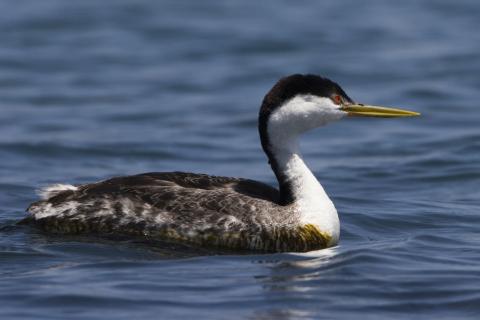
A June 19, 2013 paper in the journal PLoS ONE hypothesizes that regional declines in Western Grebe populations may be related to decreasing numbers of forage fish. Using citizen science data from 36 years of bird counts, researchers were able to look at population trends up and down the entire West Coast, finding that abundance of grebes decreased in the Salish Sea but increased in southern California. North American population declined by 52% overall.

Seabird populations are declining worldwide. This paper looks at the impact of gillnets on bird populations.

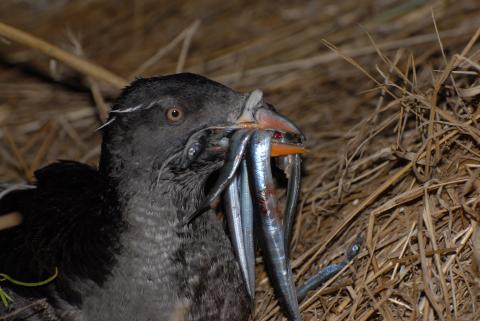
A paper in the May 2013 issue of The Condor [115(2):356–365, 2013] describes a repeatable and statistically robust approach to monitoring burrow nesting seabirds in the Salish Sea and the California Current that can be applied at single- or multi-island scales. The approach can be applied to both relatively common and important members of the seabird community like the Rhinoceros Auklet and to species of conservation concern like the Tufted Puffin.

The authors provide an approach for simultaneously gathering and identifying habitat information that influences burrow density. This habitat information can in turn be used to inform restoration activities or

This article was originally published by the Washington Department of Fish and Wildlife as part of its annual report Threatened and Endangered Wildlife in Washington.

This article was originally published by the Washington Department of Fish and Wildlife as part of its annual report Threatened and Endangered Wildlife in Washington.

This article was originally published by the Washington Department of Fish and Wildlife as part of its annual report Threatened and Endangered Wildlife in Washington.