

Find content specifically related to mammals of the Puget Sound and Salish Sea ecosystems. For checklists and descriptive accounts of individual species, visit our species library.
Additional resources:
Find content specifically related to mammals of the Puget Sound and Salish Sea ecosystems. For checklists and descriptive accounts of individual species, visit our species library.
Additional resources:
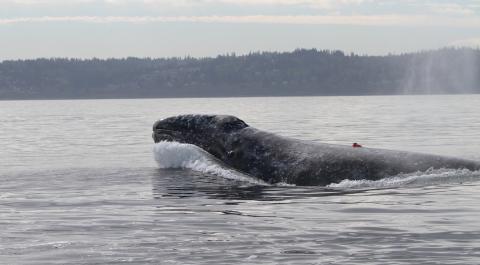
Gray whales are among the more commonly sighted large whale species in the Salish Sea and along the coast of the Pacific Northwest, but a clearer understanding of the multiple ways they use our waters has only come into focus in recent years. Gray whales were historically mostly known for their annual migrations past the Washington Coast including the entrance to the Salish Sea: southbound in December on route to their wintering grounds in Baja California, Mexico and northbound in March to May returning to their primary feeding grounds in Arctic waters (Figure 1).
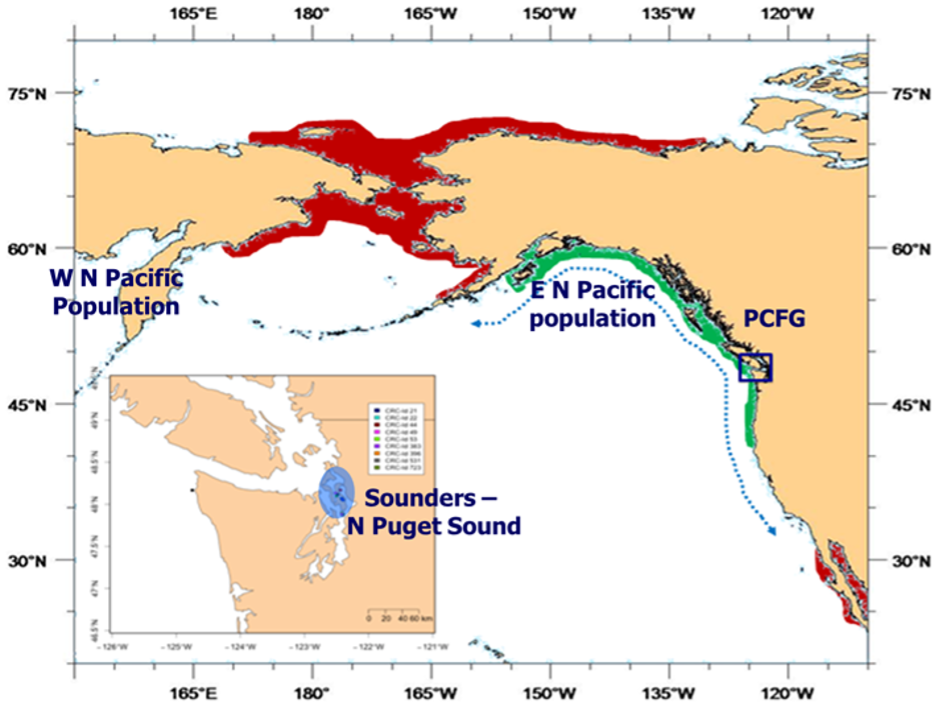
In general, gray whale use
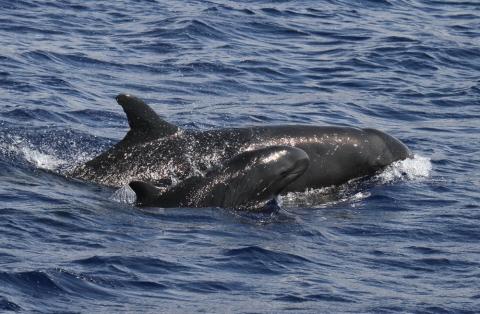
The false killer whale is a tropical to warm temperate species of dolphin that is not normally found in the Salish Sea. However, the species does occasionally appear in small numbers in Pacific Northwest waters of Washington and British Columbia, and even sometimes as far north as Alaska. They are highly social animals that typically feed on large pelagic fish, such as tuna and mahi mahi.
False killer whales are considered naturally rare, and there are no global estimates of abundance, but they generally occur in low densities across their extensive range (Zaeschmar and Baird 2025)
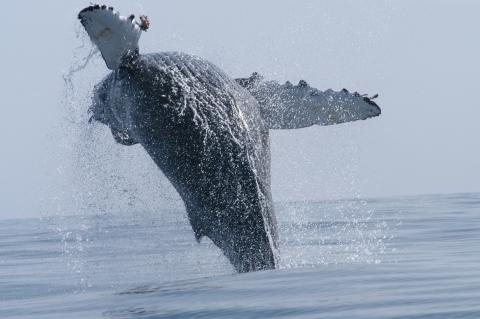
Humpback whales have made a remarkable recovery in Puget Sound and throughout the Salish Sea. While their numbers vary through the season, they can be seen in almost any month of the year. In essence, this has been a return to waters they formerly used prior to commercial whaling that wiped out the local population. Humpback whales around the world have made strong recoveries from whaling and now number some 30,000 in the North Pacific but there are some major differences in how populations in different areas have fared. Humpbacks are baleen whales that engulf small prey including krill

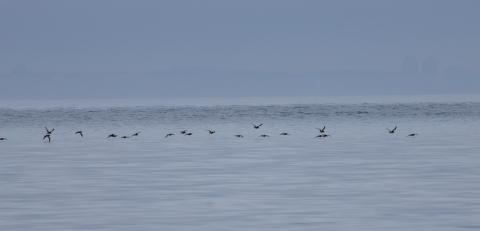
The year 2025 has been fairly mystifying to experts who make their living studying natural systems in the Puget Sound region.
Unusual observations this year include record-low dissolved oxygen levels, unexpected gray whale visitations, and the sudden arrival of an astounding number of short-tailed shearwaters — a seabird almost never seen in Puget Sound.
Cold waters rising from the deep along the West Coast helped to rescue Puget Sound from an oceanic heat wave bringing warm-water troubles to other parts of the Pacific Ocean. But our inland waterway has had its own problems, and the reasons have been a challenge

Cuvier’s beaked whales are the most commonly stranded beaked whale along the outer coasts of Oregon and Washington. Although typically a creature of deep water, beaked whales have been documented in the Salish Sea at least once in the last fifty years, although which species was swimming in Puget Sound was not clear.