

Find content specifically related to mammals of the Puget Sound and Salish Sea ecosystems. For checklists and descriptive accounts of individual species, visit our species library.
Additional resources:
Find content specifically related to mammals of the Puget Sound and Salish Sea ecosystems. For checklists and descriptive accounts of individual species, visit our species library.
Additional resources:

Research on the sounds and feeding behavior of Puget Sound's southern resident orcas is providing new insight into how the whales respond to underwater noise. A recent online conference brought together some of these findings along with discussions on how to reduce the impacts of noise from vessel traffic.

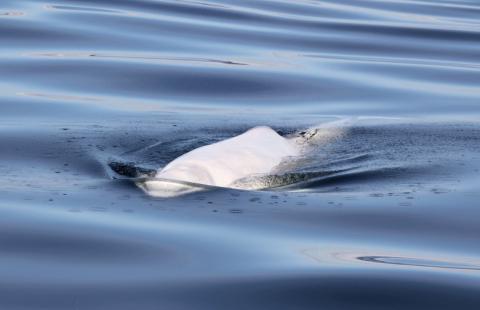
A series of beluga whale (Delphinapterus leucas) sightings in southern Puget Sound in October 2021, added a new set of records for the species in this region. The 2021 event represents the longest period of time a beluga has been observed so far south of Alaska, in the eastern North Pacific. This may have just been an isolated event of a single extralimital individual. Alternatively, it may suggest a potential range expansion that could portend future increased visits by this species in the Pacific Northwest, especially if warming of Arctic waters continues.

The tenth annual Puget Sound Marine Waters Overview looks at marine water quality and other conditions in the region in 2020. According to the report, there were few extreme weather or ecological events in 2020, but overall, conditions in Puget Sound were generally warmer, sunnier, and wetter than in typical years. The overview also examines patterns and trends in numerous environmental parameters, including plankton, water quality, climate, and marine life.

A 2021 study published in the journal Antibiotics suggests that animals may be potential sentinels for antibiotic-resistant and extraintestinal pathogenic E. coli in the Salish Sea ecosystem.
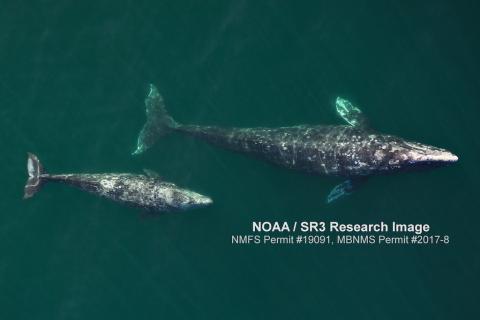
An article published in PLoS ONE in 2021 describes a study of hormone concentrations in gray whales. The findings may contribute to increased knowledge of reproductive physiology and population dynamics among the species.