

Overview
The Puget Sound ecosystem is shaped by its physical environment. This article looks at Puget Sound's geologic history as well as dynamic factors such as the flow of its rivers and currents.

The Puget Sound ecosystem is shaped by its physical environment. This article looks at Puget Sound's geologic history as well as dynamic factors such as the flow of its rivers and currents.

For more than a hundred years, property owners have seen shoreline erosion as the enemy. But it turns out that in many cases erosion is actually a good thing — crucial, according to scientists — because it provides the sand and gravel needed for healthy beaches.
Proceedings of the March 31, 2016 WA Shoreline and Coastal Planners Group Spring Forum. Shoreline Stabilization: Using the Permit Process to Protect Shoreline Habitat and Property with a Focus on Single Family Residential Properties

Where shoreline bulkheads remain in place, the loss of spawning habitat used by surf smelt is likely to reach 80 percent.

Rising sea levels are expected to exacerbate habitat loss caused by bulkheads, according to studies in the San Juan Islands.

The removal of shoreline armoring in Puget Sound has become a priority for state and federal agencies, but until recently there have been relatively few scientific studies of armoring's local impact. New research looks at the pronounced biological and ecological effects of these common shoreline structures, especially for tiny beach-dwelling creatures that make up the base of the food web.
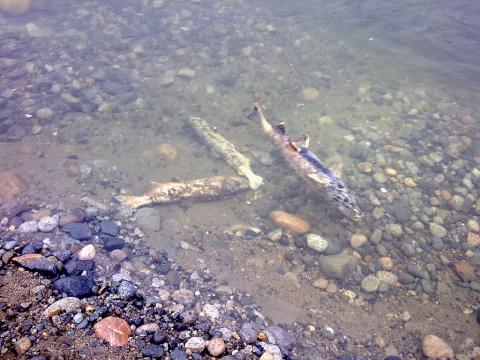
Decaying organic matter plays an important role in marine ecosystems.