

Overview
The Puget Sound ecosystem is shaped by its physical environment. This article looks at Puget Sound's geologic history as well as dynamic factors such as the flow of its rivers and currents.

The Puget Sound ecosystem is shaped by its physical environment. This article looks at Puget Sound's geologic history as well as dynamic factors such as the flow of its rivers and currents.
Proceedings of the BC/Washington Symposium on the Marine Environment, January 13 and 14, 1994

This 1954 report present the results of a geochemical investigation, based on existing data, of the waters of Puget Sound. Rivers draining into the Puget Sound and upwelled water moving in at depth from Juan de Fuca Strait are the chief sources of the chemical constituents in Puget Sound.

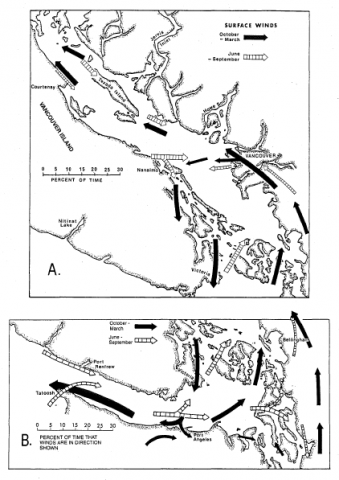
This 1954 report accumulates all available wind report summaries have been in the form of monthly wind roses for each reporting station and makes a determination of the frequency and maximum duration of surface winds of above average velocity at selected stations over a three year period.
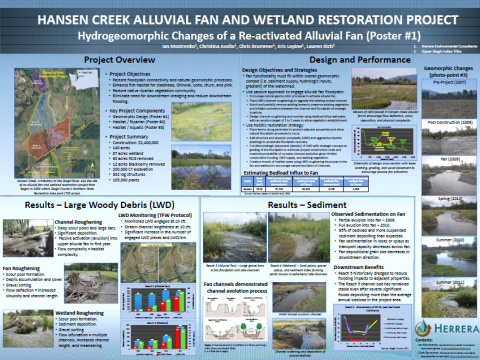
Habitat restoration was undertaken in 2009-2010 on lower Hansen Creek, Washington. The project converted 140 acres of isolated floodplain into 53 acres of alluvial fan and 87 acres of flow-through wetlands.

An annual State of the Pacific Ocean meeting is held to review the physical, biological and selected fishery resources and present the results of the most recent year’s monitoring in the context of previous observations and expected future conditions. The workshop to review conditions during 2014 took place at the Institute of Ocean Sciences, Sidney, B.C. on March 10 and 11, 2015, with over 100 participants both in person and via webinar.