

Overview
The Puget Sound ecosystem is shaped by its physical environment. This article looks at Puget Sound's geologic history as well as dynamic factors such as the flow of its rivers and currents.

The Puget Sound ecosystem is shaped by its physical environment. This article looks at Puget Sound's geologic history as well as dynamic factors such as the flow of its rivers and currents.
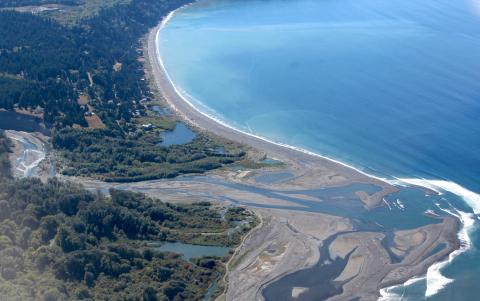
Puget Sound serves as the ultimate drainage destination for many rivers that carry fresh water from the Olympic and Cascade mountain ranges to the ocean. When this freshwater mixes with the ocean’s saltwater it creates biologically rich environments known as estuaries. These estuaries provide critical habitat for young salmon, migratory birds, and many other species including forage fish and marine mammals.
The rivers flowing into Puget Sound pass through 16 major deltas in seven sub-basins. Scientists estimate that 70–80% of Puget Sound’s historical delta habitats have been lost to human development since the early 1800s (Wildlife Management Institute, 2024)

This article is the latest in a series about computer models and their uses within the Puget Sound ecosystem. Today, we look at the Salish Sea Model, one of several models in the region helping to predict water circulation, water quality and food-web relationships.

Estuaries around the world including Puget Sound perform an amazing feat of continuous water mixing called estuarine exchange flow.

In a new series we are calling Ask a Scientist we interview local researchers to get their thoughts on some of the important but lesser-known scientific facts about the Puget Sound ecosystem. Today, we speak with University of Washington oceanographer Parker MacCready about Puget Sound’s “underwater Amazon” and why it has profound implications for Puget Sound science and policy. It all begins, he says, with the mixing of fresh and salt water and something called the estuarine exchange flow.

Puget Sound is one of the largest estuaries in the United States, but its overall size may be less important than its complexity. The place is defined by the mixing of saltwater from the ocean and freshwater from creeks and rivers that create an almost alchemical transformation of habitat. In this article, we look at the geologic forces that formed Puget Sound and made it the dynamic system that we understand today.

Large plumes of methane bubbles have been discovered throughout the waters of Puget Sound prompting questions about the Puget Sound food web, studies of earthquake faults and climate-change research.