

Find content specifically related to marine mammals of the Puget Sound and Salish Sea ecosystems. For checklists and descriptive accounts of individual species, visit our species library's marine mammals page.
Marine mammals
Related Articles
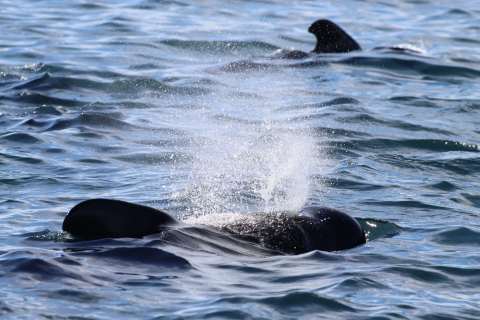
Short-finned pilot whales occur around the world as distinct populations, but records of their occurrence in the Salish Sea are rare. Pilot whales are highly social, with some of the strongest bonds known among cetaceans. Unfortunately this makes them vulnerable to mass strandings and hunting.
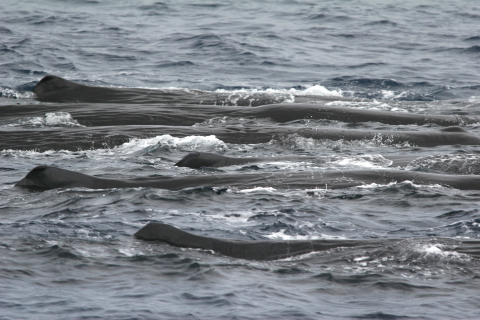
Described as ‘ocean nomads,’ sperm whales range widely throughout the world’s oceans. In Puget Sound and the Salish Sea, there has been only one documented record of a sighting in Haro Strait in 2018.
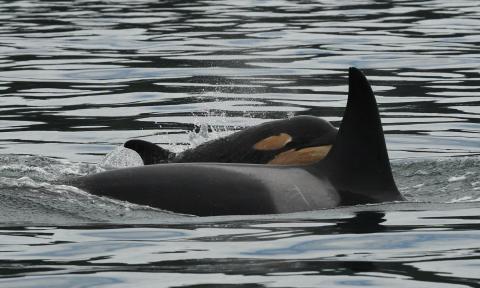
The news of two new southern resident orca calves this year marks the 50th anniversary of whale counts from the Center for Whale Research.
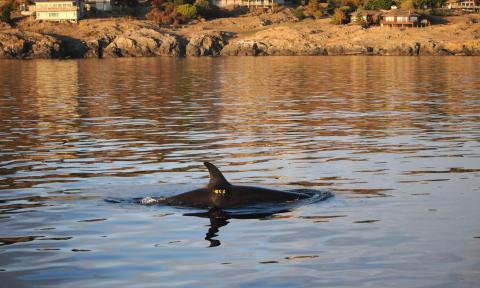
Killer whales are active both day and night, but most scientific research focuses on their daytime activities. A recent study looked at a small group of endangered southern residents to find out how often they hunt after the sun goes down. Ocean noise tends to decrease at night, potentially making it easier for the whales to catch salmon, but could they take advantage?
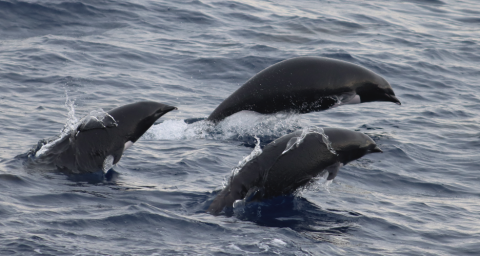
Overview
The northern right whale dolphin (Lissodelphis borealis) is one of the most unusual marine mammals of the North Pacific Ocean. It is the only dolphin species in the Northern Hemisphere with no hint of a dorsal fin, and it is very slender and streamlined, making it appear almost eel-like. Northern right whale dolphins are found only in cool temperate waters of the North Pacific and are moderately common in offshore waters. However, they are uncommon in nearshore regions and rarely enter inshore bays or channels. While they have been sighted here, their occurrence in Puget Sound and the Salish
The Pacific Whale Watch Association (PWWA) is a community of ecotourism professionals with a shared commitment to education, conservation, and responsible wildlife viewing in Washington state and British Columbia. The 2025 PWWA annual report summarizes wildlife sightings and sentinel actions logged by members throughout the year. Sentinel actions are protective measures taken by professional whale watchers, such as warning vessels near whales or removing marine debris.