

All Articles

The retreating glaciers of Puget Sound
Puget Sound's glaciers are melting rapidly due to climate change. The North Cascades mountains have lost about 56% of their glacial ice while estimates show that glaciers in the Olympics could be gone within the next 50 years. Scientists say salmon and other species could be hard hit as the region loses its “giant storage tank” of ice.

Interactive map of Puget Sound and the Salish Sea
Use our interactive map to determine if a geographic feature is within the boundaries of the Puget Sound or Salish Sea watersheds. The Puget Sound region includes the area within the United States while the Salish Sea region* encompasses the entire shaded area. Areas that influence circulation in the Salish Sea or eventually drain into the estuary are marked by broader boundaries.

Rethinking flood control for the Nooksack River
Can restoring the natural balance of the Nooksack River also reduce flood risks? Officials on both sides of the U.S.-Canada border are taking note as climate change raises the stakes.

Eyes Over Puget Sound: Surface Conditions Report - February 25, 2022
The winter was cold and wet, resulting in a good snowpack in the mountains to sustain river flows into summer. In Puget Sound, saltier waters in summer transitioned to fresher conditions by fall 2021. Water temperatures in late winter 2022 are now colder and oxygen levels are high. From the air, Puget Sound looks spectacular, with few events to report. First signs of the spring bloom were visible

Model of heat wave 'blob' shows unexpected effects in the Salish Sea
The marine heat wave that struck the Pacific Ocean in late 2013 also caused large changes in temperature in the Salish Sea, but scientists are still puzzling over the impacts of those changes on Puget Sound's food web. The so-called "blob" of warmer than average water was thought to have increased the production of plankton, which potentially benefits creatures like herring and salmon that feed on

How do you build an estuary? The answer lies in Puget Sound’s geologic history
Puget Sound is one of the largest estuaries in the United States, but its overall size may be less important than its complexity. The place is defined by the mixing of saltwater from the ocean and freshwater from creeks and rivers that create an almost alchemical transformation of habitat. In this article, we look at the geologic forces that formed Puget Sound and made it the dynamic system that

Scientists look for answers in methane bubbles rising from bottom of Puget Sound
Large plumes of methane bubbles have been discovered throughout the waters of Puget Sound prompting questions about the Puget Sound food web, studies of earthquake faults and climate-change research.
Eyes Over Puget Sound - 2021 Year in Review
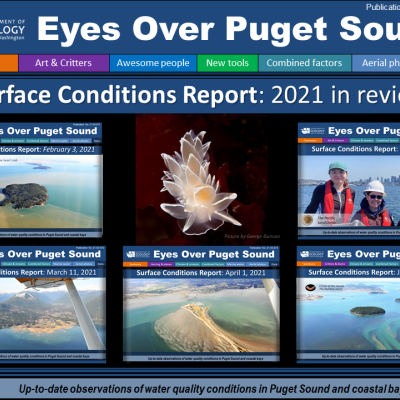
The year 2021 was generally drier and warmer including a heat wave in June. Higher river flows followed a rainy and cloudy fall. In 2021, EOPS aerial images continued to capture the diversity of phenomena on the water, with support from its wonderful contributors who documented visible water quality issues across the larger Puget Sound region. With our Artists Corner and story maps on critters in
Why are so many sixgill sharks washing up in Puget Sound?
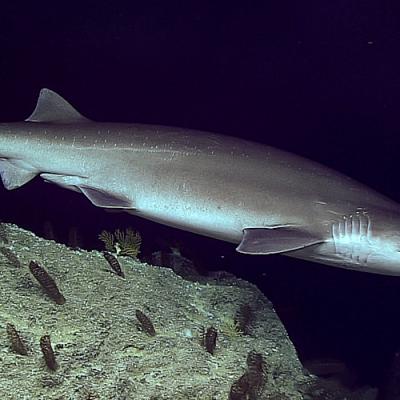
Over the past year, the Washington Department of Fish and Wildlife has reported an unusually high number of sixgill sharks found washed up along Puget Sound's shoreline. Four dead sharks in all were spotted, alarming scientists who believe that the large predators use Puget Sound as a pupping ground. Sixgills are rarely seen in Puget Sound but are one of its largest fishes, reaching lengths of up
Improving the probability that small-scale science will benefit conservation
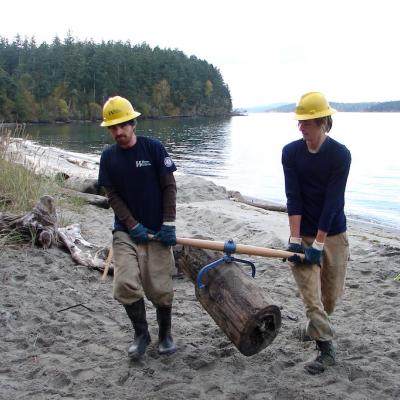
A 2021 article in the journal Conservation Science and Practice analyzes the conservation benefits of small-scale, competitively funded scientific research in the Salish Sea. The findings show that collaboration, networking, and stakeholder engagement before, during and after the research are key factors.