

All Articles
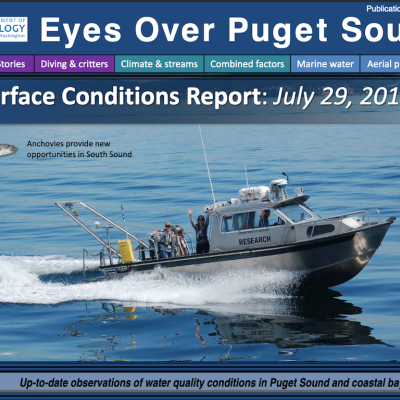
Eyes Over Puget Sound: Surface Conditions Report - July 29, 2019
In July, the recent trends of warm, dry conditions lessened; however, river flows remain low. Extensive macroalgae drifted through South and Central Sound and washed up on beaches. Macroalgae growth is fueled by excessive nutrients and sunshine. When it washes onto the beach, it is called beach wrack, and it can be a health risk to beachgoers because of bacteria it can harbor. From our aerial
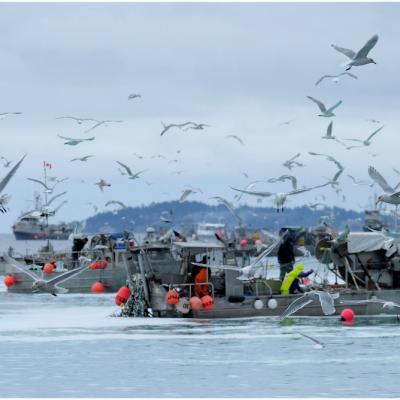
Ancient harvests: A history of Salish Sea herring
Scientists believe that herring have been a staple of Salish Sea food and culture since humans first arrived here at least 12,500 years ago. That importance has continued into modern times, even as herring numbers have declined in parts of the region.
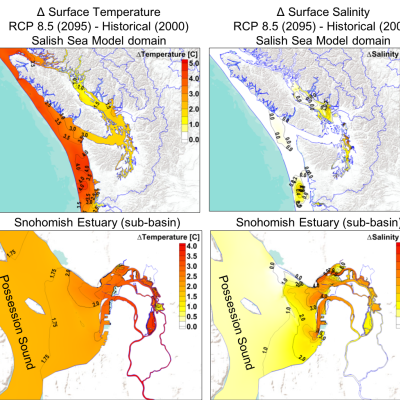
Salish Sea Model looks at climate impacts on the nearshore
A 2019 paper in the Journal of Geophysical Research: Oceans outlines how the Salish Sea Model describes the impacts of climate change, sea level rise and nutrient loads on the region's nearshore environment.
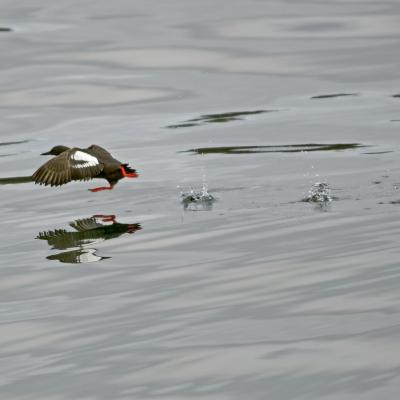
Unsung seabirds could help track Puget Sound health
Pigeon guillemots have attracted relatively little scientific attention compared to other seabirds in Puget Sound. That may be because their population is generally stable, but a group of citizen scientists is helping to put guillemots on the conservation radar. They hope the birds can be used as an indicator of Puget Sound health.
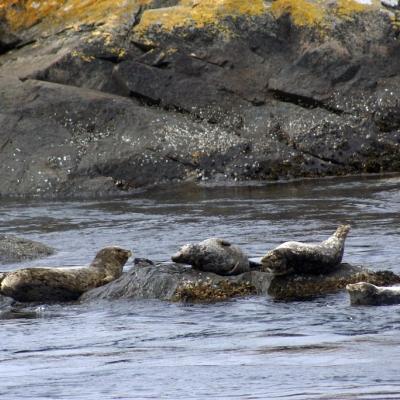
Fine-scale variability in harbor seal foraging behavior
A 2014 paper in the journal PLoS ONE examines differences between foraging behavior of harbor seals based on haulout site locations, seasons, sexes and times of day. The authors hypothesize that these factors may help explain the variability in diet among harbor seals observed at different haul-out site groups in the Salish Sea.
Eyes Over Puget Sound: Surface Conditions Report - May/June 2019
Warm and dry conditions this spring are predicted to persist into summer, resulting in saltier and warmer than normal Puget Sound water conditions. Early upwelling and a premature melt of the snowpack means nutrient-rich ocean water likely already entered Puget Sound. This sets the stage for a lot of biological activity. From the air, it is obvious that the productive season is in full swing. We
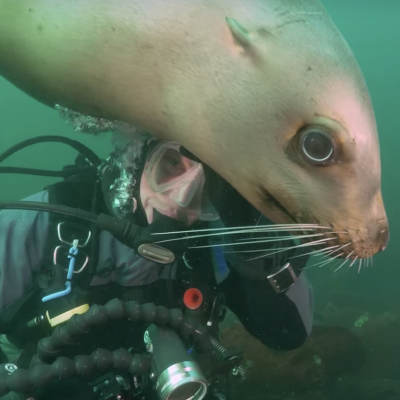
Video series features science and adventure in the Salish Sea
A new video series follows local scientists into the water, capturing the adventure behind the research. "Salish Sea Wild" is entering its second season and we interviewed the series host and producers. Among our burning questions: What's it like to have a Steller sea lion chew on your head?
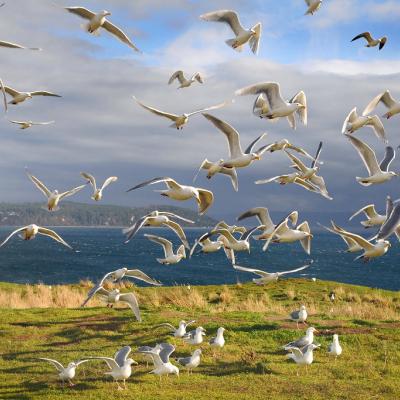
Predator–prey dynamics of bald eagles and glaucous‐winged gulls
An unintended consequence of the recovery of bald eagles (Haliaeetus leucocephalus) has been the impact on seabirds. The authors of a 2019 paper published in Ecology and Evolution suggest that the effects of bald eagle activity on a large glaucous-winged gull (Larus glaucescens) colony on Protection Island in the Strait of Juan de Fuca include the possibility of coexistence but also the
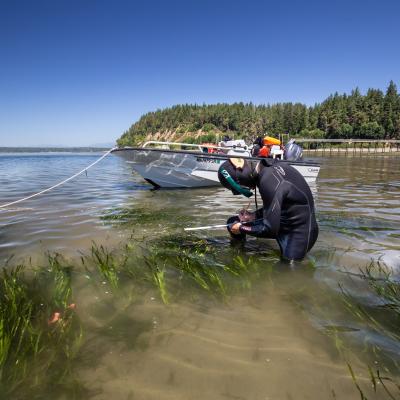
Science in the spotlight: Eelgrass recovery
The Washington Department of Natural Resources is studying new ways of increasing ecologically important eelgrass habitat in Puget Sound. It is part of the state's effort to boost eelgrass 20% Sound-wide by 2020. So far, recovery of the species has fallen short of that goal, but transplanting efforts are showing promise.
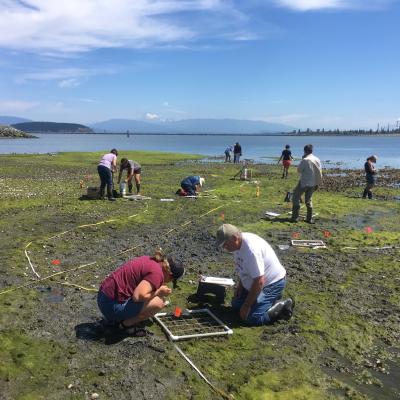
State aquatic reserves lean heavily on citizen scientists
Eight aquatic reserves in Puget Sound are being studied by volunteers working under the direction of state experts. Washington Department of Natural Resources manages the reserves with guidance from nearby communities.