

All Articles

Placing microphones on orcas offers a point-of-whale perspective on underwater noise
Research on the sounds and feeding behavior of Puget Sound's southern resident orcas is providing new insight into how the whales respond to underwater noise. A recent online conference brought together some of these findings along with discussions on how to reduce the impacts of noise from vessel traffic.

Derelict vessels prompt cleanup efforts
A state law going into effect this month will significantly increase funding for the cleanup of abandoned and derelict vessels in Puget Sound. The funding will add about $4.3 million annually to remove hazardous sunken wrecks and related pollutants.

Are yelloweye rockfish on the path to recovery?
New research suggests that recovery efforts are working for Puget Sound’s threatened yelloweye rockfish. Preliminary models show "considerable improvement" in population numbers.

A boundary spanning system supports large-scale ecosystem-based management
A 2022 article in the journal Environmental Science & Policy looks at how knowledge exchange across organizations influences science-based ecosystem recovery in Puget Sound. The University of Washington Puget Sound Institute describes its work to identify and communicate key scientific findings that support funding and policy decisions on an ecosystem scale.

'Invertebrate engineers' combat sea level rise
A pilot project to create a 'living dike' in Canada's Boundary Bay is designed to help a saltwater marsh survive rising waters due to climate change.
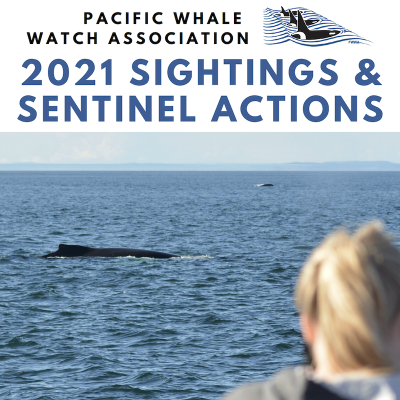
Pacific Whale Watch Association 2021 Sightings and Sentinel Actions
The Pacific Whale Watch Association (PWWA) is a community of ecotourism professionals with a shared commitment to education, conservation, and responsible wildlife viewing in Washington state and British Columbia. The 2021 PWWA annual report summarizes wildlife sightings and sentinel actions logged by members throughout the year. Sentinel actions are protective measures taken by professional whale
Species account: A lone beluga whale visits the Salish Sea
A series of beluga whale (Delphinapterus leucas) sightings in southern Puget Sound in October 2021, added a new set of records for the species in this region. The 2021 event represents the longest period of time a beluga has been observed so far south of Alaska, in the eastern North Pacific. This may have just been an isolated event of a single extralimital individual. Alternatively, it may

The retreating glaciers of Puget Sound
Puget Sound's glaciers are melting rapidly due to climate change. The North Cascades mountains have lost about 56% of their glacial ice while estimates show that glaciers in the Olympics could be gone within the next 50 years. Scientists say salmon and other species could be hard hit as the region loses its “giant storage tank” of ice.

Interactive map of Puget Sound and the Salish Sea
Use our interactive map to determine if a geographic feature is within the boundaries of the Puget Sound or Salish Sea watersheds. The Puget Sound region includes the area within the United States while the Salish Sea region* encompasses the entire shaded area. Areas that influence circulation in the Salish Sea or eventually drain into the estuary are marked by broader boundaries.

Rethinking flood control for the Nooksack River
Can restoring the natural balance of the Nooksack River also reduce flood risks? Officials on both sides of the U.S.-Canada border are taking note as climate change raises the stakes.