

All Articles
Social Science for the Salish Sea
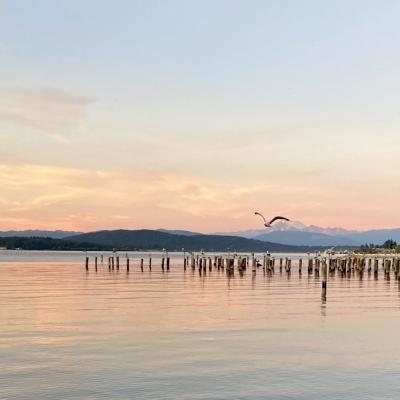
Social Science for the Salish Sea (S4) provides a foundation for future research projects, accessible information for planning or management decisions, and synthesized content to inform ecosystem recovery.
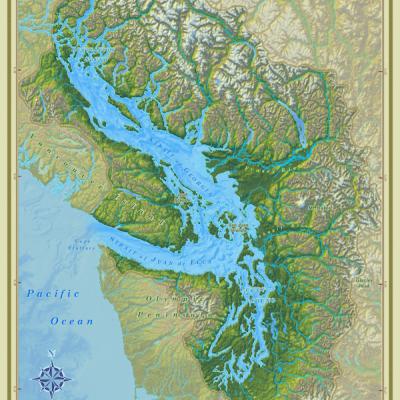
Salish Sea survey: Geographic literacy enhancing natural resource management
An article published in the journal Society & Natural Resources in 2021 describes the results of a geographic literacy survey which shows residents of Washington and British Columbia are largely unfamiliar with the name Salish Sea. The authors discuss the implications of their findings for ecosystem recovery of the region.
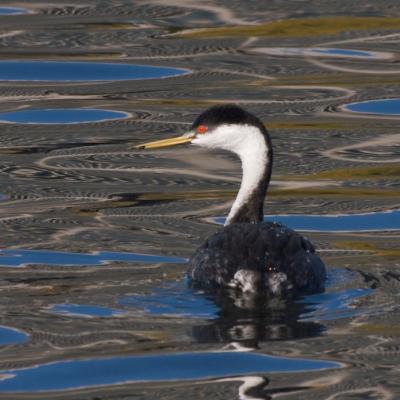
Effects of season, location, species, and sex on body weight and blood chemistry in free-ranging grebes
An article published in the Journal of Avian Medicine and Surgery in 2021 describes the results of study comparing the effects of season, location, species, and sex on body weight and blood chemistry for free-ranging western and Clark's grebes.
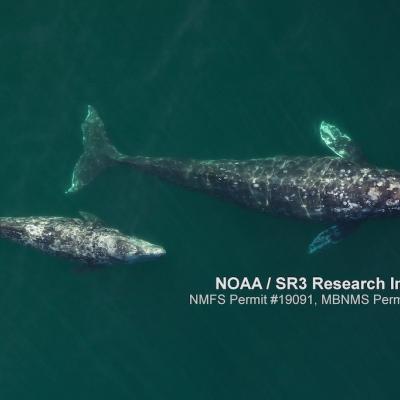
Biomarkers update insights on reproductive physiology of gray whales
An article published in PLoS ONE in 2021 describes a study of hormone concentrations in gray whales. The findings may contribute to increased knowledge of reproductive physiology and population dynamics among the species.
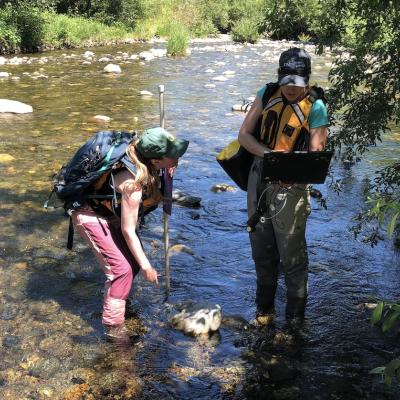
Taking the temperature of salmon
Warming waters threaten the recovery of salmon in Puget Sound. New findings about stream temperature could help salmon survive the threats of climate change.
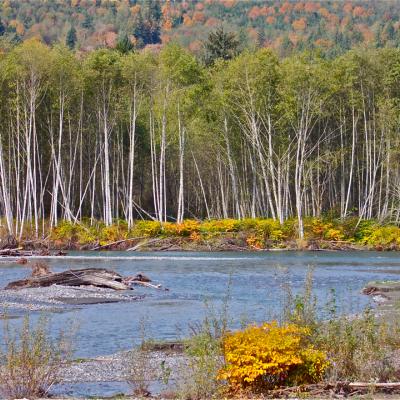
Nooksack River Transboundary Technical Collaboration Group 2020-2021 annual report
The Nooksack River watershed spans part of the border between British Columbia and the State of Washington. In August 2018, the international, multi-agency Nooksack River Transboundary Technical Collaboration Group (TCG) was established to implement a three-year work plan to reduce fecal bacteria concentrations in the Nooksack River watershed. The 2020-2021 TCG annual report summarizes third and
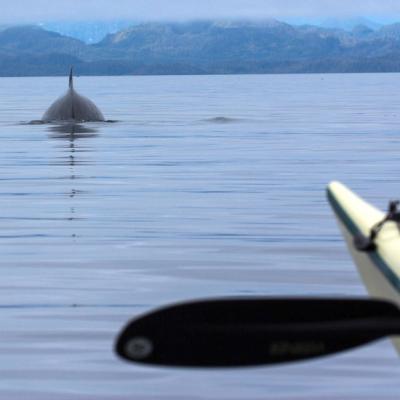
Solitary minke whales lurk in the waters of Puget Sound
A resident population of minke whales is catching the attention of scientists who want to learn if the elusive mammals are found here year-round. While small compared to their cousins the blue whales, minkes are still among the largest creatures in the Salish Sea.
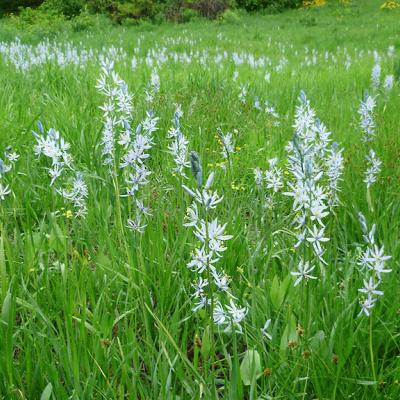
Indigenous Plants Forum raises awareness of native botanical treasures
A Lopez Island-based nonprofit says the protection of critical habitat for native plants can also preserve a wealth of traditional knowledge. The group is working with private landowners to raise awareness of culturally important plants hidden in the bogs and underbrush of Puget Sound's natural areas.
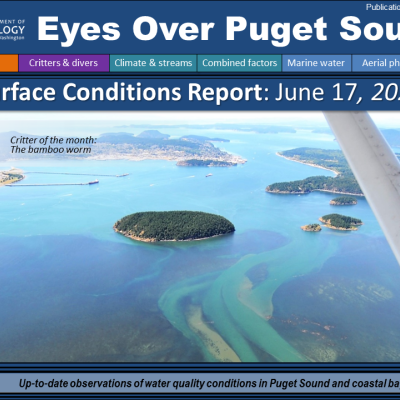
Eyes Over Puget Sound: Surface Conditions Report - June 17, 2021
Despite a La Niña, precipitation and rain have been lower since March, leaving only snow-fed rivers running high. Due to lower rainfall and warm summer temperatures the salinity of Puget Sound is now generally higher. Strong blooms and large patches of organic material and macro-algae are building up in many places and wash onto beaches. During very hot summer days, tidal mudflats and beaches can
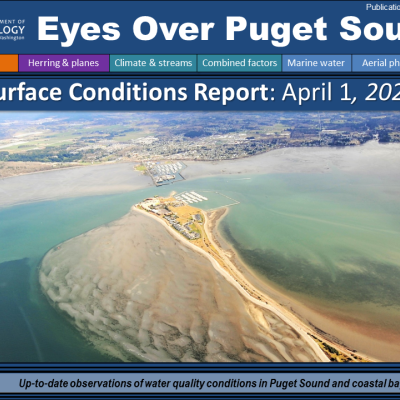
Eyes Over Puget Sound: Surface Conditions Report - April 1, 2021
After a wet winter/spring transition it has been noticeably drier, warmer and sunnier. River flows are near normal levels and in Puget Sound and coastal bays salinity is increasing above normal. The spring bloom is developing but not very pronounced, yet, Noctiluca is already visible in southern Hood Canal. Suspended sediment near rivers and creeks, failing bluffs, and shellfish activities are