

All Articles
Influence of sex and body mass on harbor seal (Phoca vitulina) diving behavior
A master's thesis prepared at Western Washington University discusses the impact of harbor seals on fish stocks in the San Juan Islands, where the seals are a year-round predator.
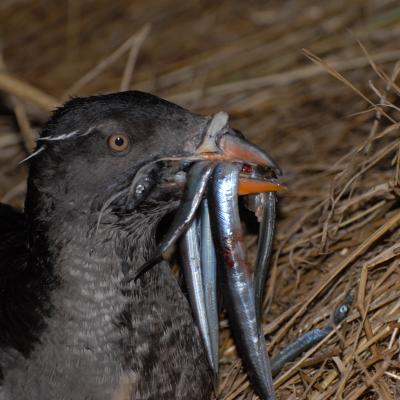
Paper: A model approach for estimating colony size, trends and habitat associations of burrow-nesting seabirds
A paper in the May 2013 issue of The Condor [115(2):356–365, 2013] describes a repeatable and statistically robust approach to monitoring burrow nesting seabirds in the Salish Sea and the California Current that can be applied at single- or multi-island scales. The approach can be applied to both relatively common and important members of the seabird community like the Rhinoceros Auklet and to
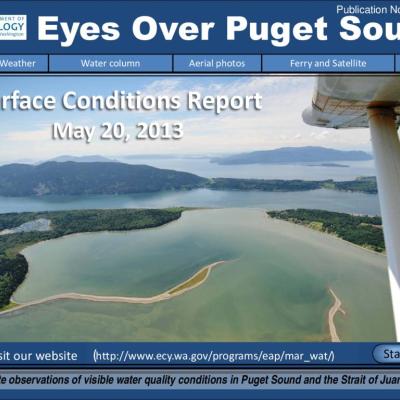
Eyes Over Puget Sound: Surface Conditions Report - May 20, 2013
After 2-years of conditions favorable for water quality, with colder temperatures and higher oxygen, Puget Sound water conditions are closer to expected again. This year phytoplankton blooms and seasonal oxygen maxima are notable, while extensive Noctiluca blooms showed up early following a period high freshwater inputs and milder weather conditions. The Fraser River sediment influence is very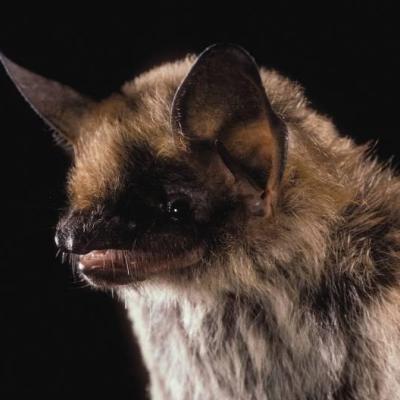
Report: Washington State Bat Conservation Plan
The Washington Department of Fish and Wildlife recently released a Bat Conservation Plan for the 15 species of bats found in Washington State. All but four of these species occur within the greater Puget Sound watershed1, including:
Big Brown Bat (Eptesicus fuscus), California Myotis (Myotis californicus), Fringed Myotis (Myotis thysanodes), Hoary Bat (Lasiurus cinereus), Keen’s Myotis (Myotis
Photos: Swinomish shellfish harvesting and research
Browse a collection of shellfish photos provided by the Swinomish Tribe.
2013 Health Impact Assessment: proposed cleanup plan for the lower Duwamish Waterway superfund site
"[Researchers at the University of Washington School of Health] partnered with two nonprofit groups, Just Health Action and the Duwamish River Cleanup Coalition/Technical Advisory Group, to assess the potential health impacts of the Duwamish River Cleanup on Tribes and people who use the Duwamish River or live or work nearby.
The health impact assessment (HIA) focuses on health changes that may
Database: Transport and fate of nutrient and pathogen loadings into nearshore Puget Sound
With funding from the EPA (EPA Interagency Agreement DW-13-923276-01), scientists at the Northwest Fisheries Science Center and the University of Washington used a field and quantitative modeling ‘source-transport-fate’ assessment approach to classify the vulnerability of shellfish growing areas to closures caused by watershed and marine-derived pathogens. Based on the historical prevalence of
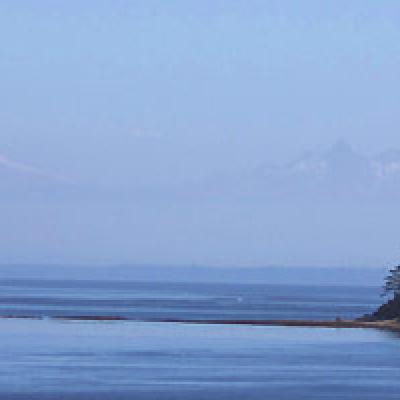
San Juan Islands National Monument
The San Juan Islands National Monument was established on March 25, 2013 by the Obama administration.
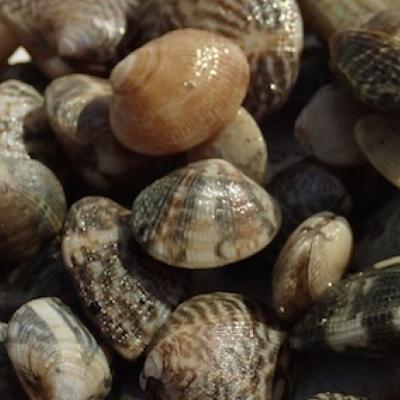
Extended abstract— Poisoning the body to nourish the soul: Prioritising health risks and impacts in a Native American community
This is an extended abstract of Poisoning the body to nourish the soul: Prioritising health risks and impacts in a Native American community by Jamie L. Donatuto, Terre A. Satterfield and Robin Gregory. The full article was published in Health, Risk & Society, Vol. 13, No. 2, April 2011, 103–127. The extended abstract was prepared for the Encyclopedia of Puget Sound by Jamie L. Donatuto.
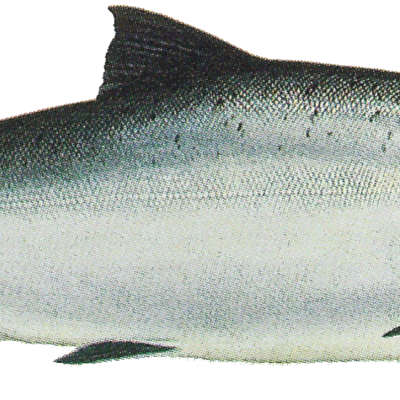
NOAA report establishes Chinook monitoring framework
A new Chinook monitoring framework is designed to build cooperation among managers and policymakers working across the Puget Sound watershed. The report, prepared by an independent team of scientists and released by NOAA, includes a regionally specific, common classification system for Chinook habitats and key ecological attributes.