Marine habitat

The Marine System encompasses all coastal areas not appreciably diluted by freshwater (surface salinities seldom falling below 30 ppt), including open coastal areas, straits, and euhaline inland waters.  It can extend from the outer edge of the continental shelf to (1) the landward limit of tidal inundation or wave splash or (2) the seaward limit of the Estuarine System.

Source:

Dethier, M.N. 1990. A marine and estuarine habitat classification system for Washington State. Natural Heritage Program, WA DNR, Olympia, WA. 60 pp.

Overview

Each year, the Puget Sound Ecosystem Monitoring Program releases the annual Puget Sound Marine Waters Overview report. The latest report combines a wealth of data from comprehensive monitoring programs and provides a concise summary of what was happening in Puget Sound’s marine waters during 2022. The report represents the collective effort of 84 contributors from federal, tribal, state, and local agencies, academia, nonprofits, and private and volunteer groups.

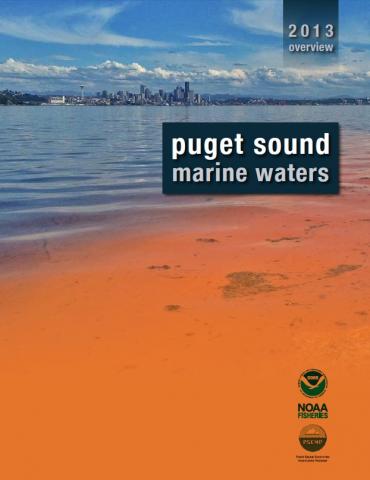
Image of a sailboat on the water at sunset.Text overlay reads: Puget Sound Marind Waters 2022 Overview.

Related Articles

Scientists say eelgrass, an unassuming flowering plant found just off shore in Puget Sound, is vital to the health of the ecosystem. They also say the plant is declining. New and increasingly urgent efforts to restore it brought a group of researchers to the 2014 Salish Sea Ecosystem Conference.

A 2014 article in the journal Northwestern Naturalist shows how Harbor Seal tissues can reflect regional and temporal trends in contaminants in Puget Sound.

Why did all the grebes leave? Where did they go? And what does their disappearance say about the health of the Salish Sea? Seasonal declines among some regional bird species could hold important clues to the overall health of the ecosystem.

A 2014 report describes a research and monitoring study of Pigeon Guillemot conducted in and near the Nisqually Reach Aquatic Reserve. 

A study published in the journal Coastal Management generates a broad description of the collaborative network among marine and nearshore researchers in Puget Sound and identifies incentives and barriers to collaboration.

The July 2014 issue of the journal Coastal Management focuses on the role of social sciences in Puget Sound ecosystem recovery. Articles range from political ecology to the development of human wellbeing indicators and directly address current Puget Sound restoration efforts. Guest editors include Encyclopedia of Puget Sound topic editor Kelly Biedenweg and Puget Sound Science Panel co-chair Katharine Wellman. The journal is co-edited by Patrick Christie of our editorial board. Extended abstracts of the articles will be available on these pages in coming weeks.