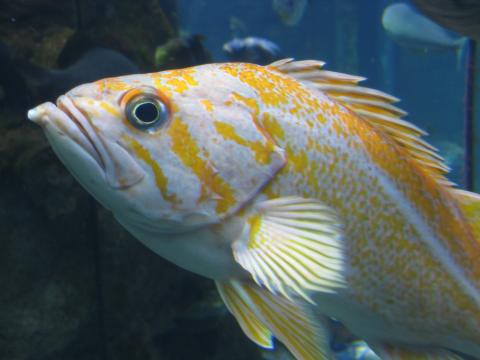
Marine habitat

The Marine System encompasses all coastal areas not appreciably diluted by freshwater (surface salinities seldom falling below 30 ppt), including open coastal areas, straits, and euhaline inland waters.  It can extend from the outer edge of the continental shelf to (1) the landward limit of tidal inundation or wave splash or (2) the seaward limit of the Estuarine System.

Source:

Dethier, M.N. 1990. A marine and estuarine habitat classification system for Washington State. Natural Heritage Program, WA DNR, Olympia, WA. 60 pp.

Overview

Each year, the Puget Sound Ecosystem Monitoring Program releases the annual Puget Sound Marine Waters Overview report. The latest report combines a wealth of data from comprehensive monitoring programs and provides a concise summary of what was happening in Puget Sound’s marine waters during 2022. The report represents the collective effort of 84 contributors from federal, tribal, state, and local agencies, academia, nonprofits, and private and volunteer groups.

Image of a sailboat on the water at sunset.Text overlay reads: Puget Sound Marind Waters 2022 Overview.

Related Articles

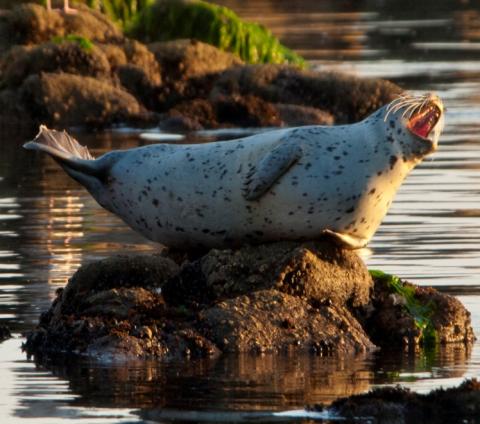
Harbor seals (Phoca vitulina) are the most commonly seen marine mammals in the Salish Sea and can be found throughout the region year round. They have been intensively studied within the Salish Sea and this species profile provides an overview of what is known about them. It was produced for the Encyclopedia of Puget Sound by the SeaDoc Society. 

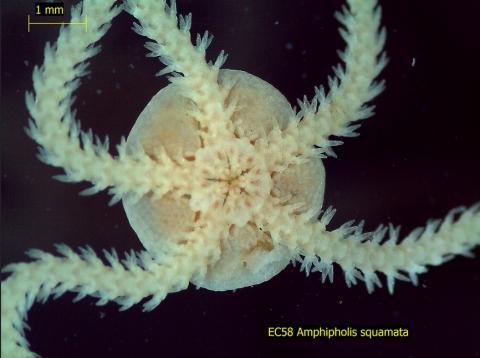
A list of over 1800 benthic infaunal invertebrates is now available on the Encyclopedia of Puget Sound. The list was prepared as part of the Washington State Department of Ecology’s Marine Sediment Monitoring Program (MSMP).  This program, initiated in 1989, is one component of the Puget Sound Ecosystem Monitoring Program, a collaborative effort dedicated to monitoring environmental conditions in Puget Sound. 

Benthic infaunal invertebrates, often referred to as benthos, are tiny animals, including worms, clams, snails, shrimp, crabs, brittle stars, and many others, that live in the sand and mud at the bottom of Puget Sound.  Benthos are an essential link in

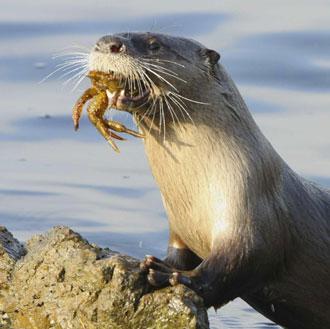
A 2014 paper in the journal Aquatic Mammals examines coastal river otter predation on rockfish at three islands in the Salish Sea.

Approximately every two years, the SeaDoc Society prepares a list of species of concern within the Salish Sea ecosystem. The following paper found 119 species at risk and was presented as part of the proceedings of the 2014 Salish Sea Ecosystem Conference, April 30 – May 2, 2014, Seattle, Washington. 

Several studies have been performed to determine the occurrence of selected Contaminants of Emerging Concern (CECs) in the environment.

Marine Protected Areas (MPAs) have been present in Puget Sound since the early 1900s, although most were established after the 1960s. By 1998 there were at least 102 intertidal and subtidal protected areas in Puget Sound, created and managed by at least 12 different agencies or organizations at the local, county, State and Federal level.