Killer whales

Killer whales are distributed throughout the marine waters of Washington. Four populations are recognized and are referred to as southern residents, northern residents, transients, and offshores. Among these, southern resident and transient (also known as Bigg's) killer whales commonly are found in Puget Sound. 

--Source: Puget Sound Science Update.

Overview

Three distinct groups of killer whales (Orcinus orca) occupy the coastal waters of the northeastern Pacific. These groups—northern and southern residents, transients, and offshores—are distinguished by diet, behavior, morphology, and other characteristics. Among these, southern resident and transient killer whales commonly are found in Puget Sound. Northern residents and offshore killer whales rarely enter Puget Sound (Wiles 2004, Kriete 2007), and therefore are not described in detail here.

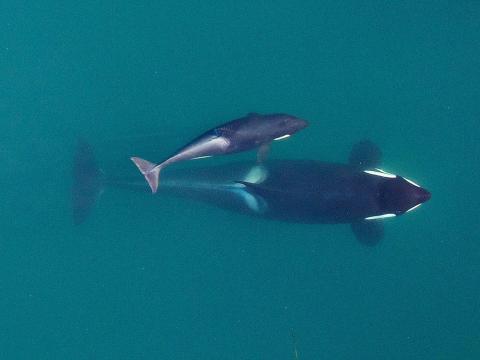
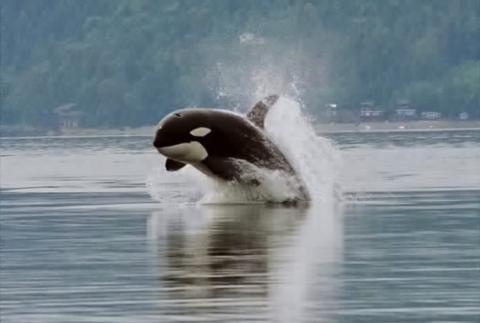
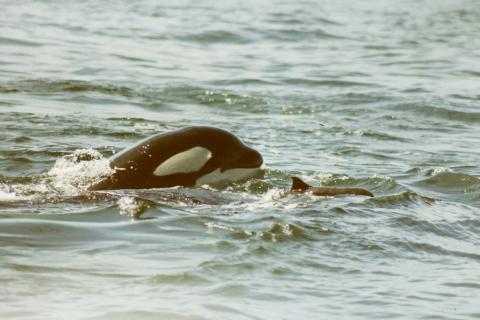
Killer whale (Orcinus orca). Photo courtesy of NOAA.

Related Articles

The Salish Sea Hydrophone Network and Orca Network are two citizen science projects dedicated to furthering our understanding of abundance, distribution, behavior, and habitat use by the endangered population of Southern Resident Killer Whales, also called orcas. The Hydrophone Network lets the public listen for orcas through their computers and phones, while the Orca Network gathers and disseminates sightings of orcas as they move between Puget Sound, the Fraser River, and the Pacific Ocean.

A 2013 article in the journal Animal Conservation compares the effects of increasing anthropogenic noise to habitat loss for endangered fin, humpback and killer whales in the Salish Sea.

The U.S. Environmental Protection Agency Region 10 and the National Marine Fisheries Service Northwest Region have released a report describing results from a series of technical workgroups about the potential effects of polybrominated diphenyl ethers (PBDEs) on Puget Sound and Southern Resident killer whales.

A new paper by Puget Sound area scientists from the SeaDoc Society and their collaborators represents the most complete summary to date of killer whale (Orcinus orca) strandings in the North Pacific. The authors analyzed stranding records dating back to 1925, obtained from scientists worldwide, finding that very few whales are stranded (an average of ten a year over the last twenty years). However, most of those strandings result in death. Only 12% of stranded whales survive.

Necropsy of stranded whales can provide important information about life history, health, genetics, and causes of death, but few of the stranded carcasses

This 2004 report looks at the status of Washington's four killer whale populations.

A recent report by an independent science panel reviewed data on the effects of salmon fisheries on Southern Resident Killer Whale populations. The report was released on November 30, 2012 and was commissioned by NOAA Fisheries and Oceans Canada.