Killer whales

Killer whales are distributed throughout the marine waters of Washington. Four populations are recognized and are referred to as southern residents, northern residents, transients, and offshores. Among these, southern resident and transient (also known as Bigg's) killer whales commonly are found in Puget Sound. 

--Source: Puget Sound Science Update.

Overview

Three distinct groups of killer whales (Orcinus orca) occupy the coastal waters of the northeastern Pacific. These groups—northern and southern residents, transients, and offshores—are distinguished by diet, behavior, morphology, and other characteristics. Among these, southern resident and transient killer whales commonly are found in Puget Sound. Northern residents and offshore killer whales rarely enter Puget Sound (Wiles 2004, Kriete 2007), and therefore are not described in detail here.

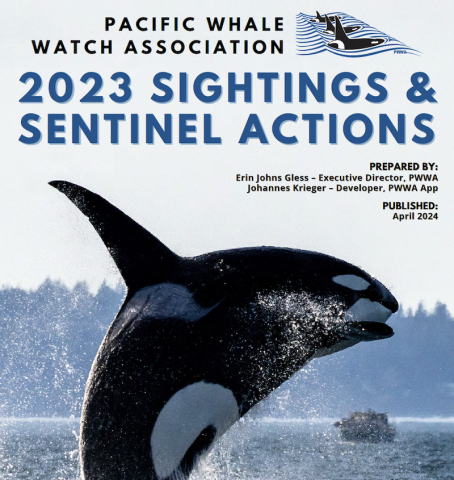
Killer whale (Orcinus orca). Photo courtesy of NOAA.

Related Articles

Puzzling encounters between endangered killer whales and harbor porpoises point to questions about prey availability and whale culture, scientists say. Are the whales playing, practicing their hunting skills, or is something else going on? 

Many types of computer models are helping researchers study the health of Puget Sound. Bayesian network models are used to examine the probabilities that certain actions will take place within the ecosystem.

The three-dimensional Atlantis model can represent physical, chemical and biological processes and can incorporate direct human involvement, such as fisheries management, habitat improvements and economic outcomes. It has been used to study the food web to determine whether salmon in Puget Sound are more threatened by predators or by the lack of a stable food supply and to evaluate specific recovery actions to help the endangered Southern Resident killer whales.

While a scarcity of Chinook salmon and other environmental factors may be pushing the Southern Resident killer whales toward extinction, a new genetics study has revealed that inbreeding has been exerting a powerful, overriding influence upon the small, genetically isolated population.

Environmental reporter Christopher Dunagan remembers the life and influence of pioneering orca researcher Ken Balcomb.  

It has been four summers since a mother orca’s dramatic vigil brought worldwide attention to the plight of Puget Sound’s southern resident killer whales. A recent gathering of legal experts, conservationists, and academic scholars looked at how perceptions of the whales have changed since then and whether laws and policies should reflect new thinking about ethical responsibilities to orcas and other animals.