Monitoring

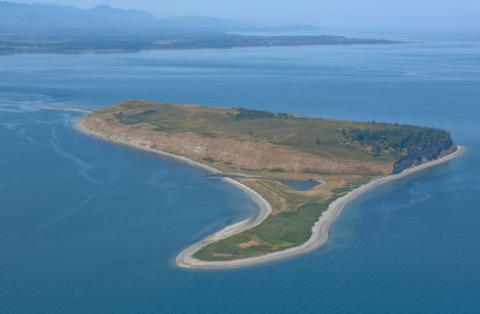
Monitoring encompasses the routine measurement of ecosystem indicators to assess the status and trends of ecosystem structure and function. Broadly, there are two goals for monitoring in the Puget Sound ecosystem. The first goal is to monitor status and trends of the ecosystem. This may take the form of snapshots of specific regions, or, more usefully, status monitoring tracks variability in carefully selected indicators over time. Status monitoring is fundamentally concerned with documenting spatial and temporal variability in ecosystem components and thus ideally relies on consistent long-term monitoring in a network of sites. A second aim of monitoring is to evaluate the effectiveness of management strategies. Effectiveness monitoring thus aims to detect changes in ecosystem status that are caused by specific management actions.

Sources:

Puget Sound Science Review

Additional resources:

Puget Sound Ecosystem Monitoring Program

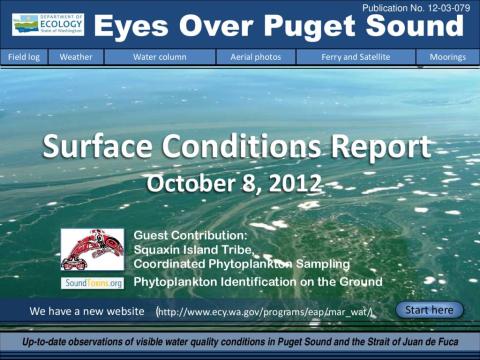
Eyes Over Puget Sound

Overview

The Puget Sound Ecosystem Monitoring Program (PSEMP) is an independent program established by state and federal statute to monitor environmental conditions in Puget Sound. 

PSEMP logo

Related Articles

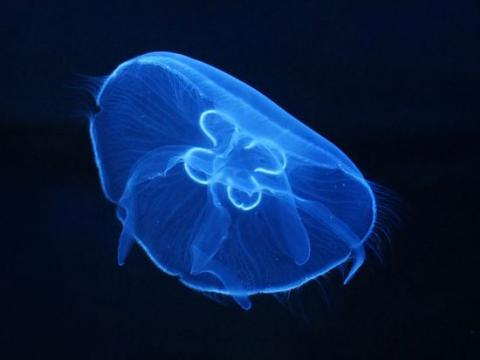
River flows are below normal. Temperatures in Puget Sound are 12-14 °C. Extensive red-brown blooms in Inlets of South and Central Sound. Jellyfish are increasing in numbers. Low-moderate fluorescence in Central Sound. In Possession Sound dissolved oxygen decreased by 1.1 mg/L.
Temperatures in Main Basin drop below 15 °C. Marco algae in Central Sound. Red-brown blooms in South Sound Inlets and parts of Central Sound. Jellyfish patches increasing in size in Sinclair and Budd Inlets. Low-Moderate fluorescence and turbidity in Main Basin and Admiralty Inlet.

Traditional Ecological Knowledge (TEK), sometimes called Indigenous Knowledge, refers to cumulative knowledge and experience that indigenous cultures have of their environment. In the last thirty years, there has been growing interest in TEK as a resource for restoration and conservation projects.

In the south a persistent marine layer over the lowlands keep conditions cooler. River flows are high. Water temperatures approach 15 °C. High fluorescence in the Main Basin Extensive red-brown blooms in South Sound. In Whidbey Basin, higher DO and algal bloom in surface waters.

Puget Sound Stream Benthos is a data management project which monitors benthic invertebrates in streams and rivers in the Puget Sound region. The system is maintained and operated by King County and was the result of a joint effort between King, Pierce, and Snohomish Counties.

Cool weather and river flows above normal. A bonanza of red-orange Noctiluca streaks in Central Basin with reduced fluorescence south of Edmonds. Strong red-brown bloom in Case Inlet. Higher DO levels in Whidbey Basin surface water. Oil sheen in Sinclair Inlet.