Salmonids

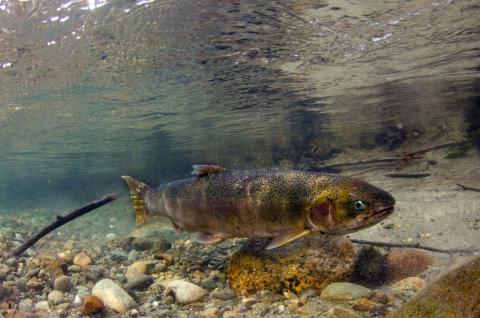
Fish in the family Salmonidae (salmon, trout, and charr) are unique in their cultural, economic and ecological role in Puget Sound. Because they utilize a very wide range of aquatic habitat types throughout their life history, they play potentially integral roles in the upland freshwater, nearshore and pelagic marine ecosystems and food webs of Puget Sound. They also provide key trophic links between habitats through their migratory behavior. While there is much variation in the behavior and ecology within and among the different salmonid species in Puget Sound, they typically use freshwater habitats to spawn, after which juveniles emerge and eventually migrate to nearshore estuaries or directly to marine pelagic habitats. The watersheds and nearshore habitats of Puget Sound currently support 8 species of salmon, trout, and charr (NOAA 2007), four of which are listed as Threatened under the Endangered Species Act (ESA). These are Chinook salmon (Oncorhynchus tshawytscha), chum salmon (O. keta), bull trout (Salvelinus confluentus) and steelhead (O. mykiss).

Puget Sound salmon:

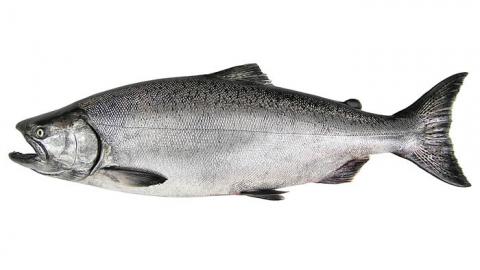
Chinook salmon (Oncorhynchus tshawytscha)

Chum salmon (Oncorhynchus keta)

Sockeye salmon (Oncorhynchus nerka)

Pink salmon (Oncorhynchus gorbuscha)

Coho salmon (Oncorhynchus kisutch)

Puget Sound trout

Steelhead (Oncorhynchus mykiss)

Cutthroat trout (Oncorhynchus clarki clarki)

Puget Sound charr

Bull trout (Salvelinus confluentus

-- Source: Puget Sound Science Review

Overview

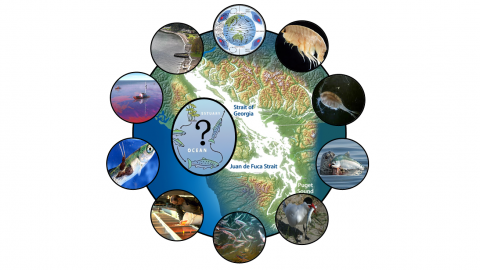
Fish in the family Salmonidae (salmon, trout, and charr) play potentially integral roles in the upland freshwater, nearshore and pelagic marine ecosystems and food webs of Puget Sound.

Chum salmon (Oncorhynchus keta). Image courtesy U.S. Fish and Wildlife Service.

Related Articles

Decaying organic matter plays an important role in marine ecosystems. 

For close to 100 years, Seattle's Ballard Locks has been one of the region's busiest waterways, drawing major boat traffic along with millions of tourists. But as it prepares to celebrate its centennial, the aged structure is also drawing the concern of engineers. They worry that an earthquake could cause the locks to fail, draining massive amounts of water from Lake Washington and Lake Union. In some scenarios, the two lakes could drop by as much as 20 feet, stranding boats, disabling bridges and causing big problems for salmon restoration.

Chinook, coho and sockeye salmon, along with steelhead trout, live in the Lake Washington watershed and navigate a treacherous route through the Ballard Locks on their way to Puget Sound.

Chinook, coho and steelhead populations in Puget Sound have declined dramatically over the past 30 years. In some cases, counts of fish returning to the rivers are just a tenth what they were in the 1980s. While many possible causes of this decline are under consideration, some researchers are focusing on the combined effects of predators and disease. This article continues our coverage of the ecological impacts of disease in Puget Sound.

The Puget Sound Fact Book brings together statistics and other information about the health and makeup of the Puget Sound ecosystem. Areas of focus include climate change, geography, water quality, habitats, human dimensions and regional species. The fact book was prepared for the Encyclopedia of Puget Sound with funding from the Environmental Protection Agency and the Puget Sound Partnership.

This report documents how Washingtonians have responded to the challenges of protecting and restoring salmon and steelhead to healthy status. It also serves as a tool to summarize achievements, track salmon recovery progress through common indicators, and identify data gaps that need to be filled.