

Find content specifically related to marine mammals of the Puget Sound and Salish Sea ecosystems. For checklists and descriptive accounts of individual species, visit our species library's marine mammals page.
Marine mammals
Related Articles

Risso’s dolphins are easily recognizable by their light color and extensive scratches and scars on their bodies. This rare visitor to the Salish Sea feeds almost exclusively on cephalopods like octopus and squid and is most commonly found in relatively warm tropical to temperate waters over the outer continental shelf and slope.
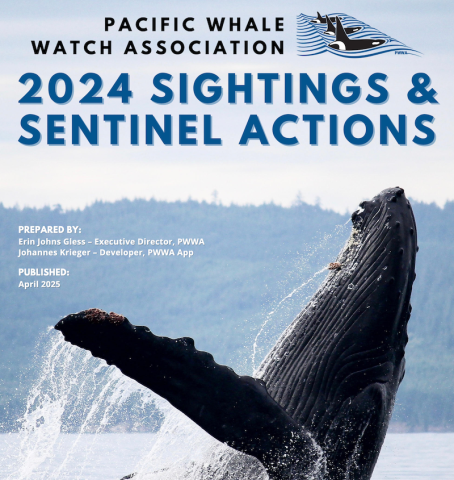
The Pacific Whale Watch Association (PWWA) is a community of ecotourism professionals with a shared commitment to education, conservation, and responsible wildlife viewing in Washington state and British Columbia. The 2024 PWWA annual report summarizes wildlife sightings and sentinel actions logged by members throughout the year. Sentinel actions are protective measures taken by professional whale watchers, such as warning vessels near whales or removing marine debris.

Artificial intelligence is emerging as a powerful new tool for whale identification. New software can be adapted and used to identify any animal with a dorsal fin on its back.

Pink salmon now comprise nearly 80 percent of all adult salmon in the North Pacific. This record abundance is coming at a cost to other salmon species such as threatened Chinook, which compete with pinks for spawning territory. A new study shows that the ecological toll may extend all the way to endangered southern resident killer whales.

Just last year, scientists published the first direct evidence that noise interferes with orca feeding behavior. Officials hope a new law establishing a larger buffer zone between boats and endangered southern resident orcas will mean quieter seas and healthier whales.

The appropriately named common dolphin is probably the most abundant cetacean on the planet. Common dolphins occur in most of the world’s tropical and temperate waters. Historically, they have not been common in inshore waters in Puget Sound and the Salish Sea but they are becoming more frequent as water temperatures warm.