

Find content specifically related to marine mammals of the Puget Sound and Salish Sea ecosystems. For checklists and descriptive accounts of individual species, visit our species library's marine mammals page.
Marine mammals
Related Articles
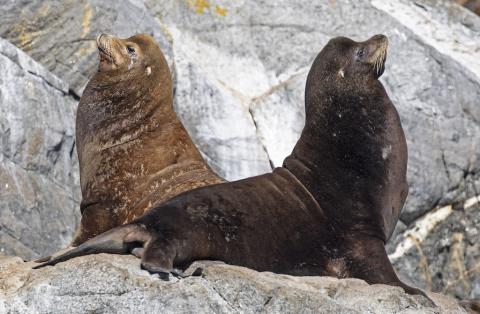
California sea lions have become common in Puget Sound in non-summer months. The overall trend for the population has been a dramatic increase in numbers since the species was protected in 1972. They are opportunistic feeders that often target herring and juvenile salmon and steelhead species in Puget Sound.

The Salish Sea may be a giant ‘practice room’ for humpback whales as they get ready to sing in their winter breeding grounds in Hawaii and Mexico. A network of hydrophones is recording it all.

Many types of computer models are helping researchers study the health of Puget Sound. Bayesian network models are used to examine the probabilities that certain actions will take place within the ecosystem.
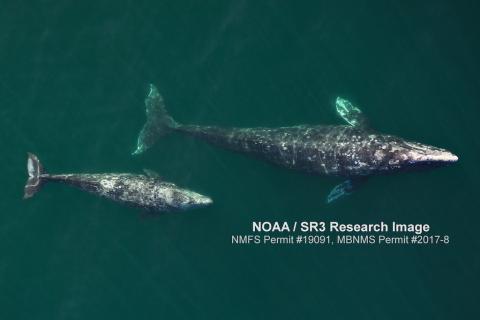
An article published in PLoS ONE in 2021 describes a study of hormone concentrations in gray whales. The findings may contribute to increased knowledge of reproductive physiology and population dynamics among the species.
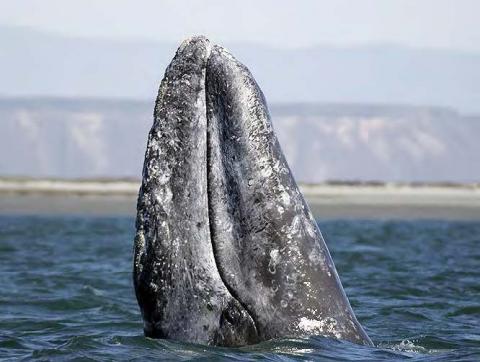
This article was originally published by the Washington Department of Fish and Wildlife as part of its annual report Threatened and Endangered Wildlife in Washington.
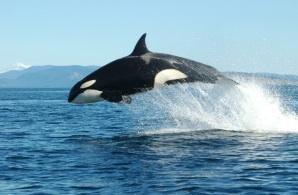
A paper presented at the European Wave and Tidal Energy Conference in Aalborg, Denmark describes the potential effects of a tidal turbine strike on an endangered Southern Resident Killer Whale in Puget Sound (SRKW). A tidal turbine is proposed for deployment in Admiralty Inlet in Island County.