

Find content specifically related to marine mammals of the Puget Sound and Salish Sea ecosystems. For checklists and descriptive accounts of individual species, visit our species library's marine mammals page.
Marine mammals
Related Articles
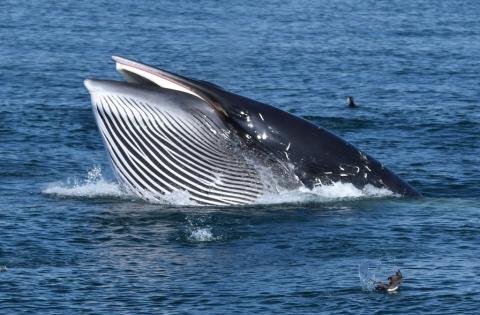
Minke whales are the most abundant baleen whale species worldwide. In the waters of the west coast of North America, their populations have remained small, but stable over time. They are hunted by transient killer whales due to their relatively small size compared with other baleen whales. Sighting rates for minke whales in the Salish Sea are highest during the summer, however, little is known about where minke whales spend the winter months.
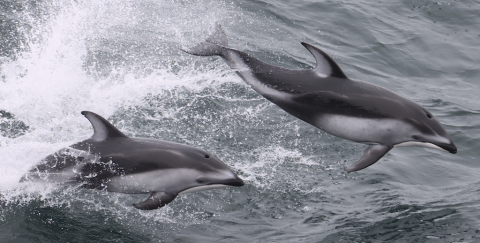
Pacific white-sided dolphins (Lagenorhynchus obliquidens) are found in the colder offshore waters of the North Pacific, but they also occasionally occur in inshore waters of the Salish Sea, and more rarely, Puget Sound. They make use of cooperative foraging techniques, and feeding at night in dark conditions means their finely tuned sonar or echolocation serves them well.

Scientists can now identify the presence of species just by testing the water for traces of DNA. The relatively new technique is being compared to the invention of the telescope or the microscope as a significant new tool for understanding ecosystems like Puget Sound. It could be a revolution for tracking the movements of all kinds of species, from salmon and killer whales to invasive green crabs.
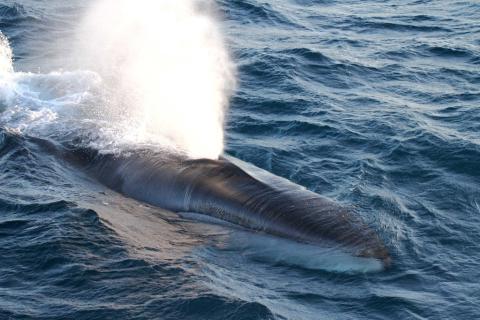
Fin whales are the second-largest species of animal on the planet. Their occasional presence in the Salish Sea is notable because they are rare and listed as Endangered federally and in Washington State. Sightings today are considered most likely to occur in the Strait of Juan de Fuca, which is closest to their migration route on the outer coast.

A formal proposal to designate resident and Bigg’s killer whales as separate species has been rejected by a committee widely recognized as the authority in naming new marine mammal species.
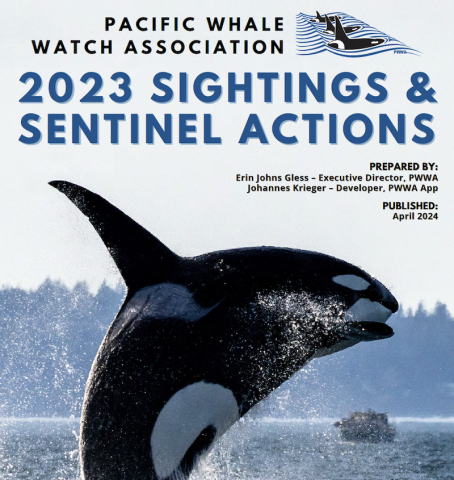
The Pacific Whale Watch Association (PWWA) is a community of ecotourism professionals with a shared commitment to education, conservation, and responsible wildlife viewing in Washington state and British Columbia. The 2023 PWWA annual report summarizes wildlife sightings and sentinel actions logged by members throughout the year. Sentinel actions are protective measures taken by professional whale watchers, such as warning vessels near whales or removing marine debris.