

Find content specifically related to mammals of the Puget Sound and Salish Sea ecosystems. For checklists and descriptive accounts of individual species, visit our species library.
Additional resources:
Find content specifically related to mammals of the Puget Sound and Salish Sea ecosystems. For checklists and descriptive accounts of individual species, visit our species library.
Additional resources:
In July, the recent trends of warm, dry conditions lessened; however, river flows remain low. Extensive macroalgae drifted through South and Central Sound and washed up on beaches. Macroalgae growth is fueled by excessive nutrients and sunshine. When it washes onto the beach, it is called beach wrack, and it can be a health risk to beachgoers because of bacteria it can harbor. From our aerial photography, we saw that Southern Hood Canal looks tropical because of a bloom of coccolithophores coloring the water turquoise. Schools of fish congregate in South Sound and southern Hood Canal. Jellyfish are abundant in Quartermaster Harbor.
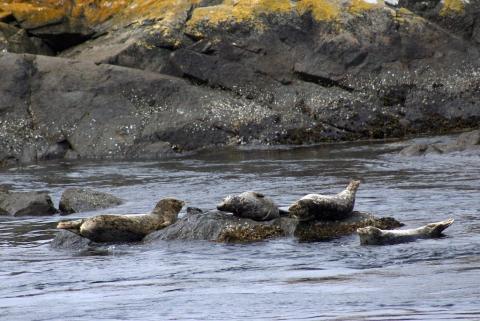
A 2014 paper in the journal PLoS ONE examines differences between foraging behavior of harbor seals based on haulout site locations, seasons, sexes and times of day. The authors hypothesize that these factors may help explain the variability in diet among harbor seals observed at different haul-out site groups in the Salish Sea.
Warm and dry conditions this spring are predicted to persist into summer, resulting in saltier and warmer than normal Puget Sound water conditions. Early upwelling and a premature melt of the snowpack means nutrient-rich ocean water likely already entered Puget Sound. This sets the stage for a lot of biological activity. From the air, it is obvious that the productive season is in full swing. We saw large algae blooms in Central Sound along with abundant Noctiluca. Huge numbers of anchovies were documented in Case Inlet and other finger inlets in South Sound, attracting hundreds of marine mammals.
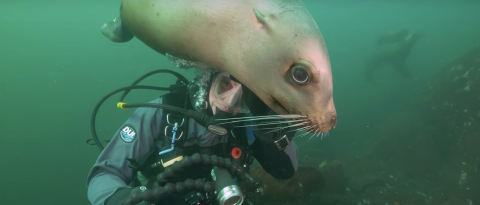
A new video series follows local scientists into the water, capturing the adventure behind the research. "Salish Sea Wild" is entering its second season and we interviewed the series host and producers. Among our burning questions: What's it like to have a Steller sea lion chew on your head?

New technology is helping to remove deadly “ghost nets” that have been lost in the depths of Puget Sound. It is part of an effort that saves millions of animals every year, but managers say better reporting of these lost nets by fishermen is still needed.

Understanding the social networks and family bonds of Puget Sound's southern resident orcas may be critical to keeping the endangered whales from extinction. A healthy population is about more than numbers, scientists say. It's about connections.