

Find content specifically related to mammals of the Puget Sound and Salish Sea ecosystems. For checklists and descriptive accounts of individual species, visit our species library.
Additional resources:
Find content specifically related to mammals of the Puget Sound and Salish Sea ecosystems. For checklists and descriptive accounts of individual species, visit our species library.
Additional resources:
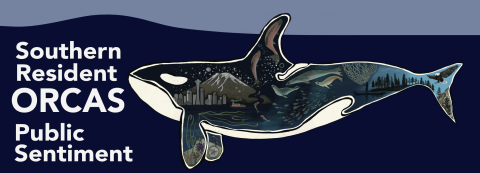
Social scientists at Oregon State University have been analyzing a trove of more than 17,000 public comments sent to the Washington state governor's southern resident orca recovery task force. The researchers have added the comments to a keyword database to look at public emotions and perceptions around the issue of orca declines.
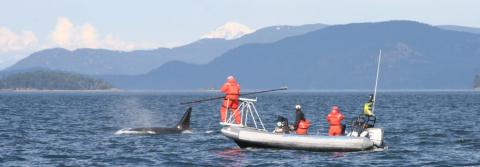
Researchers studying the killer whales that frequent Puget Sound are growing increasingly concerned that a dangerous virus or other disease-causing organism could spread through the population and hasten extinction of these critically endangered southern resident orcas.
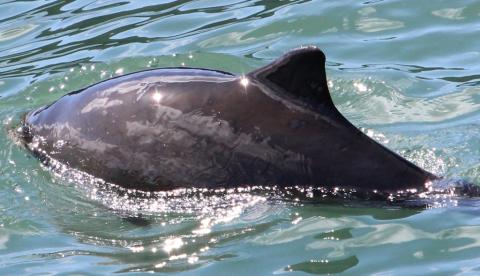
Harbor porpoises declined dramatically in the Salish Sea in the 1970s but their populations have since rebounded, increasing by more than 10% per year in recent decades. A 2020 report for the Encyclopedia of Puget Sound examines harbor porpoise status and trends, natural history and recent policy considerations for the species.

A new report from the Puget Sound Ecosystem Monitoring Program says climate change altered the base of Puget Sound's food web in 2018, diminishing microscopic phytoplankton necessary for marine life. Scientists also observed lower abundances of fish, seabirds, and marine mammals.
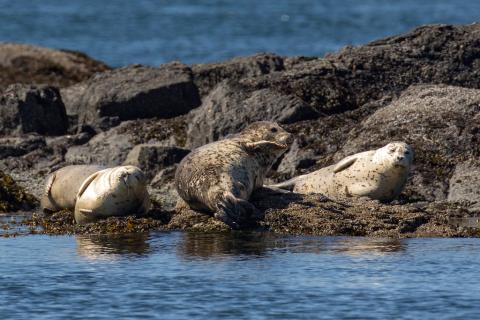
A 2019 article in the Journal of Wildlife Diseases looked at trace element concentrations of heavy metals in the livers of harbor seals that died and stranded in the San Juan Islands. The study indicated exposure to trace elements (naturally occurring, human-introduced, or both) in the Salish Sea; however, the study reports that trace element toxicity is not a major threat to harbor seal health.
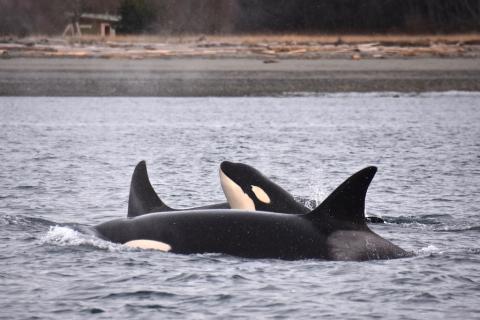
Officially known as West Coast transients but increasingly referred to as Bigg’s killer whales, these marine mammal-eating orcas (Orcinus orca) are spending increasing time in the Salish Sea to consume their marine mammal prey including harbor seals, Steller sea lions, and harbor and Dall’s porpoise. They range from Southeast Alaska to California, but over the last 15 years more members of the population are spending increasing time in the inland waters of Washington State and British Columbia (Houghton et al. 2015, Shields et al. 2018). They have no predators (except perhaps occasionally other Bigg’s killer whales - see Towers et al. 2018), but are at risk from anthropogenic effects, including toxics and noise pollution (Ford et al. 2007).