

Find content specifically related to mammals of the Puget Sound and Salish Sea ecosystems. For checklists and descriptive accounts of individual species, visit our species library.
Additional resources:
Find content specifically related to mammals of the Puget Sound and Salish Sea ecosystems. For checklists and descriptive accounts of individual species, visit our species library.
Additional resources:

Last month's federal authorization to kill more than 700 sea lions to protect salmon runs along the Columbia River is prompting discussions of similar actions for harbor seals in Puget Sound. But experts say the situations are very different with many unanswered questions.

North American river otters (Lontra canadensis) inhabit inland freshwater environments; however, from Alaska to California they also occur in coastal marine waters where they forage on a variety of marine fish and invertebrates. Little is known about mortality factors in marine-foraging river otters. Among 30 otter carcasses collected in San Juan County, Washington, analysis indicates that car collisions and gunshots were the most common causes of mortality.

The Salish Sea’s endangered southern resident orcas travel freely across the U.S.-Canada border, unconstrained by political boundaries. But while they don’t require passports, they can still face differing policies and conditions as they go back and forth between nations. We look at some of the ways that the United States and Canada compare in their efforts to protect the whales.

A paper published in the journal Oceans in 2020 describes cases of prey-related asphyxiation in harbor porpoises along the U.S. West Coast. The findings suggest that a majority of cases involve non-native American shad and that asphyxiation tends to occur more with reproductively active females than other age and sex classes.

A 2020 paper published in Frontiers in Marine Science describes details of the fungal disease Mucormycosis which has caused the death of harbor porpoises, harbor seals and one orca in Puget Sound in recent years. The authors discuss the implications for local marine mammals, specifically the endangered southern resident killer whale population.
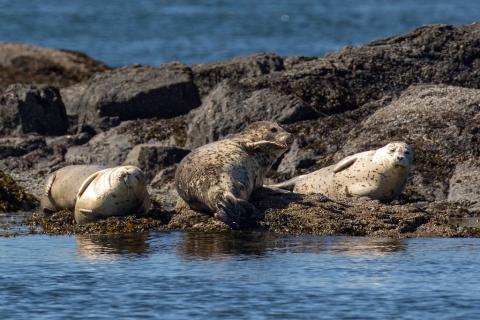
A 2020 article in the journal Frontiers in Marine Science looks at harbor seal stranding and necropsy findings in the San Juan Islands to assess age-related stranding trends and causes of mortality. The harbor seal (Phoca vitulina richardii) population in the Salish Sea has been at equilibrium since the mid-1990s. This stable population of marine mammals resides relatively close to shore near a large human population and offers a novel opportunity to evaluate whether disease acts in a density-dependent manner to limit population growth.