

All Articles
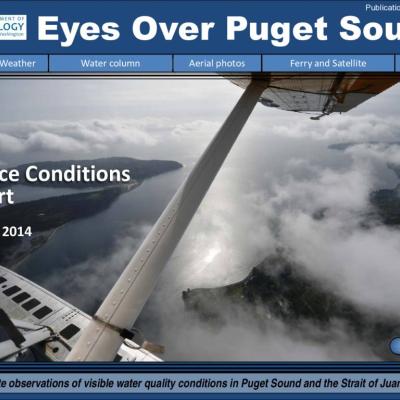
Eyes Over Puget Sound: Surface Conditions Report - April 21, 2014
Air temperatures have been slightly warmer and river flows are higher. Blooms are present only in Whidbey Basin and isolated bays. The water column otherwise is relatively clear. Sediment rich water is entering from the Stillaguamish River. Debris lines were visible in Hood Canal and North Sound. Multiple reported oil sheens seen in Lake Washington Ship Canal. Generally, the year 2014 started
Contaminants of emerging concern in the Salish Sea
Thousands of different compounds are produced and used as part of our daily lives. Examples include pharmaceuticals (NSAIDs, birth control pills, etc), personal care products (sun screen agents, scents, preservatives, etc), food additives (artificial sweeteners) and compounds used in industrial and commercial applications (flame retardants, antibiotics, etc). Advances in analytical methods have
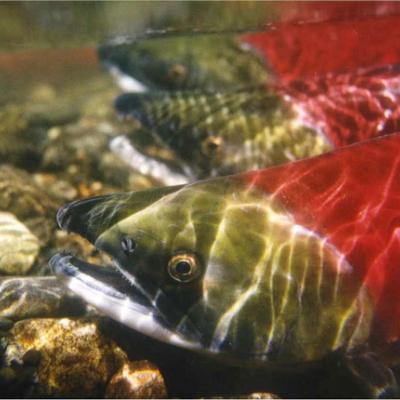
Measuring Socio-Cultural Values Associated with Salmon in the Quinault Indian Nation
A 2014 report describes a study of socio-cultural values associated with blueback salmon in the Quinault Indian Nation. The blueback salmon (Oncorhynchus nerka) is a unique strain of sockeye that returns primarily to the Quinault river system.
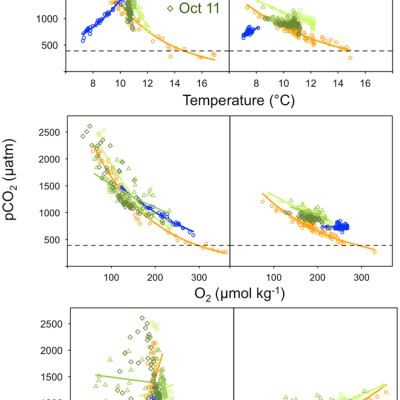
Seasonal Carbonate Chemistry Covariation with Temperature, Oxygen, and Salinity in a Fjord Estuary: Implications for the Design of Ocean Acidification Experiments
A 2014 paper in the journal PloS One analyzes a large carbonate chemistry data set from Puget Sound as a basis for identifying control conditions in ocean acidification experiments for the region.
Statement on Salish Sea Harbor Porpoise Research and Management Needs
Harbor porpoise (Phocoena phocoena) are one of the most frequently sighted cetaceans in the Salish Sea. Anecdotal information, possibly supported with stranding encounter rate data, suggests that harbor porpoise may have increased in Puget Sound, or have shifted their distribution back to Puget Sound relative to earlier decades.
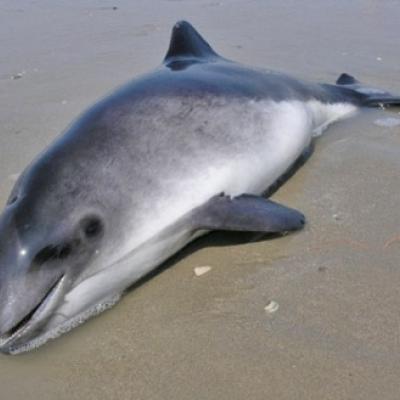
Harbor Porpoise (Phocoena phocoena vomerina): Washington inland waters stock
Harbor porpoises were once common in Puget Sound, but had all but disappeared from local waters by the 1970s. Regular and numerous anecdotal sightings in recent years show that populations of these cetaceans are now increasing and may be approaching their former status. The attached document from NOAA Fisheries describes harbor porpoise numbers and their geographic range in Puget Sound as of 2011
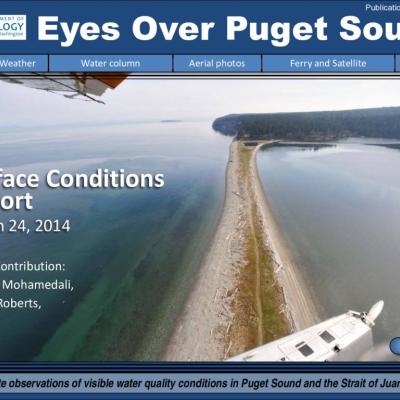
Eyes Over Puget Sound: Surface Conditions Report - March 24, 2014
River flows are above normal and air temperatures are increasing slowly. The spring phytoplankton bloom is slow to develop with visible blooms limited to smaller bays such as Sequim and Bellingham Bays. Noctiluca observed in East Sound on Orcas Island, coinciding with high numbers of jellyfish. Debris lines are mostly confined to Hood Canal. Pockets of colder water observed in Central Sound and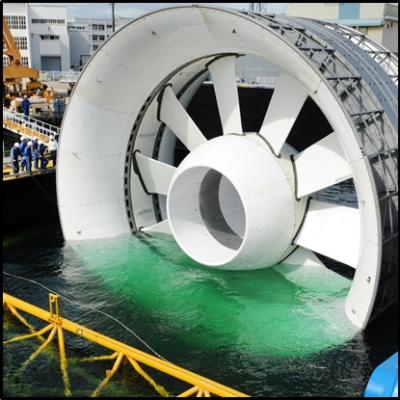
Tidal energy in Puget Sound
Scientists have identified the strong underwater currents of Puget Sound's Admiralty Inlet as a potential source of electricity for nearby utilities. The following article describes some of the basic principles and mechanisms of tidal energy.

Defining and describing Puget Sound shore types
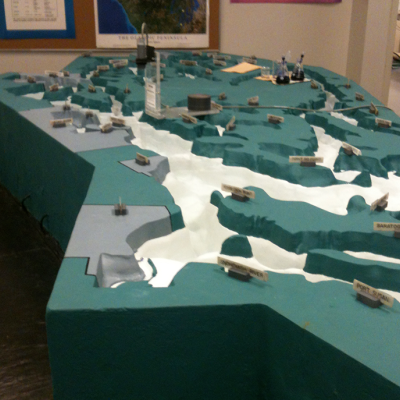
The Puget Sound Model
The Puget Sound Model was designed and built in the early 1950s at the University of Washington School of Oceanography as a research and teaching tool for understanding Puget Sound circulation patterns.