

All Articles
Envision Skagit
Envision Skagit is a partnership between Skagit County and various local and regional organizations. The county is using a land use model as a tool to engage the community about natural resource planning and decisions.
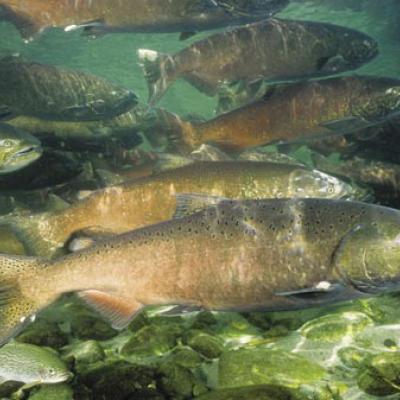
Lead Entities for salmon recovery in Puget Sound
Lead Entities are local organizations in Puget Sound that develop salmon recovery strategies and priorities for the region on a watershed-based scale.
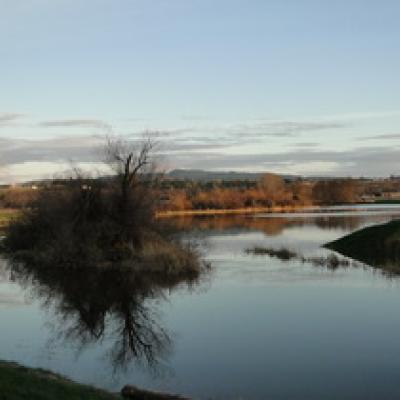
Floodplains by Design
Floodplains by Design identifies floodplains in Puget Sound with multiple benefit potential and use information on flood risk to inform ecosystem restoration.
The Willamette Valley-Puget Trough-Georgia Basin Ecoregional Assessment
The Willamette Valley-Puget Trough-Georgia Basin Ecoregional Assessment considers 833 conservation targets identified by expert teams, proposing that if those targets are represented in an ecoregion, a majority of species, including those which lack data, will be included.
Puget Sound Nearshore Ecosystem Restoration Project
The Puget Sound Nearshore Ecosystem Restoration Project (PSNERP) works to assess the health of Puget Sound nearshore environments and provides strategies for their protection and restoration.
Priority Marine Sites for Conservation in the Puget Sound
This 2006 report from the Washington Department of Natural Resources identifies areas of Washington's inland marine waters with high conservation value.
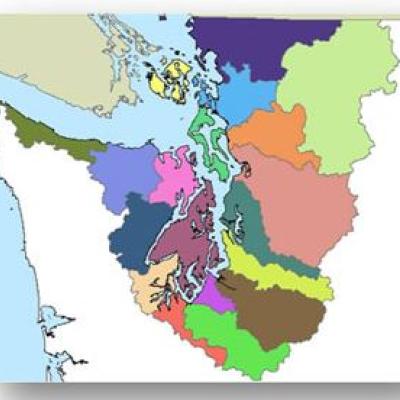
Puget Sound Watershed Characterization Project
This project is a coarse-scale, systematic characterization of different areas within the Puget Sound watershed, aimed at providing a framework for land use discussions.
West Coast Governors' Alliance Integrated Ecosystem Assessment
The West Coast Governor's Alliance on Ocean Health, a regional collaboration to protect and manage U.S. West Coast ocean and coastal resources, was launched in September of 2006. This collaboration began an integrated ecosystem assessment (IEA) covering the entire coast, comprised of six regional IEAs (R-IEAs) in Washington, Oregon, and California. The R-IEAs evaluate a range of management
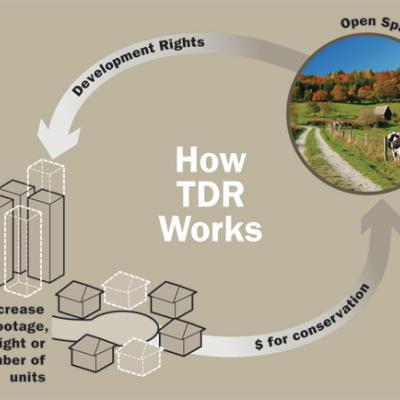
Report: Regional transfer of development rights in Puget Sound
A 2013 report from the Environmental Protection Agency discusses progress on implementing transfer of development rights (TDR) as a strategy for conservation and increased development capacity in Puget Sound.
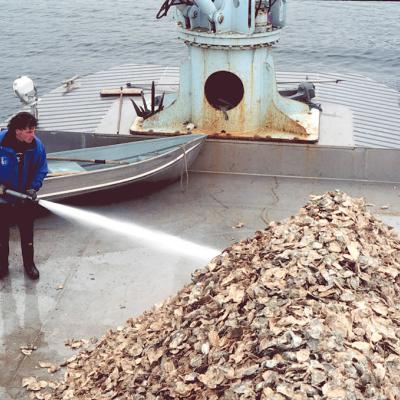
Report: Evaluating the effects of bivalve filter feeding on nutrient dynamics in Puget Sound
A January 2014 USGS report discusses approaches for measuring the effect of bivalves on nutrient availability in different regions of Puget Sound.