Marine habitat

The Marine System encompasses all coastal areas not appreciably diluted by freshwater (surface salinities seldom falling below 30 ppt), including open coastal areas, straits, and euhaline inland waters.  It can extend from the outer edge of the continental shelf to (1) the landward limit of tidal inundation or wave splash or (2) the seaward limit of the Estuarine System.

Source:

Dethier, M.N. 1990. A marine and estuarine habitat classification system for Washington State. Natural Heritage Program, WA DNR, Olympia, WA. 60 pp.

Overview

Each year, the Puget Sound Ecosystem Monitoring Program releases the annual Puget Sound Marine Waters Overview report. The latest report combines a wealth of data from comprehensive monitoring programs and provides a concise summary of what was happening in Puget Sound’s marine waters during 2022. The report represents the collective effort of 84 contributors from federal, tribal, state, and local agencies, academia, nonprofits, and private and volunteer groups.

Image of a sailboat on the water at sunset.Text overlay reads: Puget Sound Marind Waters 2022 Overview.

Related Articles

An intensive research program in the U.S. and Canada is studying why so few salmon in the Salish Sea are returning home to spawn. They are uncovering a complex web of problems involving predators, prey and other factors that put salmon at risk as they migrate to the ocean. We begin a four-part series on the Salish Sea Marine Survival Project, including new findings presented at the 2018 Salish Sea Ecosystem Conference last spring in Seattle. 

Under the federal Clean Water Act, states are required to assess the quality of their surface waters and compile a list of polluted water bodies. The law mandates cleanup plans to address pollution and other water-quality problems. This article describes how this process works in Washington state for dissolved oxygen. 

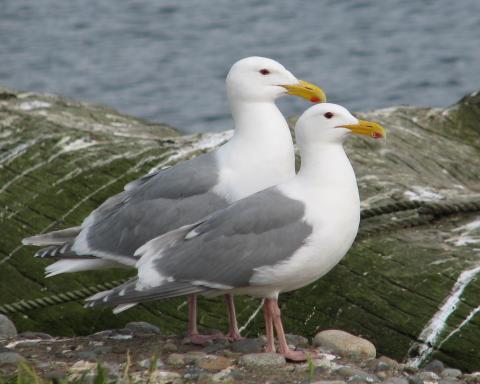
A 2017 paper in the journal Northwestern Naturalist looks at distribution patterns for Glaucous-winged Gulls across associated habitats in the Salish Sea.  

The Puget Sound Ecosystem Monitoring Program has released its sixth annual Marine Waters Overview. The report provides an assessment of marine conditions for the year 2016 and includes updates on water quality as well as status reports for select plankton, seabirds and fish.

A 2017 paper in the journal Aquatic Mammals reports that harbor seals in the Salish Sea are less concerned about predators when they become habituated to humans. 

Increased consumption of Chinook salmon by seals and sea lions in the Salish Sea “could be masking the success of coastwide salmon recovery efforts,” according to a new study published in the journal Scientific Reports. Endangered resident orcas are said to be declining in part due to a lack of available Chinook, the orcas' preferred prey.