Marine habitat

The Marine System encompasses all coastal areas not appreciably diluted by freshwater (surface salinities seldom falling below 30 ppt), including open coastal areas, straits, and euhaline inland waters.  It can extend from the outer edge of the continental shelf to (1) the landward limit of tidal inundation or wave splash or (2) the seaward limit of the Estuarine System.

Source:

Dethier, M.N. 1990. A marine and estuarine habitat classification system for Washington State. Natural Heritage Program, WA DNR, Olympia, WA. 60 pp.

Overview

Each year, the Puget Sound Ecosystem Monitoring Program releases the annual Puget Sound Marine Waters Overview report. The latest report combines a wealth of data from comprehensive monitoring programs and provides a concise summary of what was happening in Puget Sound’s marine waters during 2022. The report represents the collective effort of 84 contributors from federal, tribal, state, and local agencies, academia, nonprofits, and private and volunteer groups.

Image of a sailboat on the water at sunset.Text overlay reads: Puget Sound Marind Waters 2022 Overview.

Related Articles

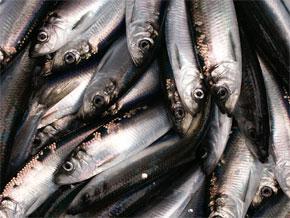
Pacific herring are a pelagic fish species found from northern Baja California to northern Honshu Island, Japan. They are found throughout the Puget Sound basin and are a mix of “resident” and “migratory” stocks. 

New research shows that warmer and more acidic oceans could lead to shorter embryos and higher respiration in Pacific herring.

Scientists argue that herring managers should take a tip from stock market investors and diversify the population’s “portfolio.” 

A 2018 paper in the journal Ocean and Coastal Management examines and compares planning approaches used to develop marine protected areas and estuary restoration projects in Puget Sound. It finds that management policies can benefit from increasingly collaborative planning with a focus on multiple benefits such as flood control, salmon recovery, recreation and resilience to climate change. 

During June, near normal air temperatures and continued low precipitation have resulted in highly variable freshwater inputs to Puget Sound. A large Noctiluca bloom extends across the South Central Basin of Puget Sound. Coccolithophores are blooming in Hood Canal. Macroalgae is drifting as mats on the water in Port Madison, South Central Basin, and South Sound. They are also piling up on beaches in South and Central Puget Sound and Whidbey Basin. Juvenile fish are migrating out of the estuaries and meeting a complex thermal habitat. New infrared images tell the story. Meet our ocean acidification expert, Stephen Gonski.

Getting bigger faster can help save juvenile Chinook salmon from a gauntlet of hungry predators ranging from birds and marine mammals to larger fish. We continue our series on the Salish Sea Marine Survival Project with a look at what helps salmon grow and prepare for life in the open ocean.