Marine habitat

The Marine System encompasses all coastal areas not appreciably diluted by freshwater (surface salinities seldom falling below 30 ppt), including open coastal areas, straits, and euhaline inland waters.  It can extend from the outer edge of the continental shelf to (1) the landward limit of tidal inundation or wave splash or (2) the seaward limit of the Estuarine System.

Source:

Dethier, M.N. 1990. A marine and estuarine habitat classification system for Washington State. Natural Heritage Program, WA DNR, Olympia, WA. 60 pp.

Overview

Each year, the Puget Sound Ecosystem Monitoring Program releases the annual Puget Sound Marine Waters Overview report. The latest report combines a wealth of data from comprehensive monitoring programs and provides a concise summary of what was happening in Puget Sound’s marine waters during 2022. The report represents the collective effort of 84 contributors from federal, tribal, state, and local agencies, academia, nonprofits, and private and volunteer groups.

Image of a sailboat on the water at sunset.Text overlay reads: Puget Sound Marind Waters 2022 Overview.

Related Articles

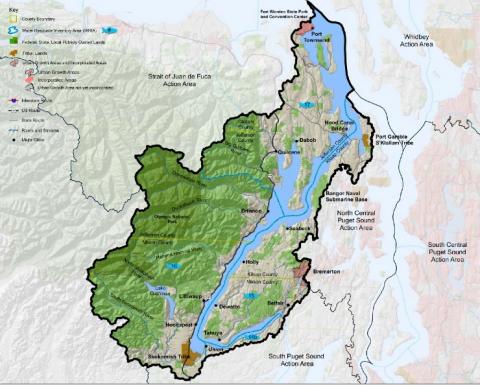
The University of Washington Puget Sound Institute and Stanford University in collaboration with the Hood Canal Coordinating Council report on efforts to select human wellbeing indicators relevant to natural resource management in the Hood Canal watershed.

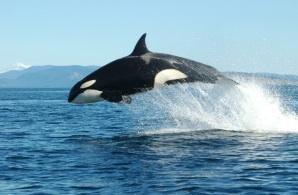
A paper presented at the European Wave and Tidal Energy Conference in Aalborg, Denmark describes the potential effects of a tidal turbine strike on an endangered Southern Resident Killer Whale in Puget Sound (SRKW). A tidal turbine is proposed for deployment in Admiralty Inlet in Island County. 

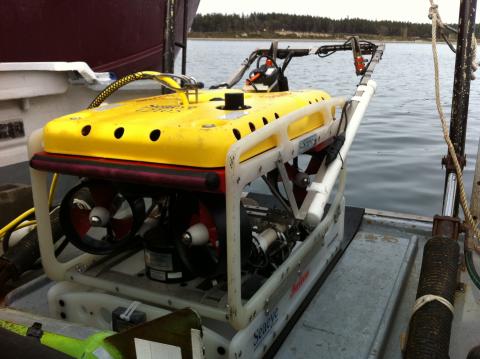
A camera on board a remotely operated vehicle scans the floor of Puget Sound capturing digital video of underwater marine life.  Selected clips of Plumose sea anemones, Pacific halibut, Pacific cod, Sea stars, and North Pacific spiny dogfish are now available for public viewing.

This page includes documents and links related to the status of Steller Sea Lion in Washington state and the Salish Sea region. 

Download presentations from the Study Panel on Ecosystem-based Management of Forage Fish held August 25, 2013 at the University of Washington’s Friday Harbor Lab, San Juan Island.

Remotely Operated Vehicles (ROVs) and Autonomous Underwater Vehicles (AUVs) are underwater robotic vehicles used for a variety of ocean surveys and operations. Both are used for deep-sea observation, mapping of underwater environments, and surveys of biodiversity and water quality trends. While ROVs are tethered to the user by a cord called the umbilical, which provides power as well as control and video signals, AUVs are programmed for a specific course and then set loose, operating without a tether.